Chemical Processing
Biodegradable Bottles? Perishable Plastics? Zounds! Could We Have Found the Answer to the Plastics Waste Problem?
It has escaped no one's notice that plastic bottles and other plastic products are ubiquitous, and like the Great Blob, are growing exponentially and threatening to turn the earth into a giant landfill.
Released Thursday, March 24, 2005
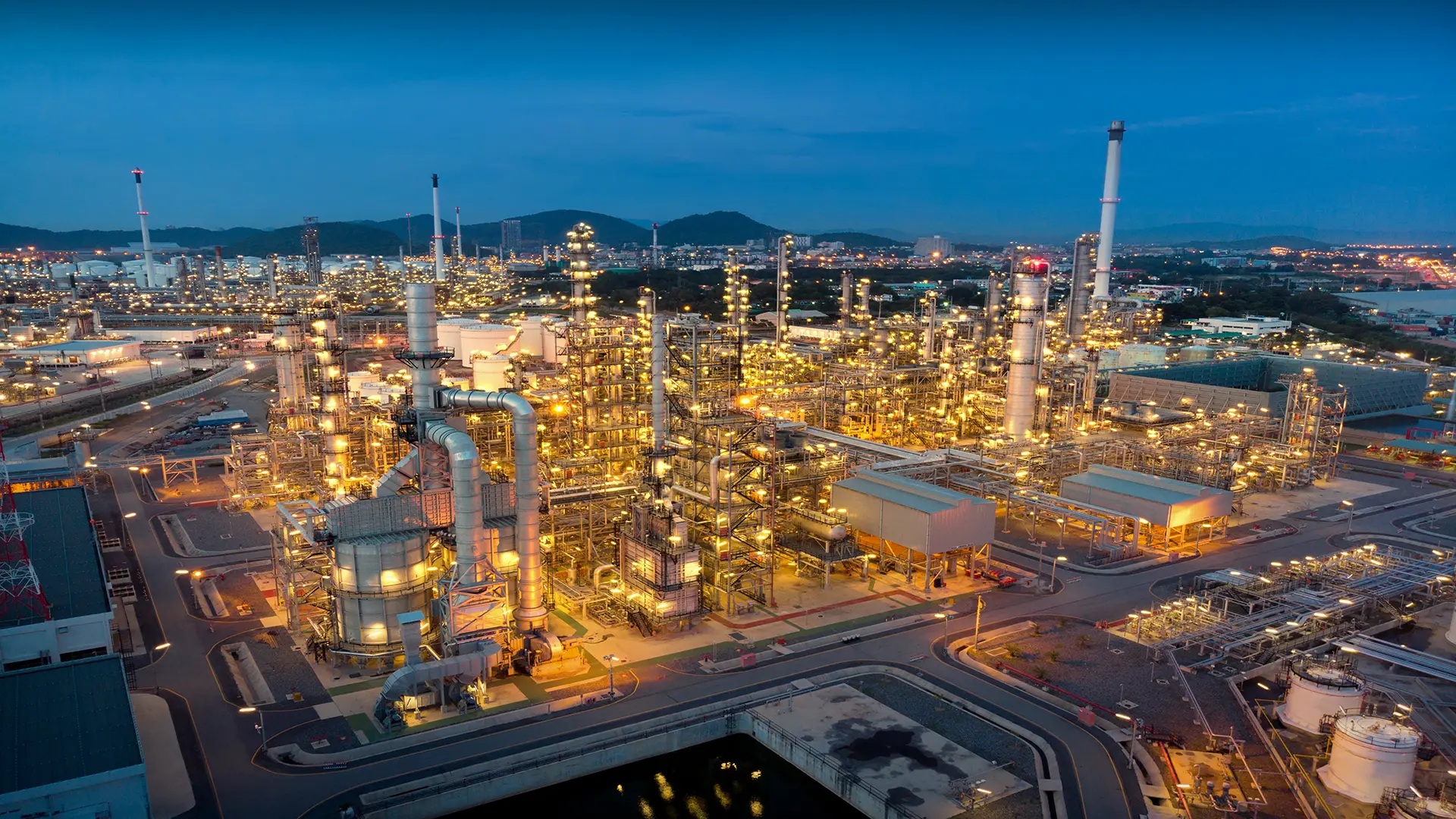
Researched by Industrialinfo.com (Industrial Information Resources, Incorporated; Houston, Texas). Who would have ever have thought it? They've finally found an appropriate use, besides cattle fodder, for corn - the making of food-grade polymers. For the past few years, the use of corn-based polymers (or bio-polymers) to make film wrap, food containers, fabrics, and other products has been growing, as it catches on in the industry that is hopefully ever more conscious of its responsibility to the environment, and to life in general.
It has escaped no one's notice that plastic bottles and other plastic products are ubiquitous, and like the Great Blob, are growing exponentially and threatening to turn the earth into a giant landfill. Plastics never go away. Five hundred years from how, when anthropologists unearth our detritus, it is certain that our cast-off plastic items will be found to be as pristine as they as they were day they were first manufactured, and we will surely be known to future earthlings as the societas plastica - not quite as evocative as the Iron Age, perhaps, but every bit as descriptive. Plastic polymers account for approximately 20% by volume of our landfill space, about 1,500 pounds per person per year.
As manufacturers begin to hop on the environmental bandwagon, we should see an increase in environmentally friendly plastics used in many applications. Several companies, among them NatureWorks LLC (Minneapolis, Minnesota), formerly known as Cargill Dow LLC, DuPont, Mitsubishi Plastics, and BASF, produce polylactose acid-based biopolymers (PLA) for bottles, films, fibers for clothing, carpets, automotive interiors, athletic equipment, and myriad other uses. Unlike petroleum-based plastics, corn-based plastics are not only 100% biodegradable, they are also recyclable, and non-flammable.
And this doesn't even take into account the fact that we could save an impressive quantity of imported and domestic oil that is being used to churn out the sixty billion pounds of thermoplastics produced each year in this country to make industrial and consumer products. With the price of oil what it is, and going up daily, the possibility of using corn, sugar beets, wheat, and other starch-rich products to make plastics looks even more promising. How in the world does one turn corn into plastic? The corn is milled, and starch is separated and further processed into unrefined dextrose. The dextrose is fermented and turned into lactic acid, the same substance produced naturally by the human body after exercise, the stuff that makes you "feel the burn". This substance is condensed and formed into a material called a lactide. After this lactide is purified, it can be made into any of PLA product. At each product's endlife, the PLA can be composted back into its simplest elements at composting facilities, where it will disintegrate back into the earth, under the right conditions.
Two U.S. companies are already using NatureWorks PLA, which is made at the company's Blair, Nebraska, manufacturing facility, for cold-filling short-shelf-life beverages. Biota Premium Water (Boulder, Colorado) uses NatureWorks PLA for its spring-fed water, and Naturally Iowa Dairy (Clarinda, Iowa) uses it to bottle its milk. NatureWorks is also working to develop applications for bottled tea and fruit juices. The product has seen success in Italy to make ice cream cups and tubs, and there has been demand from several other countries, as well. NatureWorks uses over fourteen million bushels of corn to produce 150,000 tons of PLA each year. The plant, which opened in 2002 and is the largest producer of polylactic acid in the world, is supplying 86 different companies, including bedding manufacturers, who use it to make fluffy pillows and comforters. It appears that the fibers made from PLA have more natural qualities than manmade fibers, such as polyester, thus making garments made from them more comfortable.
According to the National Corn Growers Association, there are over 60 uses identified for PLA so far, and there are bound to be more in future. Electronic consumer goods manufacturer Sony, in conjunction with Mitsubishi Plastics, began making front panels for some of its electronic equipment from a corn-based polymer in 2004. On a completely different tack, a Minnesota company, Bioenergy Incorporated, makes a rare heart and muscle nutrient called ribose, a type of sugar that helps the body restore energy levels in heart and other muscle tissue. Until now, ribose production has been extremely costly, but Bioenergy has developed an economical process for making ribose from corn syrup.
View Plant Profile - 1056991 1057983 1061133
Industrialinfo.com is the leading provider of global industrial market research. We specialize in helping companies develop information solutions to maximize their sales and marketing efforts.
/news/article.jsp
false
Want More IIR News Intelligence?
Make us a Preferred Source on Google to see more of us when you search.
Add Us On GoogleAsk Us
Have a question for our staff?
Submit a question and one of our experts will be happy to assist you.

Forecasts & Analytical Solutions
Where global project and asset data meets advanced analytics for smarter market sizing and forecasting.
Learn More
Industrial Project Opportunity Database and Project Leads
Get access to verified capital and maintenance project leads to power your growth.
Learn MoreIndustry Intel
-
2026 Regional Chemical Processing OutlookOn-Demand Podcast / Mar. 2, 2026
-
From Data to Decisions: How IIR Energy Helps Navigate Market VolatilityOn-Demand Podcast / Nov. 18, 2025
-
Navigating the Hydrogen Horizon: Trends in Blue and Green EnergyOn-Demand Podcast / Nov. 3, 2025
-
ESG Trends & Challenges in Latin AmericaOn-Demand Podcast / Nov. 3, 2025
-
2025 European Transportation & Biofuels Spending OutlookOn-Demand Podcast / Oct. 27, 2025