Power
Brazil Sells New Lines and Pumps $2 Billion into Electrical Transmission Grid as Energy Projections Pressure System
The country has one of the largest electricity markets in the world and at 79 GW is twice as big as the capacities of Argentina, Bolivia, Chile, Paraguay, and Uruguay put together.
Released Thursday, August 14, 2003
Researched by Industrialinfo.com (Industrial Information Resources, Incorporated; Houston, Texas). When approaching the Brazilian electrical power scene, you know the statistics are going to be big and bouncy. You also know that although projections of developments over the next decade are based on realistic hopes - they are indeed hopeful projections - in the light of past progress, which has been hampered by political/economic and natural disasters such as the severe drought of 2001. More than 90 percent of Brazil's power generation comes from hydro sources making it vulnerable to variations in rainfall patterns.
The country has one of the largest electricity markets in the world and at 79 GW is twice as big as the capacities of Argentina, Bolivia, Chile, Paraguay, and Uruguay put together. (Brazil shares 50% of the 12,600 MW Itaipu hydroelectric plant with Paraguay). It is also has a larger generating capacity than the United Kingdom (under 75 GW and projected to be 86 GW by 2008). Currently, with around 50 million customers, total consumption has increased from 70 to 300 TWh in the past twenty years and now 95 percent of Brazilian households have access to electricity.
The British state sponsored, Tradepartners reports estimated demand growth of 5 percent in 2003 and that a need for 30 GW of additional generating capacity added to the grid is required by 2015. Advancing these projections by five years official government agencies in Brazil say that power generation should grow from 74 GW to 107 GW by 2009 with the majority of this capacity continuing to be hydro. At present Brazil uses only about 25 percent of its hydro potential, 33 percent of which is located in the Amazon Basin. There are only two nuclear stations in the country and only a smattering of oil and coal-fired plants.
Analysts say that to achieve targets of these magnitudes $6 billion would have to be invested in system expansion with $3 billion going to generation, $2 billion to transmission, and $1 billion to distribution.
The driver behind this growth is the increased demand for electricity in northern Brazil, and the expansion of industrial and commercial interests in the south of the country. Government sources attribute an overall tariff reduction in the mid 1990s to a dramatic increase in electricity usage among all sectors of Brazilian society. This is illustrated by the inventory of Brazil's Association of Infrastructure and Basic Industries (Abdib), which has 785 electricity sector projects worth $90.8 billion planned through 2003 alone.
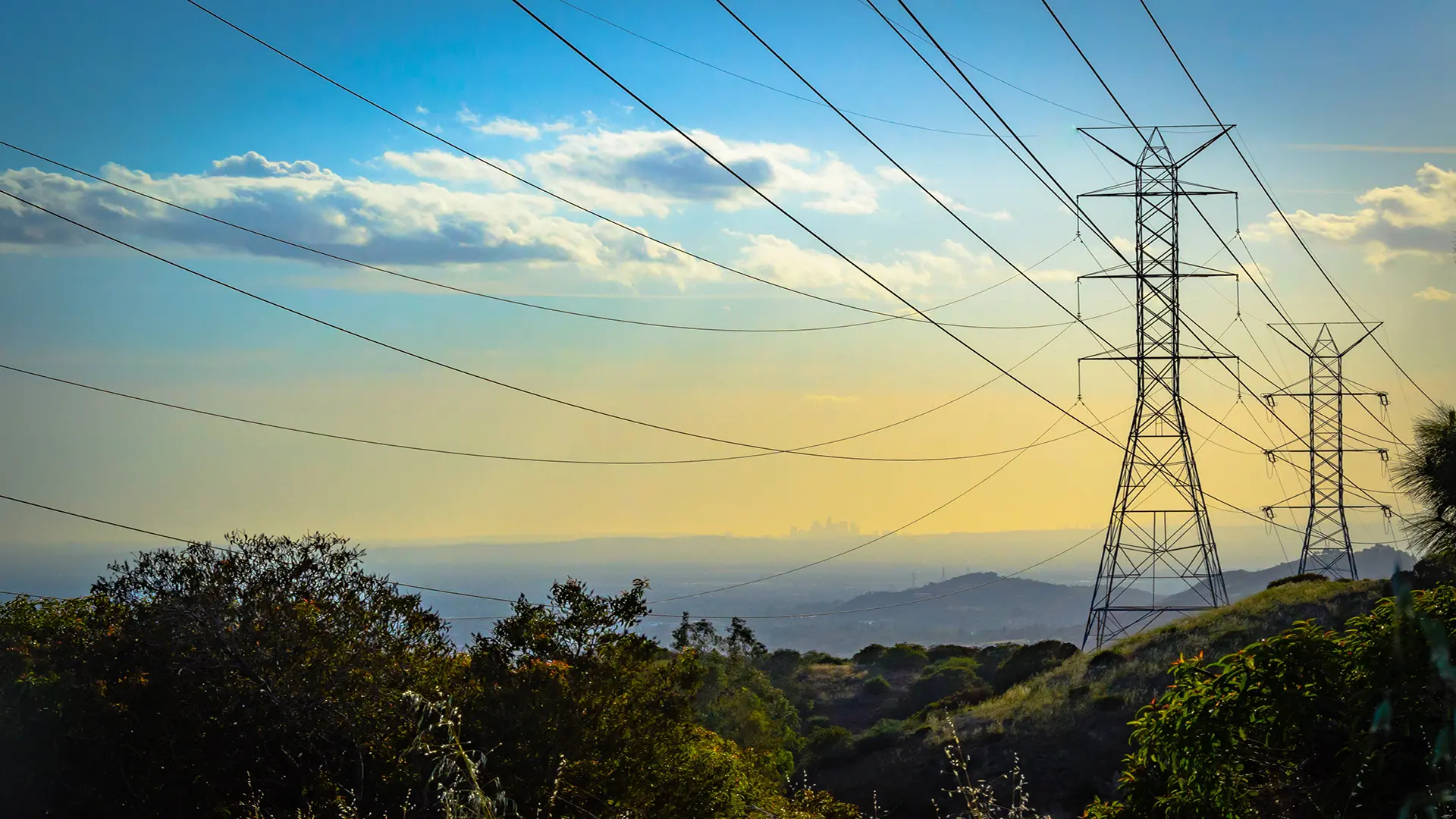
With this dramatic dimension of generating and supply pressure, the electrical transmission sector is reacting with parallel macro schemes. Brazil's ONS (Operador Nacional do Sistema Electrico) expects to have an extra 5,500 kilometers of transmission lines incorporated into the system by the end of this year. It also sees $2 billion being spent on the country's power transmission system's expansion between 2004 and 2006, which will add another 4,800 kilometers of lines and 13,300 MVA to the carrying capacity.
The state electricity agency, Aneel, will hold an auction sale for 1,787 kilometers comprising seven transmission lines on the Sao Paulo stock exchange, Bovespa, on September 27. These will be new lines to become operational by 2005 and this and subsequent sales to the private sector will lead to the progressive domination of the transmission market by private interests. Aneel is looking to clear around $580 million from the auction for which a total of 45 companies have registered to take part in the bidding, out which around ten are planning to bid for every lot.
"This confirms the interest that the sector awakens in private sector investors. The risk is low, the possibility of return is adequate, and that creates the security necessary for investors. This will continue the flow of private sector investment to permit the expansion of the electric power sector," said Cesar de Barros, general manger of the Brazilian association of transmission line operators (Abrate), to BNamericas.
Aneel will publish the list of pre-qualified companies on August 27 and after the sale on September 27 the agency expects to sign the concession contracts on December 30.
Among the bidding companies, Italian and Spanish companies are in strong evidence along with current foreign investors in the sector and traditional Brazilian investors and state power companies. Among the first time bidders are the offshoots of the state owned Electrobras, who, because of laws prohibiting them from owning concessions, have taken 49 percent stakes in consortium schemes with the balance of shares taken up by private sector partners.
Observers of the Brazilian power sector say that it is very sophisticated in its capabilities and operation. Tradepartners say that it offers substantial business opportunities for companies (in their case British companies) in several areas, justifying its choice as a priority sector.
The UK consultancy reports that 64 regional electricity companies operate in Brazil, with around 70 percent of the market under private control. There are currently 12 foreign groups controlling 26 distribution and generation companies in Brazil. Many of the largest utility companies in the world are present; including, EdF, AES, Iberdrola and Duke Energy. Under the present model, distribution companies can generate up to 30 percent of their own electricity needs. The balance is purchased through long-term contracts that were signed in 1998 as a guarantee for the transition period and now are being phased out, which is opening up an increasing part in the wholesale market pool.
Since 2001, the rains have been good and reservoir levels have returned to normal. The 2001 government imposed electricity rationing program appears to have inculcated a sense of responsible energy usage in the population and analysts say that energy efficiency is now part of the Brazilian culture.
/news/article.jsp
false
Want More IIR News Intelligence?
Make us a Preferred Source on Google to see more of us when you search.
Add Us On GoogleAsk Us
Have a question for our staff?
Submit a question and one of our experts will be happy to assist you.

Forecasts & Analytical Solutions
Where global project and asset data meets advanced analytics for smarter market sizing and forecasting.
Learn MoreRelated Articles
-
BlackRock Stands by Solar, Wind as U.S. Energy Demand GrowsApril 15, 2026
-
European Union Probes EDF's $84 Billion Nuclear Power PlanApril 14, 2026

Industrial Project Opportunity Database and Project Leads
Get access to verified capital and maintenance project leads to power your growth.
Learn MoreIndustry Intel
-
2026 Regional Chemical Processing OutlookOn-Demand Podcast / Mar. 2, 2026
-
From Data to Decisions: How IIR Energy Helps Navigate Market VolatilityOn-Demand Podcast / Nov. 18, 2025
-
Navigating the Hydrogen Horizon: Trends in Blue and Green EnergyOn-Demand Podcast / Nov. 3, 2025
-
ESG Trends & Challenges in Latin AmericaOn-Demand Podcast / Nov. 3, 2025
-
2025 European Transportation & Biofuels Spending OutlookOn-Demand Podcast / Oct. 27, 2025