Production
Cruising on a Cold Burn for Methane Hydrate Energy Data
Crystal-like compounds called 'calthrates' were discovered under laboratory conditions almost 200 years ago. The methane trapping properties of one calthrate, methane hydrates, is now attracting attention because of massive potential of the substance as a source of untapped energy.
Released Thursday, August 07, 2003
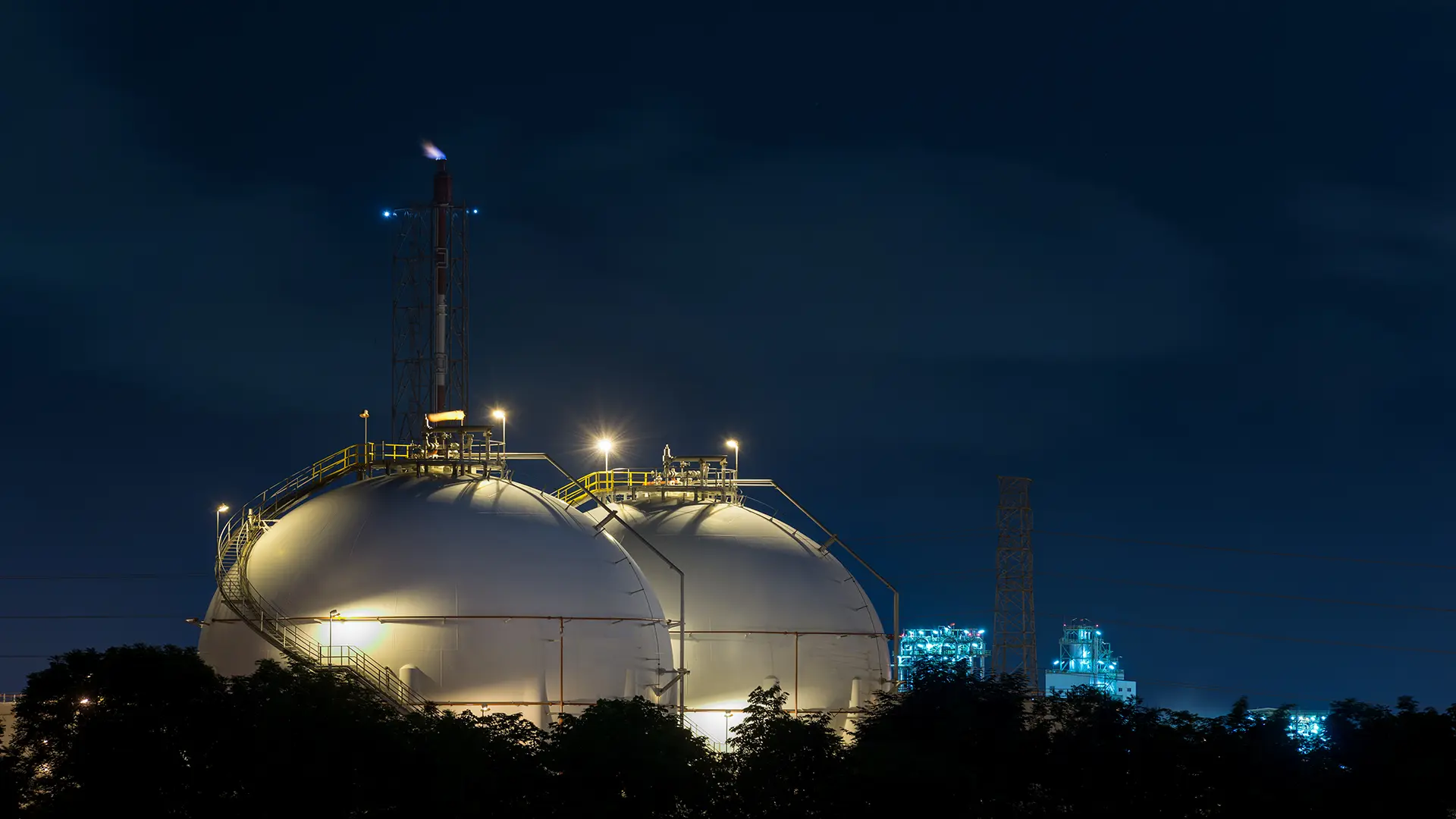
Researched by Industrialinfo.com (Industrial Information Resources, Incorporated: Houston, Texas). Voyages of discovery are being made by research bodies delving into the distribution, properties, and potential industrial/commercial exploitation of seafloor methane hydrate, which is an icy material known as 'the ice that burns' and which releases a flammable gas when melting.
Crystal-like compounds called 'calthrates' were discovered under laboratory conditions almost 200 years ago. The methane trapping properties of one calthrate, methane hydrates, is now attracting attention because of massive potential of the substance as a source of untapped energy.
Once the villain in prehistoric global warming the crystals are thought by geochemists to be the source of dramatic increases in the amount of methane in the atmosphere and oceans at the time of the Paleocene-Eocene 'thermal maximum'. This rapid release of colossal amounts of methane and the methane's oxidation to carbon dioxide are seen to have altered the chemistry of oceans and then, progressively, the atmosphere and the global climate as a whole. Lasting a period of 40,000 years the process saw the earth warming by more than 5C.
As part of the NSF funded Ocean Drilling Program (ODP) Leg 28, scientists aboard the oceanographic drill ship, JOIDES Resolution, have recently returned from a voyage to the Walvis Ridge, an ancient submarine mountain chain off south western Africa, where they studied the effects of a larger than expected methane release 55 million years ago that may have caused the extreme global warming.
Clues to the cause of the Thermal Maximum lie in sediments far below the seafloor and show evidence of the dissolution of methane as recorded in the debris which settled, layer by layer, on the ocean floor over thousands of years, the NSF (National Science Foundation, Arlington, Virginia) reports.
Cores of sediment brought up from the study site suggested a significant amount of methane dissolution, reports OPD scientist Jim Zachos, University of California at Santa Cruz. The amount of methane dissolution could be twice the original estimate, he says.
Dick Kroon, Vrije Universiteit Amsterdam, also a JOIDES Resolution researcher, reported that the results of the study far exceed those that had been estimated by models, assuming a release of 2,000 gigatons of methane.
Zachos says that the scientists suspects that the melting of calthrates and subsequent release of methane was initiated by a gradual warming that pushed the climate system across a threshold which, once started, resulted in the release of more methane.
This incremental kick-in after the threshold was passed would seem to have direct relevance to global warming thinking in 2003. "Threshold" is an emotive and threatening word when macro environmental issues are involved.
The methane hydrate resource or presence lies above the trapped methane gaseous body below the ocean floor. Methane gas spikes steeple up through the hydrates to form gas vents on the seabed and the conditions of stability and potential instability in these areas is a source of current study.
Marine seismic observations have been used to map the distribution of methane hydrates within seafloor sediments. The feature that is most clearly defines in areas of hydrate accumulation is a strong acoustic reflector up to a few hundred meters below the sediment-water interface.
The BSR (bottom-stimulating reflector) is interpreted to define the boundary between the methane hydrate phase and the underlying methane gas phase and, in general, coincides with the BGHS (base of gas hydrate stability). In areas such as the Cascadia margin off Vancouver the BGHS seems to be fairly continuous over distances of kilometers.
The DOE's National Methane Hydrate R&D program is funding research cruises on behalf of the Gulf of Mexico Joint Industry Project by the vessel GYRE on the outer continental shelf of the Gulf off Louisiana and Texas.
The JIP has an array of partners drawn from U.S. and international resource companies and high profile academic research institutes. Acoustic techniques are being used to image sedimentary layers on the seafloor to determine the likely presence and concentration of hydrates. In August, scientists from the Naval Research Laboratory will refine the search and use a deep-towed acoustics/geophysics system to make higher resolution measurements in selected locations.
Benefits being sought from the GYRE's cruises are:
*Mapping methane hydrate as a potential energy source. Some estimates put the energy potential at twice the reserves of conventional fossil derived fuels.
*Understanding the geological environment and the physical and chemical conditions under which hydrates exist in order to be able to predict their distribution and concentration before drilling starts. In drilling for gas or oil accidental encounter with hydrates may occur and could pose a hazard to the stability of the well, platform anchors, tethers or even entire platforms, says the DOE.
*Improving understanding of the stability of marine methane hydrate deposits to aid scientists studying global climate change and to help ensure the stability of hydrate deposits as the production of methane is pursued as an energy source. Methane is a greenhouse gas, 20 times more efficient at trapping heat in the atmosphere than carbon dioxide, large releases led to global warming millions of years ago.
/news/article.jsp
false
Want More IIR News Intelligence?
Make us a Preferred Source on Google to see more of us when you search.
Add Us On GoogleAsk Us
Have a question for our staff?
Submit a question and one of our experts will be happy to assist you.

Forecasts & Analytical Solutions
Where global project and asset data meets advanced analytics for smarter market sizing and forecasting.
Learn More
Industrial Project Opportunity Database and Project Leads
Get access to verified capital and maintenance project leads to power your growth.
Learn MoreIndustry Intel
-
2026 Regional Chemical Processing OutlookOn-Demand Podcast / Mar. 2, 2026
-
From Data to Decisions: How IIR Energy Helps Navigate Market VolatilityOn-Demand Podcast / Nov. 18, 2025
-
Navigating the Hydrogen Horizon: Trends in Blue and Green EnergyOn-Demand Podcast / Nov. 3, 2025
-
ESG Trends & Challenges in Latin AmericaOn-Demand Podcast / Nov. 3, 2025
-
2025 European Transportation & Biofuels Spending OutlookOn-Demand Podcast / Oct. 27, 2025