Petroleum Refining
Supply Increases, Demand Reductions Minimize Tropical Storm Isaac's Impact on Oil & Gas Prices
Oil and Natural Gas prices held steady this week despite the near-total shutdown of production in the Gulf of Mexico, a far cry from seven years ago when prices soared after hurricanes Katrina and Rita shut down production in the Gulf.
Released Thursday, August 30, 2012
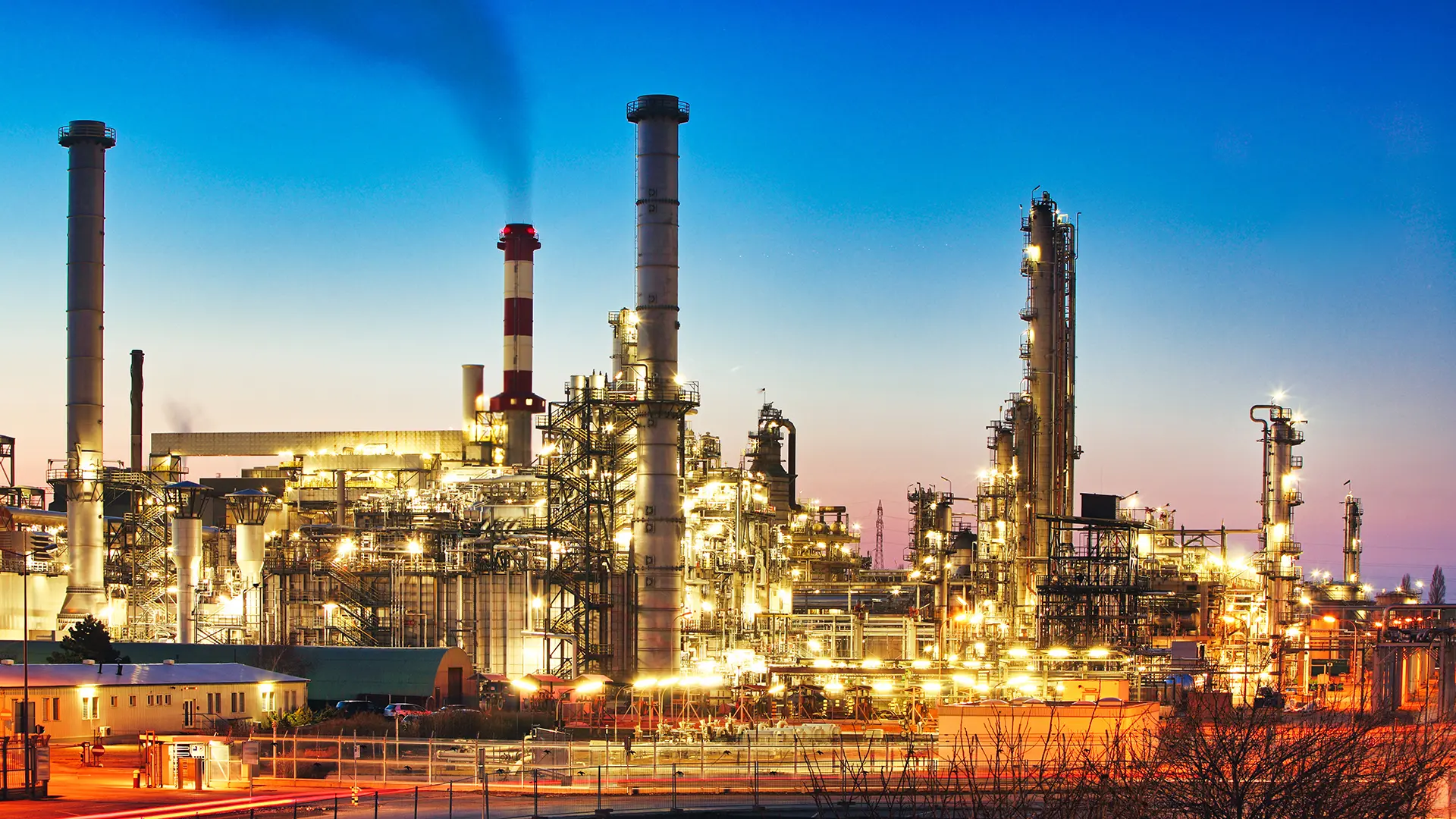
Written by John Egan for Industrial Info Resources (Sugar Land, Texas)--Oil and Natural Gas prices held steady this week despite the near-total shutdown of production in the Gulf of Mexico, a far cry from seven years ago when prices soared after hurricanes Katrina and Rita shut down production in the Gulf. Today, dramatic increases in onshore production from shale formations has helped limit oil and gas price volatility during this week's severe weather in the Gulf of Mexico, according to Martin Lin, Industrial Info Resources (IIR) Energy's special adviser on markets.
"Tropical Storm Isaac has had much less of an impact on oil and gas prices compared to hurricanes Katrina and Rita, which hit the Gulf seven years ago," Lin said in an interview. On Wednesday, Henry Hub gas prices closed at $2.63 per million British thermal units (MMBtu), a decrease of about a dime from pre-Isaac prices. "As Isaac developed, gas prices have moved in a back and forth pattern --up a few cents one day, down a few cents the next," Lin observed. "By contrast, in 2005, when Katrina and Rita hit the Gulf, prices moved in one direction --straight up."
Back then, as oil and gas production shut down in the Gulf, Hurricane Katrina drove up spot gas prices by about $2 per MMBtu, to about $12 per MMBtu, Lin recalled. Gas prices started to decline slightly after Katrina, but Hurricane Rita pushed them up by about $3 per MMBtu, to about $15 per MMBtu.
Gulf of Mexico offshore gas production was in the range of 10 billion cubic feet per day before Katrina and Rita, but it had declined to less than 5 billion cubic feet per day before Isaac hit, Lin said. Since 2005, however, gas production from the Marcellus Shale alone has grown to offset more than the entire decline from the offshore Gulf of Mexico. "Combined with the onshore production from other shale plays, and the Lower 48 gas production is well above where we were seven years ago," he said.
Offshore oil production in the Gulf also declined in the years following Katrina and Rita, but unlike gas production, it has significantly increased in recent years, Lin continued. "Onshore production from shale formations reduces reliance on offshore production, which therefore reduces storm impacts on the supply side," he said. "As refinery capacity increases along the Gulf, however, oil demand becomes more sensitive to storm-related disruptions."
In the past, when severe weather threatened Oil and Gas production in the Gulf, Lin said, "energy traders had a mantra: 'Storm = Bullish = Buy.' But energy markets today are far more nuanced: Traders need to know how a hurricane will affect Oil and Gas production as well as industrial demand for oil or gas."
That's where IIR Energy's tools like PetroCast Live and a forthcoming product, NatGasLive, can make the difference between profitable and unprofitable trades. Lin said, "These tools provide traders, asset owners, investors and other market participants with updated and confirmed market intelligence on plant outages --planned and unplanned --as well as access to researchers who can confirm plant status. As well, each product draws on Industrial Info's database of industrial projects to give users a longer-term outlook on plans to bring new plants and infrastructure online.
"When severe weather hits, energy traders need to know how supply as well as demand will be affected, and where any bottlenecks could arise," Lin said. "Only IIR Energy has that information."
Energy trades based on the old mantra of "Storm = Bullish = Buy" are unlikely to be successful today because Isaac has temporarily idled so much of the Gulf's industrial demand for Oil & Gas, Lin said. Refineries, chemical processors and other industrial facilities either closed or went to minimum production schedules, slashing their need for oil and gas.
"Today, supply and demand fundamentals are such that hurricanes have more of a bearish impact on prices, very different from the former bullish impact they used to have," Lin said. "Of course, prices, supply and demand are also critically affected by the exact path a storm takes."
Tropical Storm Isaac has shut down an estimated 95% of offshore oil production, and about 75% of offshore gas production. It also turned out the lights for over 750,000 businesses and homes across a five-state area. Isaac was downgraded to a tropical storm Wednesday afternoon as its sustained winds fell to about 70 miles per hour.
On Wednesday, which was the seven-year anniversary of Hurricane Katrina, the tropical storm spent most of the day sitting on top of New Orleans and southern Louisiana. Heavy rains led to widespread flooding in southern Louisiana, Mississippi and Alabama, and at least one tornado was reported in western Mississippi. The storm surge measured 7 to 8 feet in parts of New Orleans and Baton Rouge, but the $14.5 billion in levee and infrastructure improvements made since Katrina appeared to be holding.
Tropical Storm Isaac has led to widespread closures and production reductions for refineries and chemical processing facilities along the Gulf Coast. For more on how Tropical Storm Isaac has affected energy operations in the Gulf, see August 28, 2012, article -Gulf Coast Refiners and Chemical Processors Shut Down as Tropical Storm Isaac Veers Westward, and August 29, 2012, article -Now a Hurricane, Isaac Bears Down on Gulf Coast Industrial Facilities.
Industrial Info Resources (IIR), with global headquarters in Sugar Land, Texas, and eight offices outside of North America, is the leading provider of global market intelligence specializing in the industrial process, heavy manufacturing and energy markets. Industrial Info's quality-assurance philosophy, the Living Forward Reporting Principle, provides up-to-the-minute intelligence on what's happening now, while constantly keeping track of future opportunities.
/news/article.jsp
false
Want More IIR News Intelligence?
Make us a Preferred Source on Google to see more of us when you search.
Add Us On GoogleAsk Us
Have a question for our staff?
Submit a question and one of our experts will be happy to assist you.

Forecasts & Analytical Solutions
Where global project and asset data meets advanced analytics for smarter market sizing and forecasting.
Learn MoreRelated Articles
-
Chevron Builds Portfolio in Venezuela with Asset SwapsApril 15, 2026
-
Eni Secures Funding for Italy Biofuels PlantApril 15, 2026
-
Rising Energy Costs Cast Shadow over U.S. EconomyApril 14, 2026

Industrial Project Opportunity Database and Project Leads
Get access to verified capital and maintenance project leads to power your growth.
Learn MoreIndustry Intel
-
2026 Regional Chemical Processing OutlookOn-Demand Podcast / Mar. 2, 2026
-
From Data to Decisions: How IIR Energy Helps Navigate Market VolatilityOn-Demand Podcast / Nov. 18, 2025
-
Navigating the Hydrogen Horizon: Trends in Blue and Green EnergyOn-Demand Podcast / Nov. 3, 2025
-
ESG Trends & Challenges in Latin AmericaOn-Demand Podcast / Nov. 3, 2025
-
2025 European Transportation & Biofuels Spending OutlookOn-Demand Podcast / Oct. 27, 2025