Production
Bakken Oil Boom: Will North Dakota 'Blow it' by Under-investing in Infrastructure?
The oil boom in the Bakken Shale has triggered nearly $20 billion in spending in North Dakota. But speakers at a conference this week said the state was unwilling to fund infrastructure
Released Friday, July 19, 2013
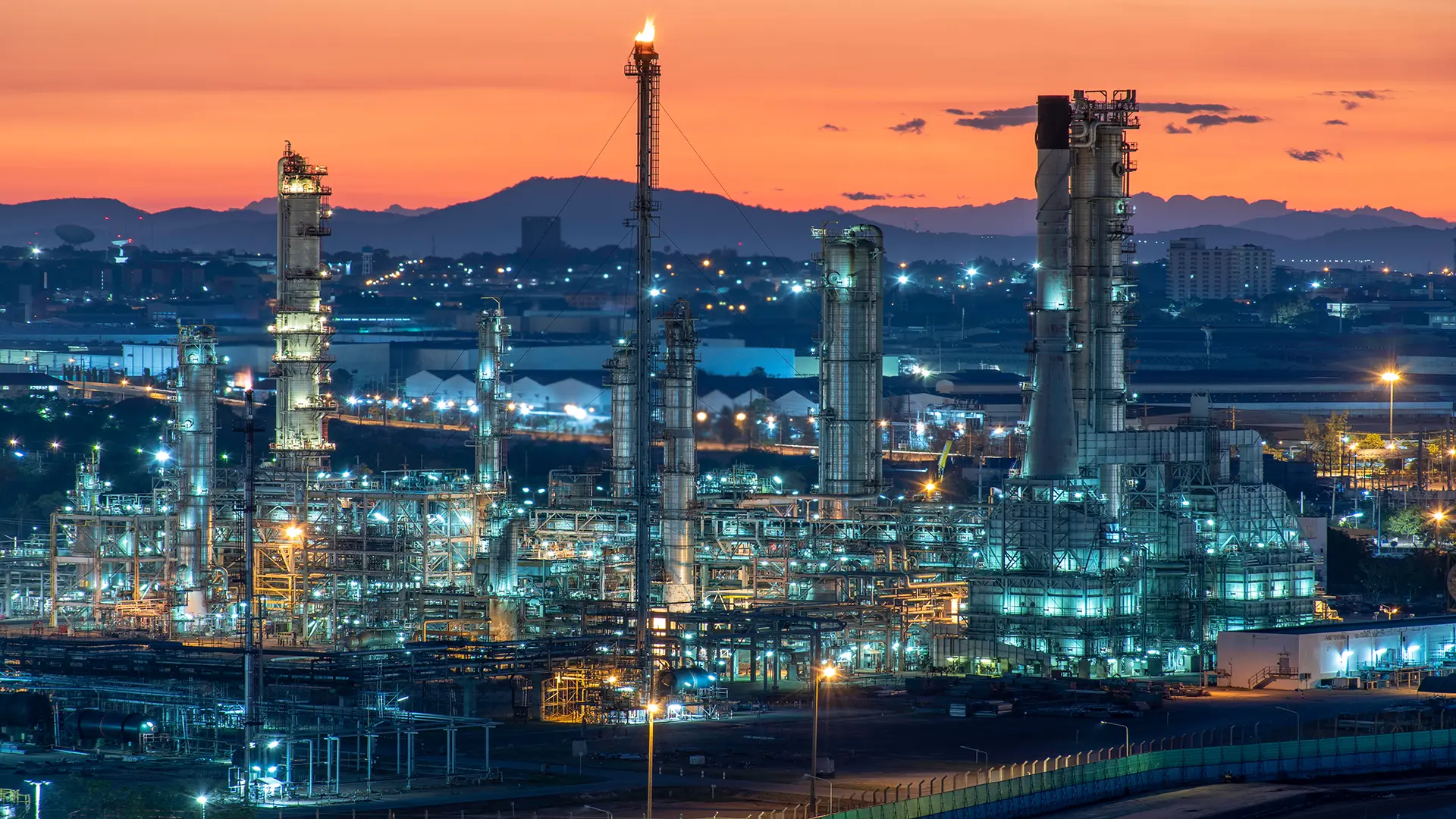
Written by John Egan for Industrial Info Resources (Sugar Land, Texas)--The oil boom in the Bakken Shale has triggered nearly $20 billion in energy-related project spending in North Dakota. Still, speakers at a conference this week in Denver said the state was courting the premature end of that boom by its inability or unwillingness to fund basic economic infrastructure projects like roads, airports, housing, libraries, water-treatment plants and lifestyle amenities like retail centers and restaurants. "The state of North Dakota is very close to blowing it big time," Dean Dovolis, an architect and investor active in that state, told about 50 attendees at the "Emerging Opportunities in Oil & Gas Plays" conference.
"Oil production has filled the state's coffers with cash," Dovolis asserted in an interview at the conference. "Industrial firms are committing to about $1 billion of capital projects per month, but the state is spending less than $1 million per month on new infrastructure. The western part of the state, where all the oil is produced, is starving for basic economic infrastructure, like adequate roads and housing."
 Click on the icon at right for a snapshot of active energy-related project spending in North Dakota.
"If North Dakota doesn't fix this and soon, it runs the risk of being economically hollowed out, just like Alaska," continued Dovolis, a principal at DJR Architecture Incorporated (Minneapolis, Minnesota). "Oil is a temporal industry. Eventually, it will run out and the oil industry will move on. Alaska never built its economic infrastructure and diversified its economy beyond oil and gas. Now that oil and gas production is declining there, the state and its citizens are hurting."
Dovolis' frustration at the pace of government decision-making in North Dakota was shared by Peter Elzi, a principal and senior economist at THK Associates Incorporated (Aurora, Colorado). "The state of North Dakota is very well off financially--it is awash with cash," he told Industrial Info in an interview at the conference. "Slowly, they're working their way through the backlog of infrastructure projects. They don't want to do anything stupid with all of this new money, which is commendable, but they're not moving fast enough. On a recent trip to Williston, there was so much truck traffic I had to wait 45 minutes in order to turn left on a road. Until you get to Williston, you'd think that was unimaginable!"
Dovolis and Elzi's call for faster government investment decisions on infrastructure projects was not shared by all speakers and attendees at the conference, which was sponsored by Information Forecast Incorporated (Infocast) (Woodland Hills, California). Several speakers and attendees, including Marc Clingaman, a principal at Eagle Homes of North Dakota LLC (Williston, North Dakota), said they liked the prevailing "free market" ethos of North Dakotans and their elected officials. "I love the work ethos of the people of North Dakota, and I love the fact that their government doesn't want to invade every aspect of citizens' lives," Clingaman told conference attendees.
Several conference participants agreed that delays in funding economic infrastructure projects are partly a function of geography and culture. "All the revenue comes from western part of the state, where the oil production is booming," Elzi said in an interview. "But the population center is in the eastern part of the state, and that's where legislators sitting in Bismarck (the state's capital) send the money."
Several attendees also said measured pace of government decision-making reflected North Dakotans' political views, which several speakers described as very conservative, skeptical of big government spending, and uncomfortable with debt. Whether the state will accelerate its investment in infrastructure depends on the results of the state's next election, one speaker added.
"In North Dakota, every county needs a new power plant," Elzi told conference attendees. But he urged state officials to move faster to approve funding for roads, schools, parks, libraries, sewer systems, housing and airports--the economic infrastructure necessary to provide residents with an acceptable quality of life.
Several speakers noted that North Dakota's harsh winter climate can dissuade job seekers from coming to the state. In the Williston area, winter temperatures of 20 degrees below zero are not unusual--and that's before calculating the wind-chill factor. Attendees noted that one way to overcome the state's harsh winter climate is to showcase what a great place North Dakota is to live. And that depends on infrastructure like parks, schools, hotels, libraries, quality roads, retail establishments, restaurants and quality housing.
"The Bakken can be an economic engine for the entire country," Elzi told conference attendees. "It needs vehicles, which are made in Detroit, and it needs steel pipe, which is made in Pittsburgh. But the cost of everything is so high because the state, county and local governments are understaffed and overwhelmed. It takes months, not weeks, to get property valuations done. State and county databases are incomplete or inconsistent. Cities and counties are leaving a lot of money on the table because of poor work processes, out of date fee structures, and an inability to make decisions in a timely manner."
Whatever their political stripe, speakers and attendees agreed that "the market" will make decisions if North Dakota's government agencies can't or won't. But leaving matters to Adam Smith's "invisible hand" can lead to higher costs and greater inefficiencies, at least in the short term. Part of the reason why oilfield workers can earn up to $125,000 per year in the Bakken, and two-bedroom apartments in the Williston area rent for $3,200 per month, is that a bidding war erupts over every good and service necessary to support the oil boom in the Bakken Shale. McDonald's restaurants in the area are paying signing bonuses of $500 plus wages of up to $20 per hour for entry-level employees.
"The market will decide, but the results won't always be pretty," Dovolis told Industrial Info.
Industrial Info Resources (IIR), with global headquarters in Sugar Land, Texas, and eight offices outside of North America, is the leading provider of global market intelligence specializing in the industrial process, heavy manufacturing and energy markets. Industrial Info's quality-assurance philosophy, the Living Forward Reporting Principle, provides up-to-the-minute intelligence on what's happening now, while constantly keeping track of future opportunities.
/news/article.jsp
false
Want More IIR News Intelligence?
Make us a Preferred Source on Google to see more of us when you search.
Add Us On GoogleAsk Us
Have a question for our staff?
Submit a question and one of our experts will be happy to assist you.

Forecasts & Analytical Solutions
Where global project and asset data meets advanced analytics for smarter market sizing and forecasting.
Explore Our SolutionsRelated Articles

PECWeb Global Market Intelligence Platform
Identify opportunities, anticipate change, and execute with confidence. PECWeb connects the industrial intelligence you need, from projects and assets to operational events, all in one platform.
Discover PecwebIndustry Intel
-
European Chemicals and Transport Fuels OutlookPodcast Episode / Jul 10, 2026
-
2026 European Petroleum Refining Project OutlookPodcast Episode / Jun 26, 2026
-
Brazil: Efficiency, Innovation, and Opportunities in the Food & Beverage IndustryPodcast Episode / Jun 12, 2026
-
2026-2027 Investment Radar for Mexico, Central America & the CaribbeanPodcast Episode / May 29, 2026
-
Innovations Shaping the Next Era of Power GenerationPodcast Episode / May 22, 2026