Pipelines
Billions of Dollars in Spending Pending on More Than 4,700 Miles of Major Natural Gas Pipelines to be Constructed in the U.S.
There are approximately 53 major natural gas transmission pipeline projects in the U.S. that are in different phases of development or construction or were recently completed. ...
Released Monday, December 01, 2008
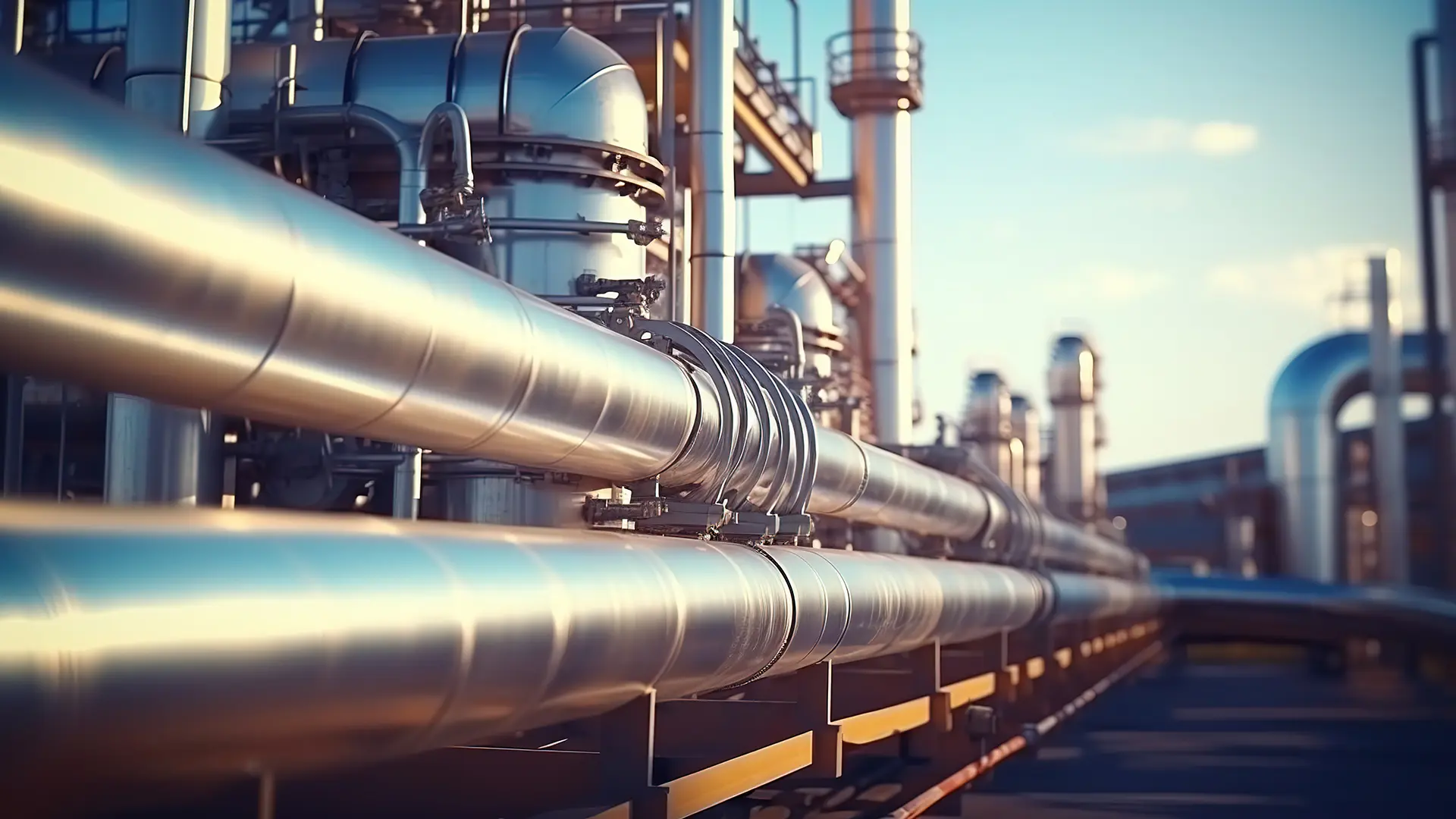
Researched by Industrial Info Resources (Sugar Land, Texas)--There are approximately 53 major natural gas transmission pipeline projects in the U.S. that are in different phases of development or construction or were recently completed. These projects total 4,772 miles of pipeline and are a sign of the continued growth in the use of natural gas even in a market downturn the U.S. is experiencing. The natural gas pipeline sector has had a history of being out of sync with the rest of the economy. Even after the demise of Enron several years ago, many projects then in advanced phases proceeded to the construction phase. In the reverse, as natural gas prices began to rise in the 2000 to 2004 time frame, it still took several years for the pipeline industry to become active again. This time lag is a natural supply-and-demand price function, and this is no different today than it was eight years ago.
The projects represent a large increase in pipeline mileage in very large 30-inch-, 36-inch- and 42-inch-diameter pipeline. These projects also represent an additional 36.78 billion cubic feet per day (Bcf/d) of transmission capacity. The majority of these projects are proceeding through the development process with little fallout even given the current market environment. Many of the companies developing these projects have a healthy cash flow and are not as susceptible to the tightening of the credit markets like other industries.
Of the 53 projects, eight have been completed, representing 1.06 Bcf/d in capacity. Six projects representing 7.19 Bcf/d are currently under construction. Two projects are currently in a holding status totaling 1.38 Bcf/d of capacity. The remaining 37 projects are in different stages of planning, permitting and engineering and represent the balance of 27.16 Bcf/d in natural gas transmission capacity.
The projects are spread over the Southeast, Northeast & New England, the Midwest, the Rocky Mountain & Southwest regions and the long-awaited Alaska pipeline project that, in itself, could represent 4.5 Bcf/d in capacity.
The Southeast region has had the majority of the work in recent years with 18 projects representing 11.47 Bcf/d of capacity. Much of this work was attributed to developing pipelines to move increased natural gas production volumes in northeastern Texas, northern Louisiana and Oklahoma to interconnections with mainlines moving natural gas to the Atlantic Coast of the U.S. The Northeast and New England account for nine projects representing 7.94 Bcf/d; the Midwest accounts for 14 projects with 5.45 Bcf/d of capacity; and the Rocky Mountains & Southwest regions account for 14 projects and an additional 7.02 Bcf/d in capacity.
Much of this work is still in progress at this time and it will be interesting to see where the development cycle goes after this round of unprecedented natural gas pipeline construction. Will the cycle tone down and remain so for the next five years after that or will the new slate of natural-gas-fired base-load power generation plants due for construction begin a new cycle of new development? As many as 900 of the next 1,000 electrical generation power plants to be constructed could be fueled by natural gas. If that does come to pass, it could not only drive the E&P side of the natural gas industry, but it would have a major effect on pipeline construction. A tertiary side of natural gas power plant construction would be an increase in demand of liquefied-natural-gas (LNG) cargos to supplement natural gas supplies, and that would lead to direct competition with LNG markets in Europe and Asia. In short, many think the construction cycle will crest in 2011 and 2012, but an outside force like the construction of natural-gas-fired power plants as an interim measure before more nuclear base-load generation can come online could change the whole picture as long as coal does not come back into favor.
Industrial Info Resources (IIR) is a marketing information service specializing in industrial process, energy and financial related markets with products and services ranging from industry news, analytics, forecasting, plant and project databases, as well as multimedia services.
/news/article.jsp
false
Want More IIR News Intelligence?
Make us a Preferred Source on Google to see more of us when you search.
Add Us On GoogleAsk Us
Have a question for our staff?
Submit a question and one of our experts will be happy to assist you.

Forecasts & Analytical Solutions
Where global project and asset data meets advanced analytics for smarter market sizing and forecasting.
Learn MoreRelated Articles

Industrial Project Opportunity Database and Project Leads
Get access to verified capital and maintenance project leads to power your growth.
Learn MoreIndustry Intel
-
2026 Regional Chemical Processing OutlookOn-Demand Podcast / Mar. 2, 2026
-
From Data to Decisions: How IIR Energy Helps Navigate Market VolatilityOn-Demand Podcast / Nov. 18, 2025
-
Navigating the Hydrogen Horizon: Trends in Blue and Green EnergyOn-Demand Podcast / Nov. 3, 2025
-
ESG Trends & Challenges in Latin AmericaOn-Demand Podcast / Nov. 3, 2025
-
2025 European Transportation & Biofuels Spending OutlookOn-Demand Podcast / Oct. 27, 2025