Pipelines
Follow the Middle East Pipelines
Take for instance the pipeline which is currently undergoing a $70 million dollar extension linking the Egyptian city of Taba with Jordan's port city of Aqaba on which will begin in March...
Released Tuesday, February 11, 2003
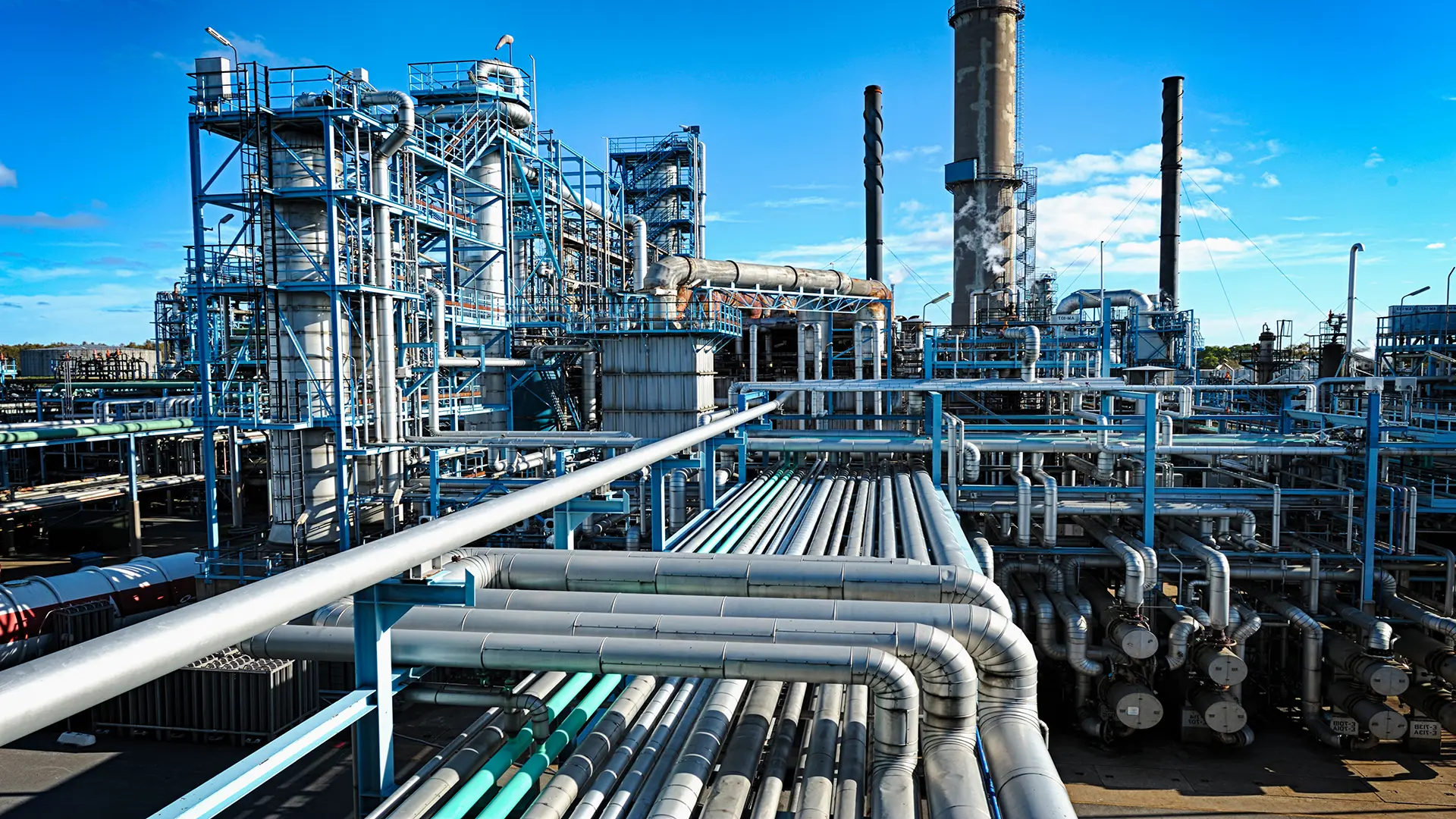
Industrialinfo.com (Industrial Information Resources Incorporated; Houston, Texas). Some might judge the future of the Middle East on the size and effectiveness of various palace guard contingents and their ability to appear and disappear, but perhaps a more solid indicator is the progress of pipelines and projects in the pipeline that appear to cross sensitive political frontiers with a brusque indifference to the political flavor of the year.
Take for instance the pipeline which is currently undergoing a $70 million dollar extension linking the Egyptian city of Taba with Jordan's port city of Aqaba on which will begin in March by the Allseas group (Denis, Switzerland) and be completed in June according to the Egyptian ministry of energy and mineral resources.
The natural gas transported by the pipeline will be used by the Aqaba thermal power station as a power source for the production of the station's 650 MW that represents about 40% of Jordan's total present capacity of 1,500 MW. This section of the pipeline is being financed by the Arab fund for Economic and Social Development and the Kuwaiti Development Fund. Jordan's energy demand is expected to grow at a rate of 3% annually over the next decade. Supplies are scheduled to commence at a rate of 1,100 million cubic meters a year by the end of 2003, rising to 3,500 million cubic meters a year after 10 years.
An Egyptian consortium that includes the national Egypt Holding Gas, GASCO (Saratosa, Florida), the Egyptian national offshore company Petrojet, and Emppi will extend the pipeline from Aqaba to power stations in the northern parts of Jordan. The project will be implemented on a build-own-operate-transfer (BOOT) basis.
In 2002, energy ministers from Egypt, Jordan, Syria, and Lebanon laid the groundwork for a joint company to act as regulatory body to supervise the distribution of gas owned by the four countries. They see the pipeline as 'a strategic project'. Parallel to this a gas pipeline linking the four countries was proposed which has now grown larger horizons whereby Egypt's proven gas reserves, estimated at more than 56 trillion cubic feet, will provide supplies to Jordan, Lebanon, Syria, Cyprus, and European states such as Turkey, Romania and, Bulgaria.
The Middle Eastern portion of the project is scheduled for completion by the end of 2005 or early 2006 and is estimated to cost a total of $700 million. The Jordan section will cost $250 million and the Jordan-Syria section is estimated at $300 million.
According to the protocol signed by Egypt, Jordan, Syria, and Lebanon in 2002, all four countries have to agree first before adding any new country to the gas project. This statement was made in response to an enquiry concerning Israel's possible participation in the pipeline scheme.
/news/article.jsp
false
Want More IIR News Intelligence?
Make us a Preferred Source on Google to see more of us when you search.
Add Us On GoogleAsk Us
Have a question for our staff?
Submit a question and one of our experts will be happy to assist you.

Forecasts & Analytical Solutions
Where global project and asset data meets advanced analytics for smarter market sizing and forecasting.
Learn MoreRelated Articles

Industrial Project Opportunity Database and Project Leads
Get access to verified capital and maintenance project leads to power your growth.
Learn MoreIndustry Intel
-
2026 Regional Chemical Processing OutlookOn-Demand Podcast / Mar. 2, 2026
-
From Data to Decisions: How IIR Energy Helps Navigate Market VolatilityOn-Demand Podcast / Nov. 18, 2025
-
Navigating the Hydrogen Horizon: Trends in Blue and Green EnergyOn-Demand Podcast / Nov. 3, 2025
-
ESG Trends & Challenges in Latin AmericaOn-Demand Podcast / Nov. 3, 2025
-
2025 European Transportation & Biofuels Spending OutlookOn-Demand Podcast / Oct. 27, 2025