Pipelines
Marcellus Shale Could Change the Face of Pipeline Construction in the U.S. Northeast
In the past several years the Marcellus Shale formation has gained increasing importance as a natural gas and liquids producing region.
Released Monday, February 15, 2010
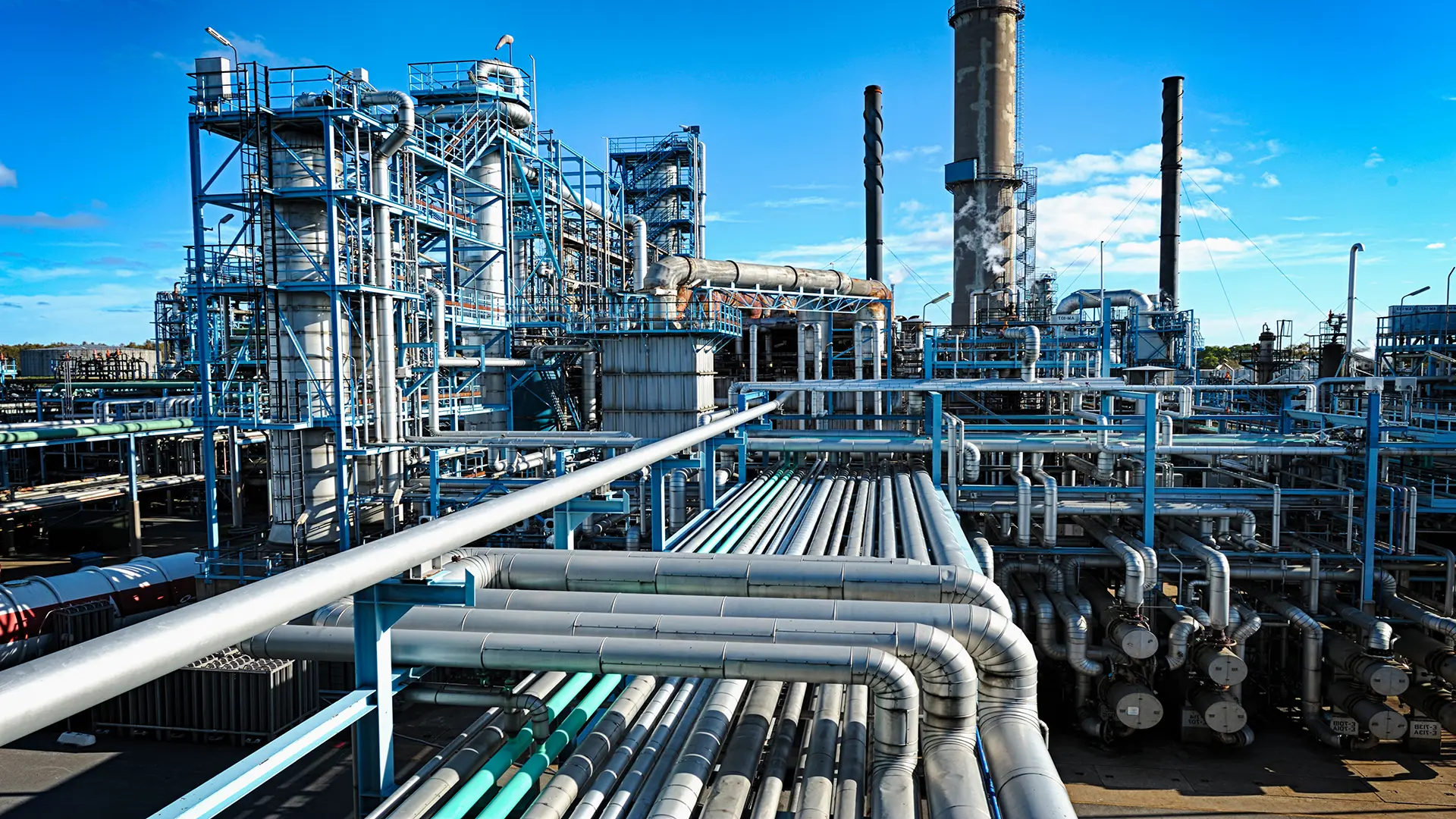
Researched by Industrial Info Resources (Sugar Land, Texas)--In the past several years the Marcellus Shale formation has gained increasing importance as a natural gas and liquids producing region. Located across the states of New York, Pennsylvania, Ohio, West Virginia and parts of Virginia, the Marcellus Shale is at the northern end of the Devonian Black Shale Succession, and what lies beneath the ground is now commonly thought to be approximately 500 trillion cubic feet of natural gas and associated hydrocarbon liquids locked within the rock. Estimates go as high as 1,300 trillion to 1,600 trillion cubic feet of natural gas in place, which would make it even larger than the 900 trillion-cubic-foot North Field in Qatar, which is helping fuel Qatar's growth to 77 million tons of liquefied natural gas (LNG) production by the end of 2010.
To put the size of the Marcellus Shale in perspective, the unconventional resource of the Marcellus Shale would increase the planet's 5,000 trillion cubic feet of proven natural gas reserves by 10% to 32%.
Shales like the Marcellus can be developed rather quickly if the Barnett Shale is any sign of things to come. The major development activity in the Barnett Shale began less than a decade ago, and the Barnett Shale now supplies almost 10% of the total natural gas demand in the U.S. The development of the Barnett Shale also spurred many billions of dollars in spending for drilling, processing, and gathering. In addition to this, several multibillion-dollar transmission pipelines were constructed to provide the producers of the Barnett with access to the U.S. gas pipeline grid, and therefore the natural gas market itself. If the development in the Marcellus continues unabated, the same billions in development dollars will flow into the region and surrounding areas.
Producers like MarkWest Energy (NYSE: MWE) (Denver, Colorado), one of the biggest producers in the Marcellus Shale, are already targeting a production rate of between 1.3 billion and 1.5 billion cubic feet per day of natural gas with associated liquids by the fourth quarter of 2012. MarkWest has targeted an additional $400 million in capital for its operations in 2010.
Other companies that have taken an interest in the production side of the Marcellus Shale read like a who's who of the natural gas industry and a who's who of the companies that developed the Barnett Shale. These companies include Chesapeake Energy (NYSE:CHK), Anadarko Petroleum (NYSE:APC), XTO Resources (NYSE:XTO), Exco Resources (NYSE:XCO), EOG Resources (NYSE:EOG), Penn Virginia (NYSE:PVA), Range Resources (NYSE:RRC), Equitable Resources (NYSE:EQT), CNX Gas (NYSE:CXG), Cabot Oil & Gas (NYSE:COG), Rex Energy (NASDAQ:REXX), Dominion Resources (NYSE:D), Marathon Oil (NYSE:MRO), Atlas Energy Incorporated (NASDAQ:ATLS), Talisman Energy (NYSE:TLM) and several others.
As these companies spend resources to increase the production of the Marcellus Shale, there will have to be development on the natural gas pipeline grid to export this new production to the semi-isolated consumption markets of the Northeast, Midwest and New England. Existing major pipeline systems like Tennessee Gas Pipeline Company, which has a capacity of 6.7 billion cubic feet per day and is owned by El Paso Corporation (NYSE:EP); 7.3 billion-cubic-feet-per-day Texas Eastern Transmission Company, owned by Spectra Energy (NYSE:SE); Transcontinental Gas Pipe Line Company, owned by Williams Companies Incorporated (NYSE:WMB); and the Dominion Transmission Corporation, owned by NiSource (NYSE:NI), do not have the spare capacity to move what will surely be increasing production volumes. These pipeline companies will have to expand their existing pipeline systems, and these and other companies will construct entirely new pipeline systems to provide the growing volumes of natural gas and liquids access to markets. Some of these companies are already planning expansion projects. For example, Texas Eastern Transmission Company is planning the Texas Eastern to Appalachia Market Expansion Program, or TEAM Project, designed to provide an additional 700 million cubic feet per day in takeaway capacity by late 2013.
Of the four major regional pipeline companies mentioned above, with the exception of Dominion, all source the majority of their natural gas from the historical southern production areas of Texas, Louisiana, Oklahoma and the Gulf of Mexico. This is bound to change as production from the Marcellus Shale increases and the new pipeline infrastructure is put into place to move natural gas from the Marcellus to the Northeast, New England and the Midwest. In the long run, the Marcellus will change future natural gas pipeline projects from the expected pipeline expansions originating along the Gulf Coast and running to the Northeast and New England to regional expansions originating in the Marcellus Shale itself and terminating in these demand areas.
The Marcellus Shale development could also cast a long-term question of what is going to be done with the multiple LNG-receiving projects that were constructed along the Gulf Coast with the idea of transporting a portion of that imported natural gas to the Northeast & New England. In short, the Marcellus Shale will most likely cause a major shift in the location of many billions of dollars to be spent in pipeline construction and expansions from the South to the areas north of the Marcellus Shale.
Industrial Info is currently tracking the progress of more than 70 pipeline, compressor station, and gas production plant projects located in the states of West Virginia, Pennsylvania, New York, Ohio and Virginia that are scheduled to begin construction in February 2010 and beyond. These projects, totaling more than $3 billion, are being developed by Columbia Gas, Dominion, Equitrans Incorporated, Inergy LP, Kinder Morgan Energy Partners LP, National Fuel Gas, Norse Energy, Spectra Energy, Tennessee Gas Pipeline Company, Texas Eastern Transmission Corporation, and Transcontinental Pipe Line Company. The projects being proposed by these companies include the Columbia Penn, Sentinel Expansion, TEMAX, TIME III, Tioga Extension, TGP Line 300, the TEAM projects, West-to-East Appalachian Lateral, Appalachian Gateway, New Penn, Keystone Connector and Equitrans. These projects will cost many billions of dollars to place into service and will change the way the Northeast and New England markets receive their natural gas.
Industrial Info Resources (IIR) is the leading provider of global market intelligence specializing in the industrial process, heavy manufacturing and energy related markets. For more than 26 years, Industrial Info has provided plant and project opportunity databases, market forecasts, high resolution maps, and daily industry news.
/news/article.jsp
false
Want More IIR News Intelligence?
Make us a Preferred Source on Google to see more of us when you search.
Add Us On GoogleAsk Us
Have a question for our staff?
Submit a question and one of our experts will be happy to assist you.

Forecasts & Analytical Solutions
Where global project and asset data meets advanced analytics for smarter market sizing and forecasting.
Explore Our SolutionsRelated Articles
-
Americas Offset Some Middle East Oil Supply IssuesSeptember 22, 2026
-
U.S. Refineries to Run Lower Amid Regular Maintenance PeriodSeptember 18, 2026
-
Climate Risk Emerges as Power-Plant Design QuestionSeptember 18, 2026
-
Saudi Arabia Yanbu Refinery Still Operating, Industrial Info...September 17, 2026
-
EU Breaking Away from Russian Gas, IEA FindsSeptember 16, 2026

PECWeb Global Market Intelligence Platform
Identify opportunities, anticipate change, and execute with confidence. PECWeb connects the industrial intelligence you need, from projects and assets to operational events, all in one platform.
Discover PecwebIndustry Intel
-
2026 US Data Center Outlook: Power, Land & CoolingPodcast Episode / Sep 18, 2026
-
2026 Global Power Demand Outlook: Gas, Nuclear & RenewablesPodcast Episode / Sep 18, 2026
-
2026 Oil & Gas CapEx Outlook: Middle East, LNG & PermianPodcast Episode / Sep 4, 2026
-
The Answer Age Starts with Trusted Data: Introducing IIR Envoy™ MCPPodcast Episode / Sep 1, 2026
-
European Chemicals and Transport Fuels OutlookPodcast Episode / Jul 10, 2026