Metals & Minerals
MINExpo 2016 Opening Session: Innovation Key to Surviving Market Conditions
The mining industry can thrive by focusing on innovation and perception.
Released Wednesday, September 28, 2016
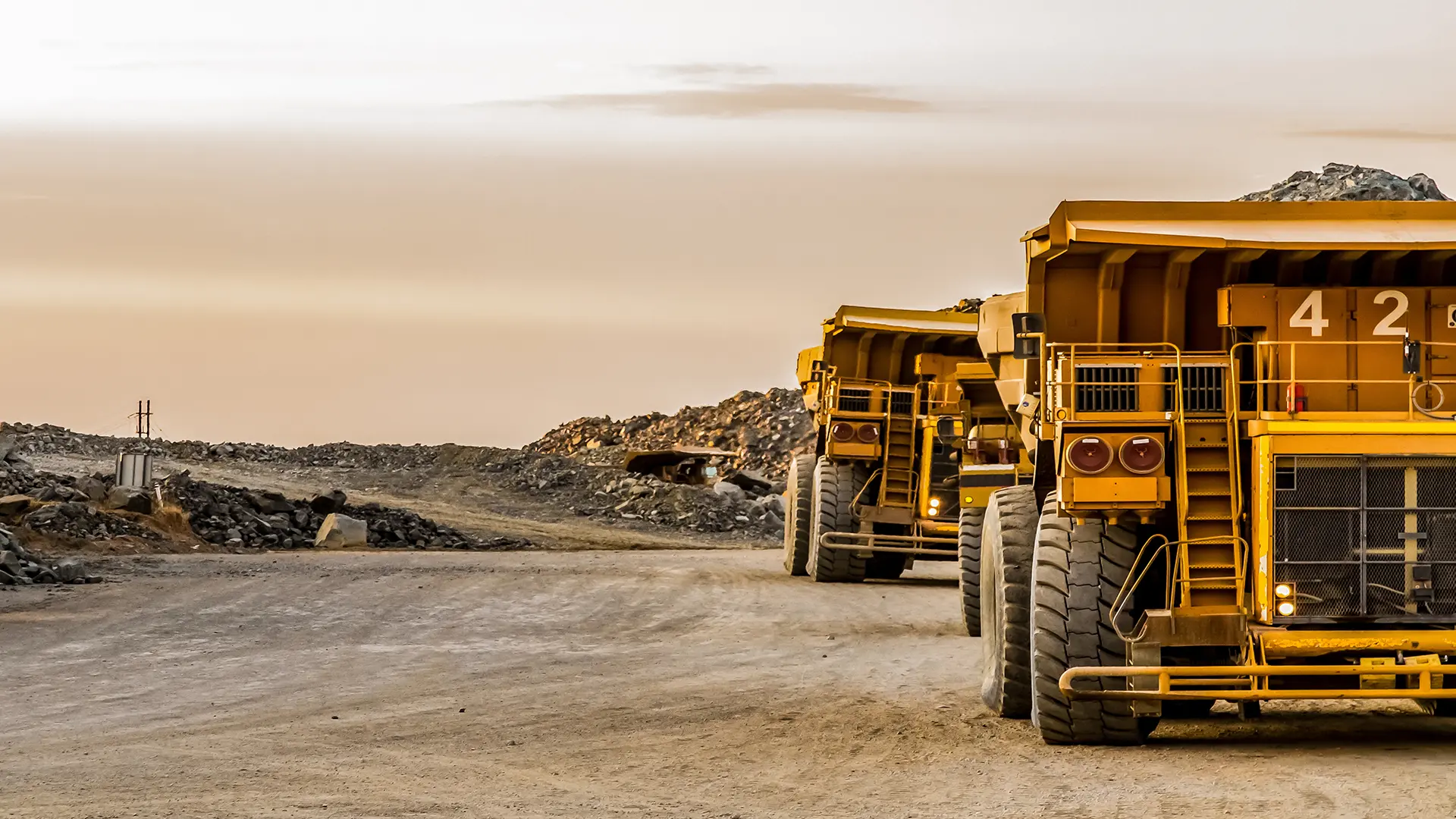
Researched by Industrial Info Resources (Sugar Land, Texas)--Mining Industry leaders at the MINExpo International opening session discussed ways to not only survive a tough economic environment, but how to thrive by focusing on innovation and perception.
Ted Doheny, president and chief executive officer of Joy Global Incorporated (NYSE:JOY) (Milwaukee, Wisconsin), acknowledged at the Monday opening that the mining industry is going through tough times, with significant reductions in people and equipment. "The bright spots, the word from our customers is that they are less pessimistic now," he said, adding there is hope that the cyclical business may have already hit the bottom and may be heading for a rebound.
Doheny said the company is still managing costs and being extremely cautious. Joy Global is in the process of being acquired by Komatsu Limited (Tokyo, Japan), which will result in the mining equipment industry being run by two large companies: Komatsu and Caterpillar Incorporated (NYSE: CAT) (Peoria, Illinois).
This move will result in making the two companies stronger together than they were separately, Doheny said.
Newer applications for gold, silver and copper are creating a refreshed demand for these resources.
"Silver is an interesting commodity," said Phillips S. Baker, Jr., president and chief executive officer of Hecla Mining Company (NYSE:HL) (Coeur d'Alene, Idaho), one of the largest silver producers in the U.S. "We consume twice as much silver as we did 25 years ago. We've been producing silver for 125 years and the outlook for the future of silver operations is the best we've seen in our history."
With increased demand for solar energy, it is predicted that solar panels will require up to 100 million ounces a year of silver, Baker said.
The panel expressed excitement regarding copper and gold use in the medical field.
Harry M. "Red" Conger, president and chief operating officer, Americas and Africa Mining, Freeport-McMoRan Incorporated (NYSE:FCX) (Phoenix, Arizona) stated there have been many studies covering the antimicrobial qualities of copper, namely in use in countertops and bedrails in hospitals and clinics. Viruses that are becoming more and more prevalent will not survive in that environment.
"One unique use for gold is in anti-malaria treatment," said Gary J. Goldberg, president and chief executive officer of Newmont Mining Corporation (NYSE:NEM) (Greenwood Village, Colorado). "That is something that has made a big difference where we have operations. Trace amounts of gold are used in the treatment."
While there are unfortunately no alternative uses for coal (besides for electricity and steel making), said Kevin S. Crutchfield, chief executive officer of Contura Energy, Incorporated (Bristol, Tennessee) there is increased use in developing economies.
"The use of electricity is bringing people out of poverty," Doheny added. "The use of metals and minerals and coal have made them a modern society. We [the U.S. and the advanced economies of other nations] take for granted you flip on a switch and have electricity... and purified water."
At the end of the day, 40% of the world's electricity is from coal, Crutchfield said.
"This whole leave-it-in-the-ground idea is just not practical," he said. "There is no faster way to bring prosperity to an economy than cheap reliable electricity."
While the mining industry as a whole gets a bad rap as far as its perceived environmental impact, Crutchfield said, this is where mining companies need to do a better job of telling the story.
"We have to reposition ourselves to be part of the solution, not perceived as part of the problem," Crutchfield said. He agreed that the mining industry has had its issues, but the reality is there are no stronger environmentalists than those who work in the field.
"We do really care about the environment," he said. "We care how we remediate the land, but there are some folks that just don't like that we exist. They are very organized and talk about coal in the past tense.
The key, the panel agreed, was reaching out to the community for feedback as well as utilizing new technology that is not only more environmentally friendly, but also improves safety and working conditions for workers.
There needs to be more focus on employees rather than incidents.
"People should come home in the same condition they came to work," Crutchfield said. He said more and more industry executives were coming together to focus on core safety.
They all agreed that the industry needs to move away from the acceptance of just lowering number of incidences and injuries per year to expecting zero harm and zero incidences.
"Every one of those 'statistics' is a person, a father or mother with a family," Crutchfield said. We care deeply about that." Engineering safety into the process and giving employees more of a voice will result in better outcomes.
Automation and robotics are being used more and more to ensure safety.
Mines used to have more people walking the face, Doheny said. Now they utilize cameras and remote controlled equipment to keep people out of harm's way. These cameras can be viewed from a protected center. Jobs are not being eliminated, but rather become more technical. He emphasized that the future of this industry will require more intensive training and education.
Conger stated Freeport-McMoRan built a training center in a Native American reservation to help recruit and train local workers and reduce unemployment.
All the panelists recognized the gender gap in the mining workforce, and that more needs to be done push for diversity.
"Fifty percent of all college graduates are women and if we are not getting them, we are missing out," Doheny said.
Industrial Info Resources (IIR), with global headquarters in Sugar Land, Texas, five offices in North America and 10 international offices, is the leading provider of global market intelligence specializing in the industrial process, heavy manufacturing and energy markets. Industrial Info's quality-assurance philosophy, the Living Forward Reporting Principle, provides up-to-the-minute intelligence on what's happening now, while constantly keeping track of future opportunities. Follow IIR on: Facebook - Twitter - LinkedIn. For more information on our coverage, send inquiries to info@industrialinfo.com or visit us online at http://www.industrialinfo.com/.
/news/article.jsp
false
Want More IIR News Intelligence?
Make us a Preferred Source on Google to see more of us when you search.
Add Us On GoogleAsk Us
Have a question for our staff?
Submit a question and one of our experts will be happy to assist you.

Forecasts & Analytical Solutions
Where global project and asset data meets advanced analytics for smarter market sizing and forecasting.
Learn More
Industrial Project Opportunity Database and Project Leads
Get access to verified capital and maintenance project leads to power your growth.
Learn MoreIndustry Intel
-
2026 Regional Chemical Processing OutlookOn-Demand Podcast / Mar. 2, 2026
-
From Data to Decisions: How IIR Energy Helps Navigate Market VolatilityOn-Demand Podcast / Nov. 18, 2025
-
Navigating the Hydrogen Horizon: Trends in Blue and Green EnergyOn-Demand Podcast / Nov. 3, 2025
-
ESG Trends & Challenges in Latin AmericaOn-Demand Podcast / Nov. 3, 2025
-
2025 European Transportation & Biofuels Spending OutlookOn-Demand Podcast / Oct. 27, 2025