Metals & Minerals
Platinum Producers Watch Russian Tactics and Price Spike Prospects
In this scenario South Africa's third largest producer, Lonmin Platinum (JSE:LON) (Johannesburg, South Africa), has fast tracked new open cast mines to fill the looming...
Released Friday, February 07, 2003
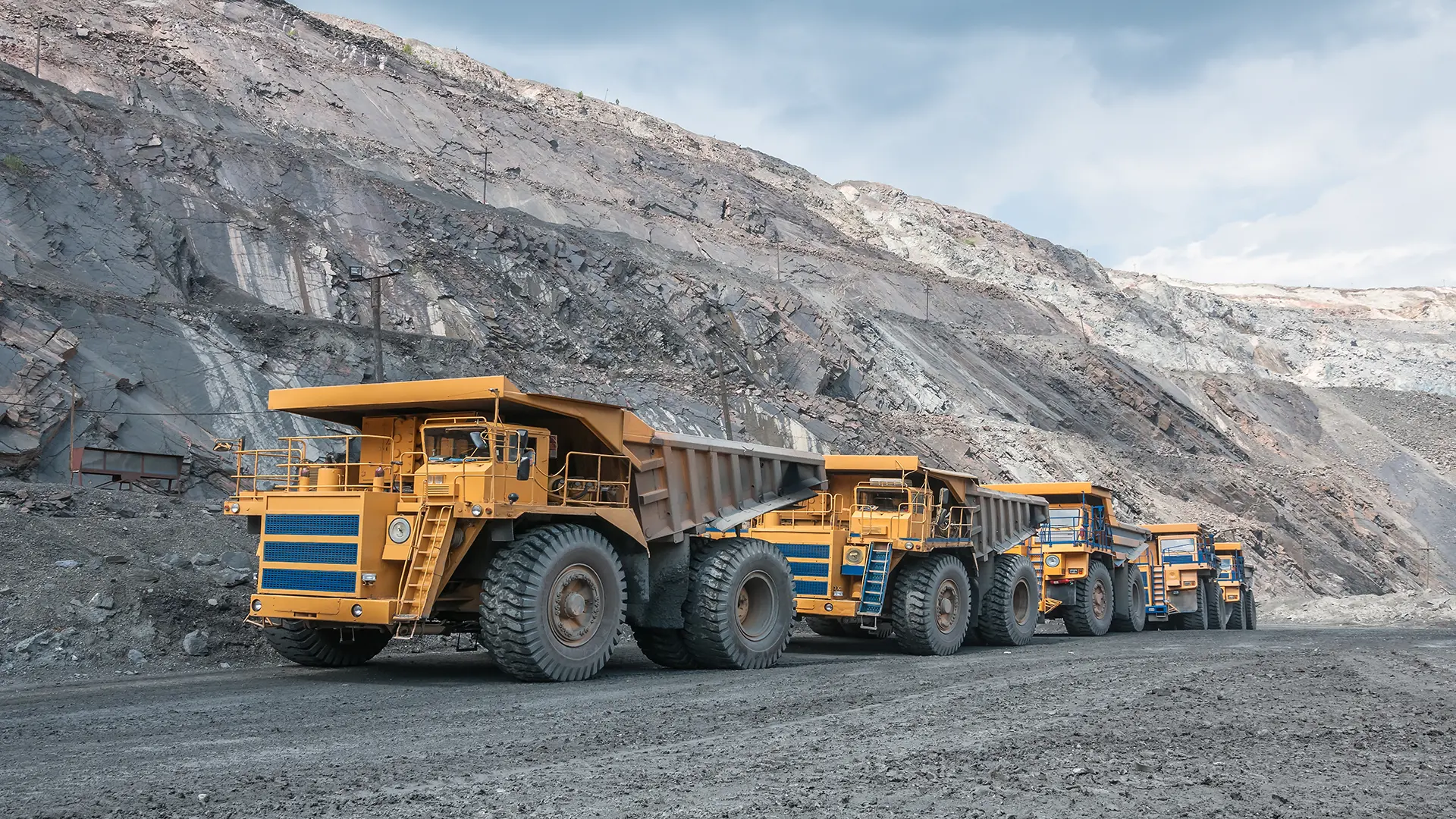
Researched by Industrialinfo.com (Industrial Information Resources, Incorporated; Houston, Texas). Platinum producers are thinking market tactics at the moment but continue to fast-track mining operations and identify new ore bodies. As the price of platinum rose to $698/oz (the highest price for 22 years) in London in the first days of February there were rumors and counter rumors that the Russians, the world's second largest platinum group metal (PGM) producer after South Africa, were stockpiling with a view to cashing in on ever rising prices and also attempting to reinvigorate palladium sales which had slumped from $1,110/oz in the first month of 2001 to $264/oz in the first week of February. Platinum has ousted palladium as the metal of choice for automakers targeting cleaner emissions in diesel and petrol engines and the new breed of hybrids using hydrogen and other renewable replacement fuels and technologies.
In this scenario South Africa's third largest producer, Lonmin Platinum (JSE:LON) (Johannesburg, South Africa), has fast tracked new open cast mines to fill the looming supply gap as Russia's sales through Zurich dwindle. The opencast operations have come into production in the Rustenberg area, north of Johannesburg, only 14 months after the go ahead was given by the Lonmin board. Two modern computerized concentrator plants have been achieving processing availabilities of up to 98%.
The entire $60 million opencast project is set to provide between 115,000 and 120,000 ounces per annum.
Lonmin Platinum's underground mines have also been going for maximum production. Overall production targets from all operations are on schedule for a total of 840,000 ounces in the financial year to September 2003, which is 11% above the 2002 figure. This target was revised down by 3.4% from 870,000 ounces following an explosion in the company's smelter. But the two concentrator plants, commissioned in October 2002, are beating nominal design capacity. In November they milled 245,000 tons compared to a design specification of 240,000 tons. The new plants are highly automated and controlled entirely by programmable logic controllers.
If the market price of platinum stays strong, open cast mining could continue beyond the current 30 month plan. There is a 2 million ton opencast reserve on the Merensky resource horizon.
The opencast operations are giving Lonmin time to complete large scale vertical shaft sinking projects that will eventually replace opencast production. With recoveries at 55% to 60% from highly oxidized ore obtained 30-40 meters below the surface, Lonmin is confident that it will be able to provide 115,000 oz to 120,000 oz from opencast mines where oxidization will decrease as the pit deepens. On underground ore there is an 85% recovery. The grade of the opencast ore is 4.7g/ton and the grade of the underground ore is 5.25g/ton. The grand overall target for Lonmin Platinum is to produce a million ounces of platinum per annum by 2008.
South Africa produced 51% of the world's supply of PGM in 2001. Sales at $3.5 billion made up 11.2% of the country's exports.
The threat of a strike at Russia's Norilsk plants, Anglo Platinum (Angloplat) (JSE,LSE:AMS) (Johannesburg, South Africa), the world's leading platinum producer, altering its near term production targets, George Bush's funding support for fuel cell vehicles and low sales in Zurich are causing analysts to warn of the possibility of a stock shortage and a price spike for the metal. Angloplat has said that it will meet its production target of 3.5 million oz by 2006, but the timing of production on certain areas would change, resulting in less platinum than expected being produced up to 2005.
/news/article.jsp
false
Want More IIR News Intelligence?
Make us a Preferred Source on Google to see more of us when you search.
Add Us On GoogleAsk Us
Have a question for our staff?
Submit a question and one of our experts will be happy to assist you.

Forecasts & Analytical Solutions
Where global project and asset data meets advanced analytics for smarter market sizing and forecasting.
Learn More
Industrial Project Opportunity Database and Project Leads
Get access to verified capital and maintenance project leads to power your growth.
Learn MoreIndustry Intel
-
2026 Regional Chemical Processing OutlookOn-Demand Podcast / Mar. 2, 2026
-
From Data to Decisions: How IIR Energy Helps Navigate Market VolatilityOn-Demand Podcast / Nov. 18, 2025
-
Navigating the Hydrogen Horizon: Trends in Blue and Green EnergyOn-Demand Podcast / Nov. 3, 2025
-
ESG Trends & Challenges in Latin AmericaOn-Demand Podcast / Nov. 3, 2025
-
2025 European Transportation & Biofuels Spending OutlookOn-Demand Podcast / Oct. 27, 2025