Metals & Minerals
South Korea's STX Heavy Industries Wins $3 Billion Contract to Build Steel and Power Plant in Iraq
Korean engineering and construction major STX Heavy Industries has secured a contract worth $3 billion to build a 3 million-ton-per-year steel plant and a 500-megawatt, gas-fired power plant...
Released Friday, February 12, 2010
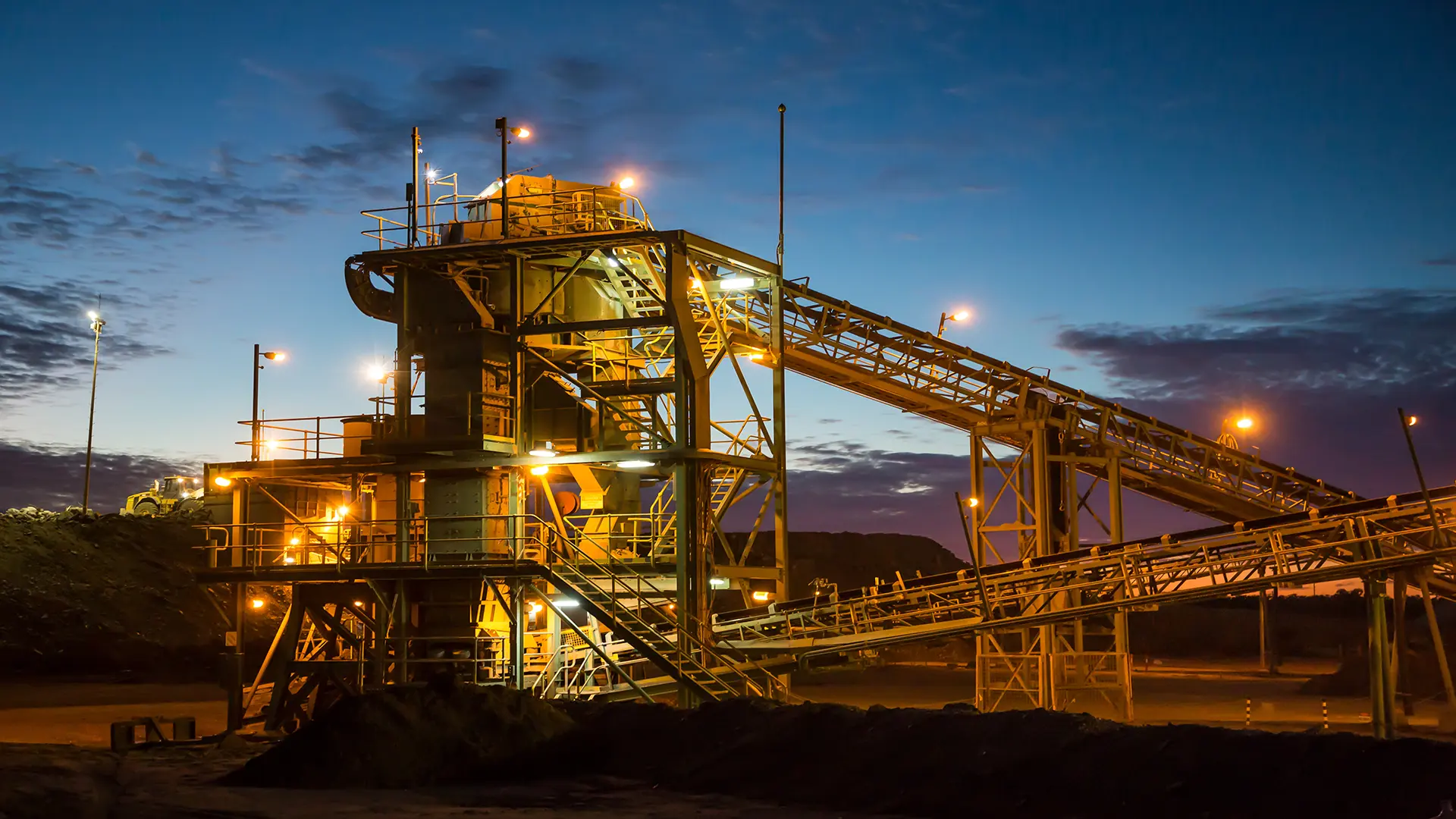
Researched by Industrial Info Resources (Sugar Land, Texas)--Korean engineering and construction major STX Heavy Industries (Gyeongsangnam-Do, South Korea), a subsidiary of STX Corporation (SEO:011810) (Gyeongsangnam-Do, South Korea), has secured a contract worth $3 billion to build a 3 million-ton-per-year steel mill and a 500-megawatt (MW) gas-fired power plant in the southern region of Iraq. The steel mill will manufacture 1.2 million tons per year each of hot rolled products and iron bars, and 600,000 tons per year of section steel.
The projects, which will be located in Basra, will be executed by STX Heavy Industries on a turnkey basis and operated by the Iraqi government. The steel mill reportedly will be managed and operated by State Company of Iron and Steel (Basra).
Construction of the steel and power plant is likely to be completed in two phases. STX Heavy Industries will receive 40% of its contract fee from the state during the first stage of construction. The remainder is expected to be arranged through international funding.
This is the first time that STX Heavy Industries is participating in infrastructure development projects in the war-torn country. STX Heavy Industries operates seven business divisions covering cement, water treatment, processing, power, shipbuilding, engineering and steel. In September 2009, the firm secured a $200 million contract to build a steel mill at Jazan, in Saudi Arabia.
For three decades, war has ravaged Iraq's economy and infrastructure. The country's basic infrastructure and amenities are in shambles. International trade embargoes and lack of financial aid have left Iraq's industrial and manufacturing facilities in a derelict state. The power plants in the country, which were built in the 1970s and 1980s, operate below optimal efficiency levels due to a lack of available spare parts and routine maintenance. Destruction of about 70% of the country's power generating capacity during the wars in 1991 and 2003 has resulted in Iraq becoming a net importer of electricity. As of September 2009, Iraq's power generating capacity was about 7,500 MW against a demand of 12,000 MW. With demand for steel estimated at 8 million tons per year and demand for electricity increasing at an annual rate of 15%, Iraq is taking concrete steps to avert a long-term economic crisis.
The government, which is aiming to add at least 12,000 MW of power generation capacity in the next couple of years, has signed large gas turbine deals with Siemens AG (NYSE:SI) (Munich, Germany) and General Electric Company (NYSE:GE) (Fairfield, Connecticut). According to reports, these deals, which were stalled due to financing issues, are now back on track.
In September last year, the government awarded two contracts, each worth $85 million, to URUK Engineering Services (Dubai, United Arab Emirates) and SNC-Lavalin Group Incorporated (TSX:SNC) (Montreal, Canada) to install gas turbines in existing power plants in the country. URUK Engineering will install four gas turbines of 40 MW each at the Taji power plant, while SNC-Lavalin will install two gas turbines of 125 MW each at the Hilla power plant. SNC-Lavalin and URUK Engineering will complete their contracts within 18 months and 15 months, respectively.
Recently, Iraq's State Directorate of Industrial Development sanctioned 185 new permits worth $27.8 million for projects in the food, construction, textiles, wood and industrial sectors. The construction and food sectors secured 49 and 48 permits, respectively.
In a related development, the Iraqi government and the United Nations (UN) have agreed to work together to strengthen the country's economic, social and industrial growth. The program, to be known as United Nations Development Assistance Framework (UNDAF), will include participation from academia, government and civil agencies, international funding agencies, and UN affiliates. The program, which is likely to be rolled out in 2011, will support and complement Iraq's five-year national development plan for 2010-14, which envisages an investment of $200 million to improve the country's economic, social and industrial growth. The UNDAF agreement is expected to be signed this year.
Industrial Info Resources (IIR) is the leading provider of global market intelligence specializing in the industrial process, heavy manufacturing and energy related markets. For more than 26 years, Industrial Info has provided plant and project opportunity databases, market forecasts, high resolution maps, and daily industry news.
/news/article.jsp
false
Want More IIR News Intelligence?
Make us a Preferred Source on Google to see more of us when you search.
Add Us On GoogleAsk Us
Have a question for our staff?
Submit a question and one of our experts will be happy to assist you.
Forecasts & Analytical Solutions
Where global project and asset data meets advanced analytics for smarter market sizing and forecasting.
Learn More
Industrial Project Opportunity Database and Project Leads
Get access to verified capital and maintenance project leads to power your growth.
Learn MoreIndustry Intel
-
2026 Regional Chemical Processing OutlookOn-Demand Podcast / Mar. 2, 2026
-
From Data to Decisions: How IIR Energy Helps Navigate Market VolatilityOn-Demand Podcast / Nov. 18, 2025
-
Navigating the Hydrogen Horizon: Trends in Blue and Green EnergyOn-Demand Podcast / Nov. 3, 2025
-
ESG Trends & Challenges in Latin AmericaOn-Demand Podcast / Nov. 3, 2025
-
2025 European Transportation & Biofuels Spending OutlookOn-Demand Podcast / Oct. 27, 2025