Power
Wartsila and Hyundai Pick Up $670 Million Projects in Iraq's 'Indefinite' Electrical Power Progress
Towards the end of 2003, USAID announced plans to up power production to 6,000 megawatts (MW) by May 2004 and CEIS, the Iraqi Electricity ministry, targeted an output of 7,000 MW by June this year which would allow a supply of five hours on and...
Released Wednesday, March 31, 2004
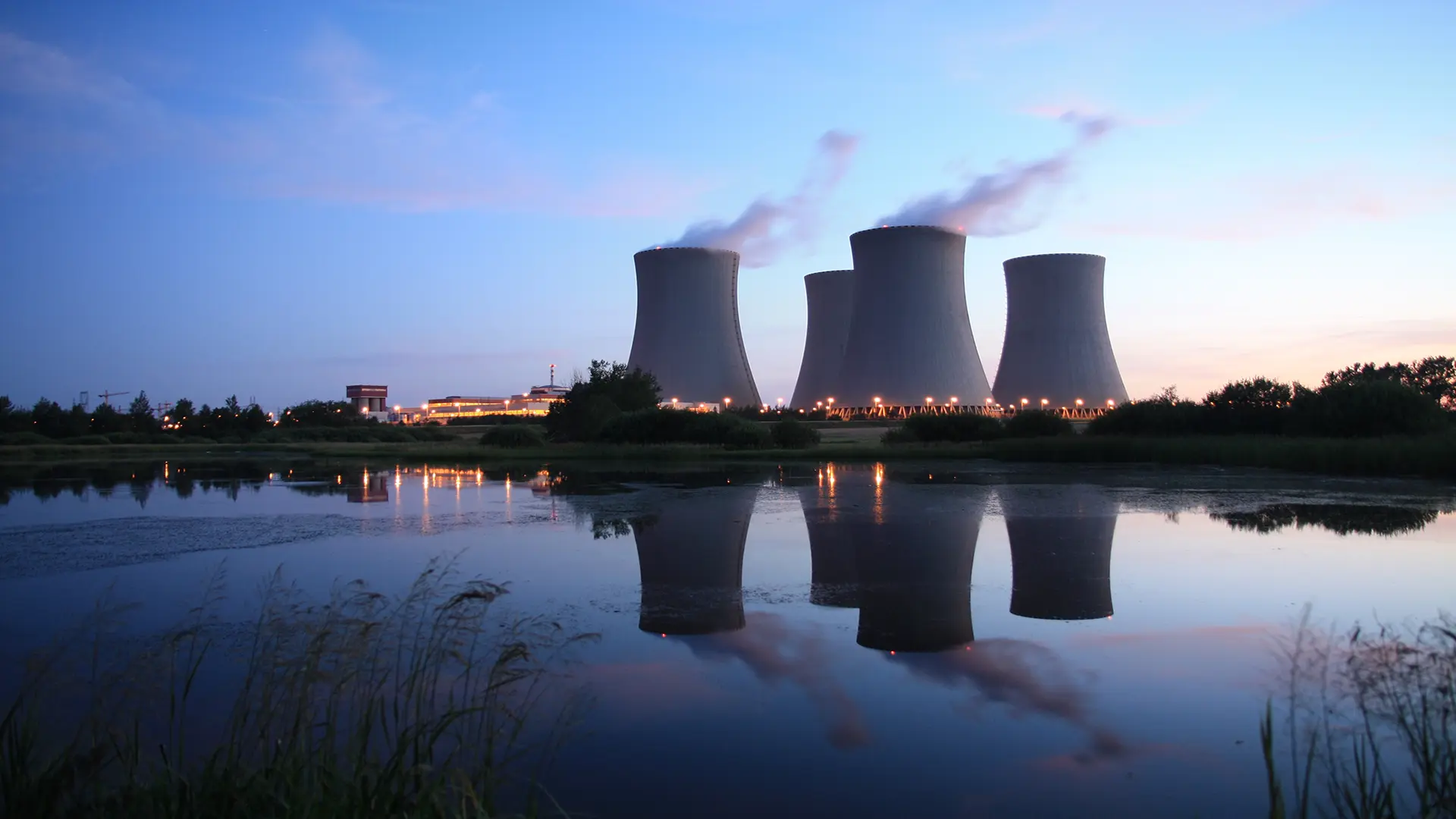
Researched by Industrialinfo.com (Industrial Information Resources Incorporated; Houston, Texas). If there is to be light at the end of the tunnel for Iraq, it is fitting that the electrical power generating sector should be the one to provide power for that light. But for a period of over a decade of war, sanctions, sabotage, corruption, looting, and poor maintenance of obsolete technology has ensured that the country's power industry has been on a hiding to nothing.
Towards the end of 2003, USAID announced plans to up power production to 6,000 megawatts (MW) by May 2004 and CEIS, the Iraqi Electricity ministry, targeted an output of 7,000 MW by June this year which would allow a supply of five hours on and one hour off rationing schedule which would be a dramatic improvement to the three hours on and three off experienced by Iraqis in the later period of 2003.
Prior to the 2003 war, the nameplate capacity of Iraq's stations was around 10,000 MW with thermal capacity at 5,415 MW, gas turbine generated power at 2,181 MW and hydropower providing 2,518 MW. The 10 GW capacity had been degraded by the problems listed above.
The latest entrants into the scenario for providing new power plant are Finlands Wartsila (HELSINKI:WRTAF) (Helsinki, Finland) and Korea's Hyundai. This follows various power supply undertakings by the main coalition partners and Russia's Technoprom that is working on a large thermal plant at Yusufia.
Wartsila has two contracts with Iraq's electricity ministry to provide 341 MW oil-fired power plants with a total value of $450 million. These orders, each consisting of 20 Wartsila 46 engines as prime power generators will be delivered from the company's Trieste factory during 2004 and 2005.
As a partner in a primary $500 million contract, won by The Washington Group International (NASDAQ:WGII) (Boise, Idaho) to assist in the reconstruction of Iraq's electrical infrastructure, Hyundai Construction and Engineering (KSE:000720) (Seoul, Korea) has won $220 million worth of contracts to reconstruct and build power distribution and transmission systems. In addition to the initial contract Hyundai expects to win additional reconstruction orders worth about $160 million.
The 'process of selection' could mean that there was some 'stipulation' that a Korean firm should share the work as Korea had agreed to send 3,000 troops to Iraq and had countered public opposition by saying that the troop deployment could firms secure business in Iraq.
The Electricity ministry also announced in March that it would be building four new power plants with a total capacity of 2114 MW. Minister, Ayham AL Samurai, said that Iran had agreed to supply Iraq with 100 MW of electricity, which would be half paid in cash, and half in oil. He indicated that Iraq's demand for electrical power is 18,000 MW and that the government was continuing to work on the rehabilitation of existing power plants and the construction of new international projects.
In mid-March, WGI made announcements that it had been selected for contracts worth a total of $1.1 billion by the US Department of Defense under the Program Management Office (PMO) of the coalition Provisional Authority to provide design, engineering, and construction services to rebuild water and infrastructure in Iraq ($600 million) and to assist in the reconstruction of electrical infrastructure in the country ($500 million). Under the terms of the water contract WGI is assigned with 70% of the work and Black&Veatch (Overland Park, Kansas) will get 30%.
Currently, WGI is working on eight task orders awarded by the U.S. Army Corps of Engineers under two separate indefinite delivery/indefinite quantity (ID/IQ) contracts in the region. Tasks include refurbishing, converting or installing 13 electrical generators at power plant complexes in northern Iraq, reconstructing 460 kilometers of 400 kilovolt electrical transmission lines near Baghdad and refurbishing a hospital and administrative facilities in Baghdad. ID/IQ contracts have a monetary ceiling but do not identify a specific quantity of services, but set ceilings on the total amount of work that can be awarded during the lifetime of a contract.
WGI and Black and Veatch have been working on Corps of Engineers contracts since 2003.
In 2003, the World Bank estimated that the net financial requirement for the electricity sector in 2004 would be $2.501 billion of which $997 million would come from the Oil for Food program. Further adjustments of all major elements in the budget figure were assumed at the time.
/news/article.jsp
false
Want More IIR News Intelligence?
Make us a Preferred Source on Google to see more of us when you search.
Add Us On GoogleAsk Us
Have a question for our staff?
Submit a question and one of our experts will be happy to assist you.
Forecasts & Analytical Solutions
Where global project and asset data meets advanced analytics for smarter market sizing and forecasting.
Learn More
Industrial Project Opportunity Database and Project Leads
Get access to verified capital and maintenance project leads to power your growth.
Learn MoreIndustry Intel
-
2026 Regional Chemical Processing OutlookOn-Demand Podcast / Mar. 2, 2026
-
From Data to Decisions: How IIR Energy Helps Navigate Market VolatilityOn-Demand Podcast / Nov. 18, 2025
-
Navigating the Hydrogen Horizon: Trends in Blue and Green EnergyOn-Demand Podcast / Nov. 3, 2025
-
ESG Trends & Challenges in Latin AmericaOn-Demand Podcast / Nov. 3, 2025
-
2025 European Transportation & Biofuels Spending OutlookOn-Demand Podcast / Oct. 27, 2025