Production
Biden to Oil Companies: Increase Production or Face Possible Tax Hike
President Joe Biden accused big oil companies of 'war profiteering' and warned they would face higher taxes if they don't reinvest in production and refining capacity
Released Tuesday, November 01, 2022
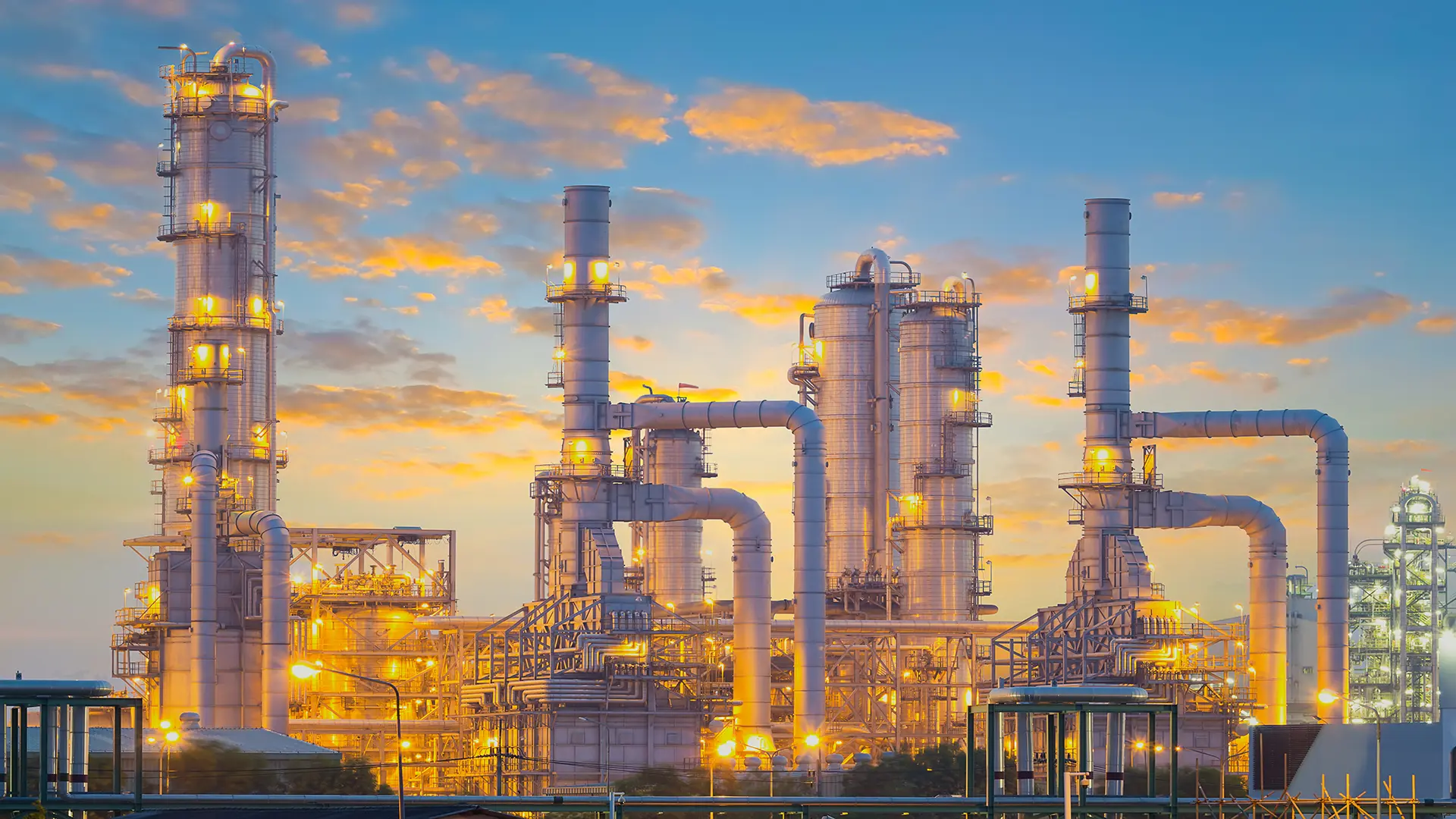
Written by John Egan for Industrial Info Resources (Sugar Land, Texas)--In the face of record third-quarter profits from oil companies, rising inflation, weak approval ratings, and a looming mid-term election, President Joe Biden accused big oil companies of "war profiteering" and warned they would face higher taxes if they don't reinvest in production and refining capacity.
In a Monday afternoon speech, Biden accused oil companies of reaping "outrageous" third-quarter profits as a result of energy supply disruptions caused by Russia's invasion of Ukraine.
"I mean profits so high it's hard to believe," Biden said. He took aim at Shell Plc (NYSE:SHEL) (London, England) and Exxon Mobil Corporation (NYSE:XOM) (Irving, Texas), who saw their profits nearly double and triple, respectively, from a year earlier.
Biden maintained that U.S. gasoline prices dropped from an average of more than $5 per gallon in June to an average of $3.76 per gallon on Monday, but added they could have gone even lower if big oil companies had directed some of their profits into reducing gasoline prices or plowed more earnings back into oil production in the U.S.
Facing an oil and gas industry unwilling or unable to increase production, and diminishing prospects for the Democratic Party to keep its congressional majorities in next week's mid-term elections, Biden ended months of debate within his administration by floating the idea that Congress should look into raising taxes on the largest oil producers unless they increase production, according to White House sources.
A tax increase on big oil companies would require Congressional approval. White House sources emphasized that Biden would recommend Congress consider enacting such a tax if production does not increase. He would not propose it himself: "The President will again call on oil and gas companies to invest their record profits in lowering costs for American families and increasing production," a White House official said in a statement. "And if they don't, he will call on Congress to consider requiring oil companies to pay tax penalties and face other restrictions."
A Republican majority in either the House or the Senate likely would refuse to consider such a measure. Projections about the mid-terms have been a hot topic of speculation, and most observers predict a close election at the national level.
Passage of such a measure in Congress would be a tall order even if the Democrats maintained control. At least 10 GOP votes would now be needed to break a filibuster in the Senate, according to The Hill. Also, not all Democrats were likely to go along with such an initiative.
The American Petroleum Institute (API) wasted little time responding to Biden.
"Rather than taking credit for price declines and shifting blame for price increases, the Biden administration should get serious about addressing the supply and demand imbalance that has caused higher gas prices and created long-term energy challenges, API Chief Executive Officer Mike Sommers said in a press release.
"Today, the president proposed to raise taxes on the U.S. natural gas and oil industry that is competing globally to produce the fuels Americans need every single day. Oil companies do not set prices--global commodities markets do. Increasing taxes on American energy discourages investment in new production, which is the exact opposite of what is needed. American families and businesses are looking to lawmakers for solutions, not campaign rhetoric."
The API said analysis of a windfall profits tax established in 1980 have found that it decreased domestic energy production and increased reliance on imported oil. The trade group said according to the Congressional Research Service, the tax reduced domestic production by as much as 8% from 1980 to 1988 when it was repealed in part because "it made the United States more dependent on foreign oil."
Even before he became president, Biden signaled he was no friend to the oil and gas industry. In contrast to his predecessor's policy of easing regulations on that industry, Biden said he wanted to end hydraulic fracturing on public lands as a step to making the U.S. economy carbon-free by 2050. His signature pieces of legislation, the Bipartisan Infrastructure Investment and Jobs Act of 2021 and the Inflation Reduction Act of 2022 contained billions of dollars in support for electrifying transportation and building a nationwide system of electric vehicle charging stations.
The president has crossed swords periodically with the industry this year, alleging they were making excess profits as high demand for transportation fuels and production constraints around the world drove up retail prices for gasoline and diesel.
That messaging emerged after oil companies posted very high profits after the second quarter of this year, when profits soared at U.S.-based integrated supermajors like ExxonMobil and Chevron Corporation (NYSE:CVX) (San Ramon, California). European-based supermajors like Shell and BP Plc (NYSE:BP) (London, England) also reported strong second-quarter earnings. For more on that, see August 3, 2022, article - Big Oil Q2 Profits Gush as Prices, Margins, Demand Rise.
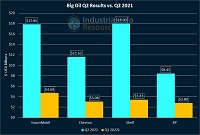
The strong profits of integrated supermajors continued in the third quarter. For the just-completed three-month period, ExxonMobil reported net earnings of $19.7 billion, exceeding its quarter-earlier performance, and Chevron's profits dipped slightly from its second-quarter results, to $11.3 billion from $11 6 billion in the quarter ended June 30.
As oil companies released their third-quarter results in the last week, the president continued to use the bully pulpit to try to talk down fuel prices. That worked to some extent over the summer, when pump prices fell for nearly three consecutive months. But that trend has stalled, and prices started heading back up after the Organization of the Petroleum Exporting Countries (OPEC) and their allies, included Russia, decided to cut crude oil production by 2 million barrels per day, starting in November.
Most analysts attribute sharply higher crude oil and transport fuel costs to Russia's invasion of Ukraine earlier this year. That led to a series of actions where Russian hydrocarbon products were sanctioned by other countries, especially those in the European Union (EU). Reduced global supply, coupled with strong demand growth in the U.S. and elsewhere, created a price squeeze. For more on that, see July 20, 2022, article - Russia's Invasion of Ukraine Upends Energy and Electricity Markets.
U.S. crude oil production has remained flat at about 12 million barrels per day, over a million barrels below its pre-pandemic peak. U.S. oil companies blame flat production and rising profits on a combination of factors: strong demand coupled with labor and materials that remain scarce and are growing more expensive. But the president and his Democratic allies suspect corporate greed is more of a factor.
The outlook of consumers tends to be highly correlated with changes in fuel prices, which they see displayed every day. Rising prices tends to lead to a sour mood among the electorate, which could have dire consequences for Biden as well as the Democrats in Congress. Falling prices this summer correlated with an increase in Biden's approval rating, but stubbornly high inflation has taken the bloom off that rose for the president and his party.
Industrial Info Resources (IIR) is the leading provider of industrial market intelligence. Since 1983, IIR has provided comprehensive research, news and analysis on the industrial process, manufacturing and energy related industries. IIR's Global Market Intelligence (GMI) helps companies identify and pursue trends across multiple markets with access to real, qualified and validated plant and project opportunities. Across the world, IIR is tracking over 200,000 current and future projects worth $17.8 Trillion (USD).
/news/article.jsp
false
Want More IIR News Intelligence?
Make us a Preferred Source on Google to see more of us when you search.
Add Us On GoogleAsk Us
Have a question for our staff?
Submit a question and one of our experts will be happy to assist you.

Forecasts & Analytical Solutions
Where global project and asset data meets advanced analytics for smarter market sizing and forecasting.
Learn MoreRelated Articles
-
Europe's Plan to Combat Fuel CrisisMay 04, 2026
-
Alberta Gets Tax Credits for Enhanced Oil RecoveryMay 01, 2026

Industrial Project Opportunity Database and Project Leads
Get access to verified capital and maintenance project leads to power your growth.
Learn MoreIndustry Intel
-
2026 North American Labor OutlookPodcast Episode / Apr 24, 2026
-
2026 European Metals & Minerals Project Spending OutlookPodcast Episode / Apr 7, 2026
-
The Age of Critical Minerals in the AmericasPodcast Episode / Mar 20, 2026
-
2026 Regional Chemical Processing OutlookPodcast Episode / Mar 6, 2026
-
From Data to Decisions: How IIR Energy Helps Navigate Market VolatilityPodcast Episode / Nov 21, 2025