Metals & Minerals
Abu Dhabi Plans to Become Major Regional Steel Exporter
The Chairman of state-owned Emirates Steel Industries (ESI) (Abu Dhabi, United Arab Emirates), Hussein Jasem Al Nouwais, recently said that the company...
Released Tuesday, June 23, 2009
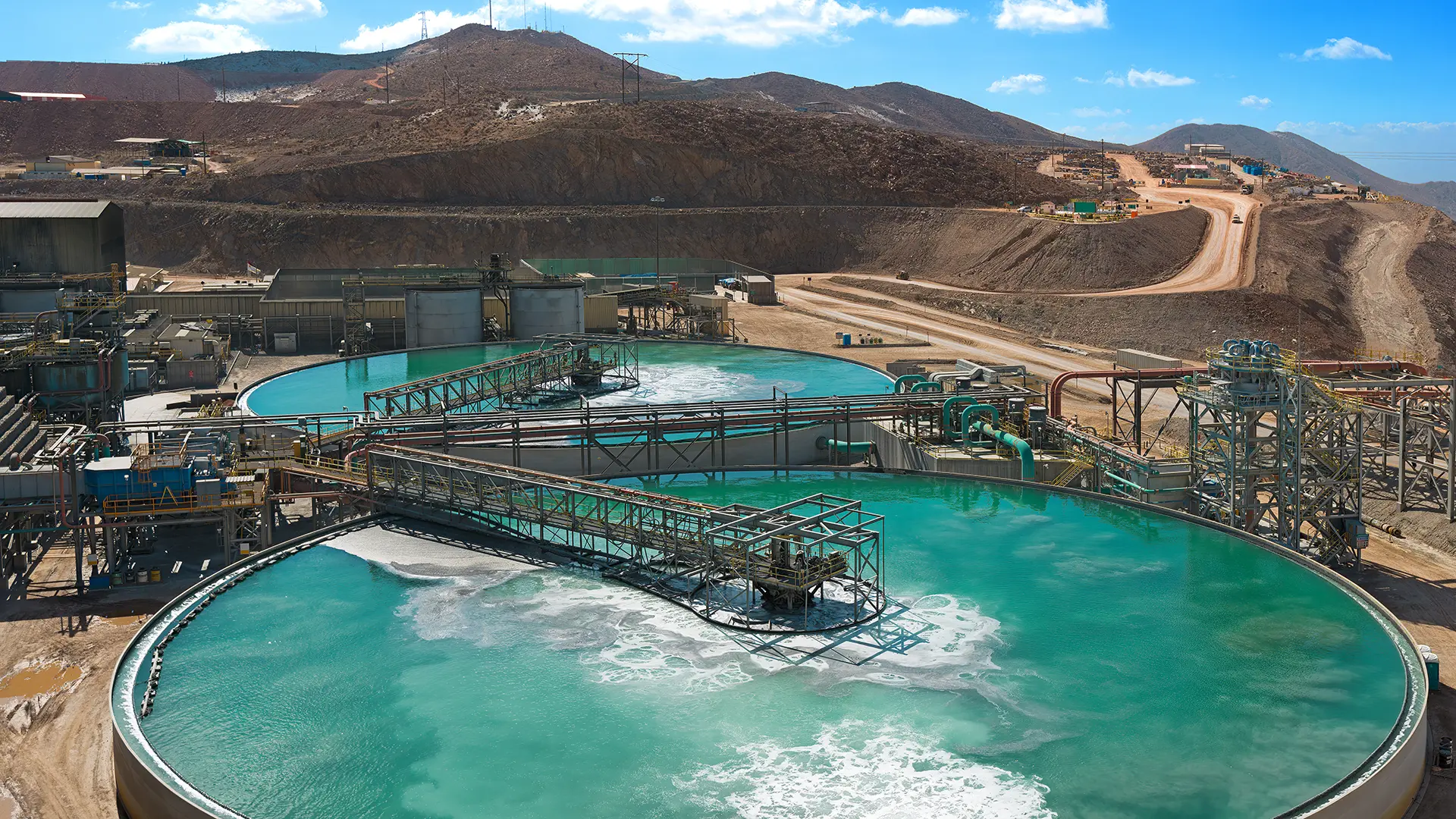
Researched by Industrial Info Resources (Sugar Land, Texas)--The Chairman of state-owned Emirates Steel Industries (ESI) (Abu Dhabi, United Arab Emirates), Hussein Jasem Al Nouwais, recently said that the company would invest $1.63 billion in the second phase of capacity expansion at its steel mill in the Mussafah Industrial Area in Abu Dhabi. The production capacity of the plant will be ramped up from 2 million tons per year to 3 million tons per year. The announcement was officially made by the Crown Prince of Abu Dhabi, General Sheikh Mohammed bin Zayed Al Nahyan, during the inauguration of Phase I of the expansion project. Phase I of the expansion project was launched in 2006 and cost the company about $817 million. Funds were raised through debt, with a 70:30 debt-to-equity ratio. According to Nouwais, ESI will continue to expand the production capacity of its plant and intends to raise it to 6.5 million tons per year by 2014.
With the completion of Phase I, the facility was transformed from a steel-processing and manufacturing unit to United Arab Emirates' first fully integrated steel plant. The facility can now produce raw steel from iron oxide pellets. During Phase I, the production capacity of the plant was expanded from 650,000 tons per year to 2 million tons per year. The plant is now capable of producing 1.4 million tons per year of liquid steel and has a rolling capacity of 2 million tons per year.
Phase II will include the setting up of three mills that will be capable of producing reinforcement bars and wire rods for the construction sector. According to Stephen Pope, Chief Financial Officer and Shared Services Vice- President, work on Phase II is already under way and is scheduled to be completed in 2011. Funds for the project will be raised from shareholder equities, cash inflow and banks. The company intends to borrow approximately $900 million from local, regional and international banks and raise the rest in a 60:40 debt-to-equity ratio. ESI already has $500 million to cover the immediate needs of the project.
Nouwais remarked that the demand for steel was gradually increasing in the entire region but that this demand was still being met by imports from overseas markets. By implementing the capacity expansion plans, ESI hopes to replace the imports and take advantage of the growing market in the region. In fact, the company hopes to export its products to meet the demands of the regional market. At present ESI exports about 5% of its products to the markets of the Gulf Cooperation Council (GCC) countries, which include United Arab Emirates, Saudi Arabia, Qatar, Oman, Kuwait and Bahrain. As part of its expansion plans, ESI also intends to spend about $1 billion during the next two years or so to acquire assets in the steel and iron industry of the nation and the entire region. Nouwais said that ESI was considering a number of such assets but did not disclose any names.
Abu Dhabi owns more than 90% of the United Arab Emirates' oil wealth, and the impact of the global financial crisis has been less on Abu Dhabi than Dubai. Many of Dubai's construction projects have faced delays and have been stalled as property investments have declined significantly during that past year. Steel demand is unlikely to fall in Abu Dhabi, as the emirate intends to complete all of its infrastructure projects. However, the rest of United Arab Emirates is likely to present a different picture during the remainder of 2009. Nouwais expects the demand for steel in the country to stand at approximately 3.5 million tons in 2009, a sharp fall from the 5.5 million-6 million tons that was consumed in 2008.
Historically, the oil sector and its associated sectors have been the mainstay of Abu Dhabi's economy. However, the nation's non-oil trade deficit reached a massive $21 billion in 2006, although its overall economy has always been at a surplus. In an effort to reduce reliance on the oil sector, the government of Abu Dhabi published a report titled "The Abu Dhabi Economic Vision 2030," which outlines plans to increase the future focus of the economy on knowledge-based industries rather than the oil sector alone. While the oil sector will continue to form the backbone of the economy, the emirate has set ambitious targets for its non-oil sectors. The sectors that are expected to grow at more than 7.5% and help the emirate achieve economic diversification by 2030 are Oil and Gas, Petrochemicals, Metals, Aviation, Aerospace and Defense, Pharmaceuticals, Biotechnology and Life Sciences, Tourism, Healthcare Equipment and Services, Transportation, Trade and Logistics, Education, Media, Financial Services and Telecommunication Services.
Industrial Info Resources (IIR) is the leading provider of global market intelligence specializing in the industrial process, heavy manufacturing and energy related markets. For more than 26 years, Industrial Info has provided plant and project opportunity databases, market forecasts, high resolution maps, and daily industry news.
/news/article.jsp
false
Want More IIR News Intelligence?
Make us a Preferred Source on Google to see more of us when you search.
Add Us On GoogleAsk Us
Have a question for our staff?
Submit a question and one of our experts will be happy to assist you.

Forecasts & Analytical Solutions
Where global project and asset data meets advanced analytics for smarter market sizing and forecasting.
Learn More
Industrial Project Opportunity Database and Project Leads
Get access to verified capital and maintenance project leads to power your growth.
Learn MoreIndustry Intel
-
2026 North American Labor OutlookPodcast Episode / Apr 24, 2026
-
2026 European Metals & Minerals Project Spending OutlookPodcast Episode / Apr 7, 2026
-
The Age of Critical Minerals in the AmericasPodcast Episode / Mar 20, 2026
-
2026 Regional Chemical Processing OutlookPodcast Episode / Mar 6, 2026
-
From Data to Decisions: How IIR Energy Helps Navigate Market VolatilityPodcast Episode / Nov 21, 2025