Power
Chile Setting 2020 Targets For Massive Fast Track Power Project Development
Chile will need forty new generation plants by 2020 in order to double its installed capacity, which, at present, is approximately 10,370 MW
Released Wednesday, February 19, 2003
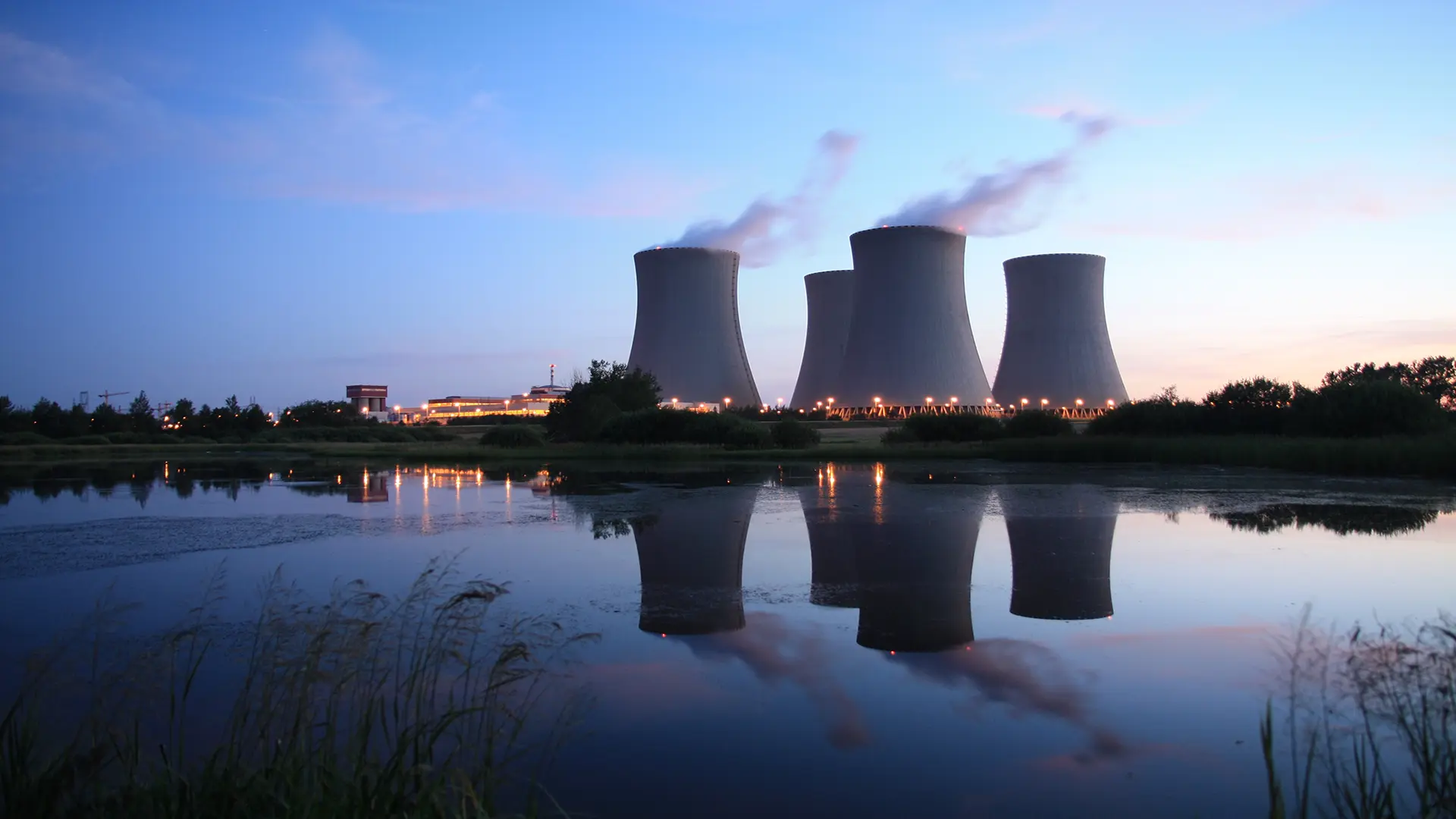
Researched by Industrialinfo.com (Industrial Information Resources, Incorporated; Houston, Texas). Chile will need forty new generation plants by 2020 in order to double its installed capacity, which, at present, is approximately 10,370 MW. Sixty percent of this output is generated in the central grid (SIC), while thirty-three percent is transmitted by the northern grid (SING). The two southern grids, Aysen and Magallanes, contribute less than one percent of installed capacity.
Gas transporter and power generator, GasAtacama is owned by a consortium of local and foreign power interests, including CMS Energy 40% (NYSE:CMS) (Dearborn, Michigan), and estimates that the necessary growth will require a $7 billion investment in generation, and between $500 million and $2 billion in transmission assets. This is based on projected capacity increases of 8% for SIC and 7% for SING through 2012.
Connecting the SIC and the SING grids would increase capacity by the equivalent of up to two plants. Connecting the Chilean transmission system with Argentina's grid would also add the equivalent capacity of two plants. Chile's SING is connected to Argentina's grid through a 235 mile, 345 kV transmission line. Chile's National Energy Commission (CNE) announced last year that it would support investments in interconnections between SING and SIC. A transmission line to export power to Bolivia is under construction.
CNE estimates that around 480 MW will need to be added to SIC's generating capacity each year through 2011 in order to avoid power shortages. Currently, there is a lack of generation projects in development with only the 570 MW Ralco Dam hydroelectric project in SIC under construction and under continuing fire from environmentalists and representatives of indigenous people being displaced along the Bio Bio, Chiles largest river. Chile has excellent hydroelectric potential and significant untapped geothermal generating potential. CNE will support construction of ten combined cycle plants and one hydroelectric plant through 2012.
GasAtacama estimates that a balance of 36 generating plants will need the use of cheap natural gas as fuel. This forces Chile to look toward Argentina and Bolivia for increased volumes of gas. Chile has been competing with Peru to be the site for the coastal terminal for Bolivia's LNG pipeline project. Despite historical feuds between Chile and Peru, Chile is seen as the frontrunner due to its port infrastructure and its comparative economic and political stability. It is estimated that a Chilean port terminal could save up to $2 billion in project investment.
In May 2002, the CNE submitted the fast track power bill Ley Corta to congress with the objectives of reducing uncertainty by clarifying and stabilizing the power sector's regulatory framework for potential investors. This was needed in order to maintain levels of power supply and investment in the industry. Ley Corta is designed to regulate node prices and transmission costs. Some generators such as AES Gener (Santiago, Chile) and Colbun (SANTIAGO:COL) (Santiago, Chile) are critical of the new law, saying that it is biased towards GasAtacama's joint owner, Endesa Chile (MADRID:ELE, SANTIAGO:SN) (Madrid, Spain). GasAtacama counters this view by saying that professing ignorance of future regulations will act against investment decisions into new products because a degree of certainty is required for the long term solution of the country's power supply problems.
Under the CNE coordination of the 1994 Program for Rural Electrification (PER), in which the objective was to make power available to 75% of rural households by 2000, the target was surpassed with a level of 78% coverage by the end of 2000. Since then the target has been increased to 90% of households by 2006. The CNE provides incentives and promotes self-generation using alternative energy sources such as biomass and solar and micro- hydrogenerators. This rural progress is balanced by the fact that SING serves only about 4.5% of the population, although 90% of its consumption comes from mining companies, large industrial concerns, and distributors.
/news/article.jsp
false
Want More IIR News Intelligence?
Make us a Preferred Source on Google to see more of us when you search.
Add Us On GoogleAsk Us
Have a question for our staff?
Submit a question and one of our experts will be happy to assist you.

Forecasts & Analytical Solutions
Where global project and asset data meets advanced analytics for smarter market sizing and forecasting.
Learn MoreRelated Articles
-
U.K. Greenlights Largest Solar Power ProjectApril 28, 2026
-
South Africa Targets 6 Gigawatts of Gas-Fired Power by 2030April 28, 2026

Industrial Project Opportunity Database and Project Leads
Get access to verified capital and maintenance project leads to power your growth.
Learn MoreIndustry Intel
-
2026 North American Labor OutlookPodcast Episode / Apr 24, 2026
-
2026 European Metals & Minerals Project Spending OutlookPodcast Episode / Apr 7, 2026
-
The Age of Critical Minerals in the AmericasPodcast Episode / Mar 20, 2026
-
2026 Regional Chemical Processing OutlookPodcast Episode / Mar 6, 2026
-
From Data to Decisions: How IIR Energy Helps Navigate Market VolatilityPodcast Episode / Nov 21, 2025