Terminals
Excelerate Energy Plans a New Innovative Way of Delivering LNG to the U.S.
Energy Bridge system will consist of a submerged turret loading (STL) system, comprised of a turret buoy, lines, chains, a sub-sea manifold, and a flexible riser.
Released Thursday, September 02, 2004
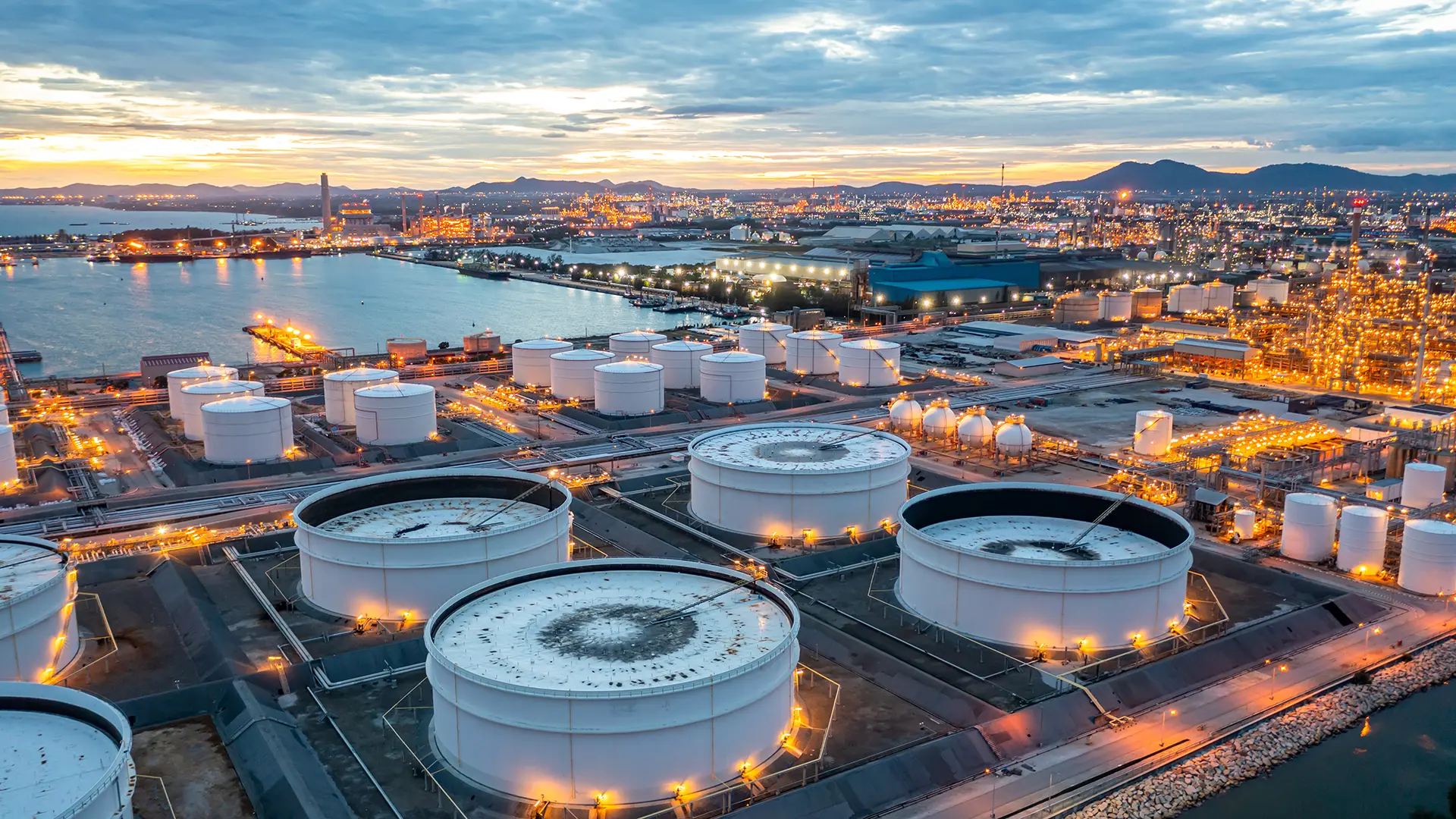
Researched by Industrialinfo.com (Industrial Information Resources, Incorporated; Houston, Texas). In December 2003, Excelerate Energy (The Woodlands, Texas) began the initial development phase of its innovative offshore LNG (Liquefied Natural Gas) regassification and delivery system. This system involves the use of modified LNG tankers with onboard LNG vaporization systems for the transportation and vaporization of LNG and off-loading to offshore pipelines.
The Gulf of Mexico Deepwater Port is based on Excelerate Energy's Energy Bridge system and will consist of a submerged turret loading (STL) system, comprised of a turret buoy, lines, chains, a sub-sea manifold, and a flexible riser. Approximately 1.93 miles of pipeline will connect the STL system to the meter platform. Almost four miles of pipeline will connect the meter platform to the existing Sea Robin Pipeline. Also, an additional 1.38 miles of pipeline will connect from the meter platform to the Blue Water Pipeline system. The Gulf of Mexico Deepwater Port will be located approximately 116 miles off the coast of Louisiana.
The two Energy Bridge regassification vessels that have been specifically designed for the project are currently under construction at the Daewoo Shipbuilding & Marine Engineering Company Limited shipyard in South Korea. A third vessel that is presently on order. These vessels are based on a standard 138,000 cubic meter design, with various modifications, which allow them to vaporize the LNG stored onboard, and deliver high gas to sub-sea pipelines. The tankers cost approximately $170 million, in addition to $25-30 million for the onboard regassification system.
The entire project is costing nearly $65 million and is scheduled to begin supplying U.S. markets at the beginning of 2005. Currently, the pipeline is still under construction, with installation expected to commence in mid-September. Installation of the turret buoy and the flexible riser will begin mid-to late September. Coinciding with increasing demands for LNG in the United States, The Gulf of Mexico Deepwater port is expected to deliver 500 million cubic feet of natural gas per day into the U.S. market.
/news/article.jsp
false
Want More IIR News Intelligence?
Make us a Preferred Source on Google to see more of us when you search.
Add Us On GoogleAsk Us
Have a question for our staff?
Submit a question and one of our experts will be happy to assist you.
Forecasts & Analytical Solutions
Where global project and asset data meets advanced analytics for smarter market sizing and forecasting.
Learn MoreRelated Articles
-
Europe Bracing for 'Prolonged Fuel Disruption'April 13, 2026
-
U.S. Pressure on Venezuela Eases, Exports Inch HigherApril 03, 2026

Industrial Project Opportunity Database and Project Leads
Get access to verified capital and maintenance project leads to power your growth.
Learn MoreIndustry Intel
-
2026 Regional Chemical Processing OutlookOn-Demand Podcast / Mar. 2, 2026
-
From Data to Decisions: How IIR Energy Helps Navigate Market VolatilityOn-Demand Podcast / Nov. 18, 2025
-
Navigating the Hydrogen Horizon: Trends in Blue and Green EnergyOn-Demand Podcast / Nov. 3, 2025
-
ESG Trends & Challenges in Latin AmericaOn-Demand Podcast / Nov. 3, 2025
-
2025 European Transportation & Biofuels Spending OutlookOn-Demand Podcast / Oct. 27, 2025