Metals & Minerals
Pechiney Opts-in as Work Starts on South Africa's $3 Billion Coega Port
With the active commitment to the project of the government and the active support of public and private sector companies, including the crucial promise of Eskom to provide cheap power...
Released Monday, September 23, 2002
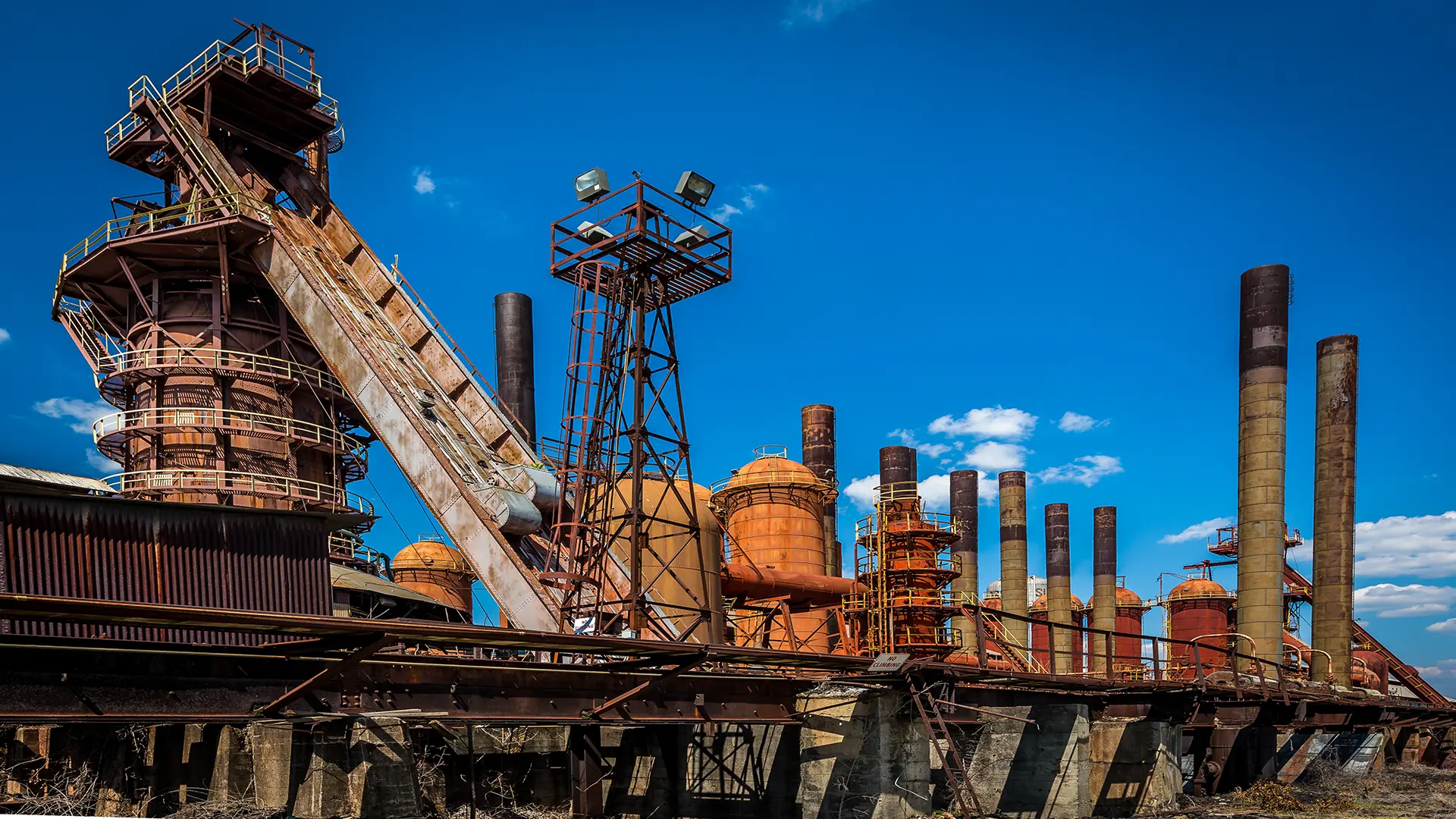
Researched by Industrialinfo.com (Industrial Information Resources, Incorporated; Houston, Texas). With contracts worth over over $265 millon placed for the construction of the new port and industrial development zone (IDZ) at the Coega River (see releated article) mouth in South Africa's Eastern Province, 20km north of the city of Port Elizabeth, the project has moved vigorously off the drawing board into the physical implementation stage. In the first period of the project, which has a fifty year horizon, over $3 billion will be invested in infrastructure development, electrical power upgrade, the construction of the deepwater port, direct private sector investment, and downstream development investment.
With the active commitment to the project of the government and the active support of public and private sector companies, including the crucial promise of Eskom to provide cheap power to the IDZ, comes a strong indication this week from the French aluminum producer Pechiney (NYSE:PY;EURONEXT:13290) (Paris, France; Montreal, Canada; Zurich, Switzerland) that it hopes to begin construction of its $2 billion dollar AP50 smelter at Coega in 2003 (As reported as part of Industrialinfo.com's International Industrial Database).
While Pechiney says that full authorization and funding have to be finalized 'before digging can begin' it is significantly an outright statement of intent on the project by the French company. This decision which has kept Coega executives on edge for the past year, had been seen to be in competition with Australia for the smelter. In Australia it would be sited adjacent to major alumina deposits. The initial political problems concerning the piping of gas to the proposed project from East Timor were resolved but were succeeded by corporate problems among the major gasfield stakeholders. The South Africans have proposed a strong support, investment, and power supply package to Pechiney that appears to have ended the cliffhanger in their favor.
Pechiney has publicly noted that the Coega site would be served by the new port of Ngqura, which is scheduled for completion in 2004/5 and would then be ready to handle the smelters output. The AP50, using new technologies, needs less equipment than earlier generations, is labor-efficient, and has a shorter construction and start-up period. The cost of the smelter expressed in terms of the aluminum price is estimated at $3,400 a ton. This figure would reduce as the plant became fully operational.
The port and the IDZ are dubbed assymetrical projects, as the port is viable as a standalone project whereas the IDZ needs the port to develop. The development of the IDZ is a crucial part of the plan to bring employment to one of the poorest regions in the country. The target is for 50,000 new jobs over the next ten years, to which will be added major downstream employment spinoffs for the Nelson Mandela Metropole, which includes the city of Port Elizabeth on whose beaches the first official British settlers were dumped in 1820. Eastern Province is a heartland of South African politics and history. The ruling ANC party has strong roots in the region, which is the family home province of both Nelson Mandela and Thabo Mbeki. Currently unemployment is estimated at around 50% of the workforce. This figure is qualified by the fact that at least 25% of the officially unemployed have part time jobs or eke a living in the informal sector.
The new harbor in the first phase will have two berths 16.5m draft and 300m long, which can handle 80,000 deadweight ton vessels. This will allow the port to take post-panamax (larger than container ships that can use the Panama Canal) container ships, which are already plying trade carrying 6,600 teu's (twenty foot equivalent units). Coega will be one of a select number of trans-shipment terminals able to handle these new generation post panamax containers. The National Ports Authority (NPA) intends that Coega will rival the world's container hubs alongside Goteborg, Sweden, Salalah, Oman, and San Pedro, California. The port is strategically placed geographically as a natural transit point for east-west shipping and for north-south trade coming through Suez (which can handle post panamax ships) and around the Cape from the west. This capability gives it the ability as 'stand alone' port. It is estimated that 80% of the containers handled at Coega will be trans-shipment cargoes.
The $140 million contract for the construction of the harbor was awarded to the Ngqura Harbor Consortium Joint Venture that includes Hochtief Construction (Essen, Germany), Concor (JSE:CNCJ) (Johannesburg, South Africa), and Ngqura Empowerment Contractors (NEC). The $10 million contract for sand erosion control went to Connecl JV, a Concor-NEC venture. The $48 million contract for harbor dredging was won by Jan de Nul (Hofstade-Aalst, Belgium). The harbor will have a main breakwater of over 2km and a downwind breakwater of over 1km in length. Another contract in the process of being awarded is the $10 million bridge across the Coega river and the construction of a major four-loop interchange on the national highway between Port Elizabeth and Grahamstown. The $3.8 million Neptune Road linking the port and the IDZ to the national road network is being handled by Sibakhuklu Construction, a black owned company from the Western Cape. Other contracts include transport upgrades, housing village infrastructure, a recruitment center, and medium and high voltage electrical installations.
Over the next twelve months the Coega Development Corporation (CDC) will undertake the building of seven bridges, 40,000 square meters of construction worker accommodation, 5,000 square meters of office space, and 30km of roads. Thousand have already registered on the waiting list for jobs on the projects.
With port construction scheduled to take three years, investors who wish to bring plants online at the same time as the port is commissioned will have to start construction by the end of 2003. This means that decisions will have to be made by early 2003.
Now that work is under way and the Pechiney prospects are clarifying, more announcements by ventures in the IDZ can be expected. Planned clusters include: electronic and technical, automotive, metallurgical, airport industry, mineral construction, training and academic, and leisure and agricultural. Heavy international interests have been scouting the IDZ without yet making firm decisions. The SA minerals research agency Mintek is promoting a number of high-tech projects that would add up to investments in the billions of dollars. These include the construction of a ferro-nickel plant using Mintek technology to attract producers from the first world with low energy costs and state-of-the-art technological efficiency. This would boost the chances of setting up a stainless steel plant. In company with the CDC, Mintek would invest in a $40 million electrolytic manganese dioxide plant, which would produce the raw material for dry-cell batteries. A feasibility study, with funding from the U.S., has been launched and private sector investment is being sought.
Ore carriers taking iron, manganese ore, and other minerals from South Africa returned empty from North America, Europe and Asia, but could be used to bring nickel laterite, the raw feedstock for ferro-nickel.
Although economically depressed in terms of unemployment as a region, the Eastern Cape has a booming automotive production industry with components, catalysts, and the manufacture and export of a number of major international car marques rising year-on-year. DaimlerChrysler has just announced that its is aiming for 80% local content as it tools up for its latest models which will be exported from its new custom built terminal in East London, up the coast from Coega.
The potential trainability and productivity of the local management and workforce is proven. The potential quality of life in the province, with its own unique African ecology and including a breathtaking coastline, is South Africa's best kept secret. The Addo Elephant wildlife park, which is half an hour inland from Coega and Port Elizabeth, is being extended down to the coastline where Africa's Big Five will roam by the Indian Ocean as they did 150 years ago. The arrival of Scandanavian cruise tourists has motivated an upgrading and heating of Port Elizabeth beachfront pools and general amenities.
/news/article.jsp
false
Want More IIR News Intelligence?
Make us a Preferred Source on Google to see more of us when you search.
Add Us On GoogleAsk Us
Have a question for our staff?
Submit a question and one of our experts will be happy to assist you.

Forecasts & Analytical Solutions
Where global project and asset data meets advanced analytics for smarter market sizing and forecasting.
Explore Our SolutionsRelated Articles
-
Australia Cutting 500 Jobs at Largest Steelworks WhyallaSeptember 18, 2026
-
Canada Draws in Billions from Toronto Investment SummitSeptember 17, 2026
PECWeb Global Market Intelligence Platform
Identify opportunities, anticipate change, and execute with confidence. PECWeb connects the industrial intelligence you need, from projects and assets to operational events, all in one platform.
Discover PecwebIndustry Intel
-
2026 US Data Center Outlook: Power, Land & CoolingPodcast Episode / Sep 18, 2026
-
2026 Global Power Demand Outlook: Gas, Nuclear & RenewablesPodcast Episode / Sep 18, 2026
-
2026 Oil & Gas CapEx Outlook: Middle East, LNG & PermianPodcast Episode / Sep 4, 2026
-
The Answer Age Starts with Trusted Data: Introducing IIR Envoy™ MCPPodcast Episode / Sep 1, 2026
-
European Chemicals and Transport Fuels OutlookPodcast Episode / Jul 10, 2026