Production
Bold Arctic Circle LNG Cold Chain Technology Feeds USA And Europe
Statoil, in partnership with Linde (XETRA:LING.DE) (Wiesbaden, Germany), who have the $380 million contract to design and build the plant on Melkoya, have developed a proprietary...
Released Wednesday, September 04, 2002
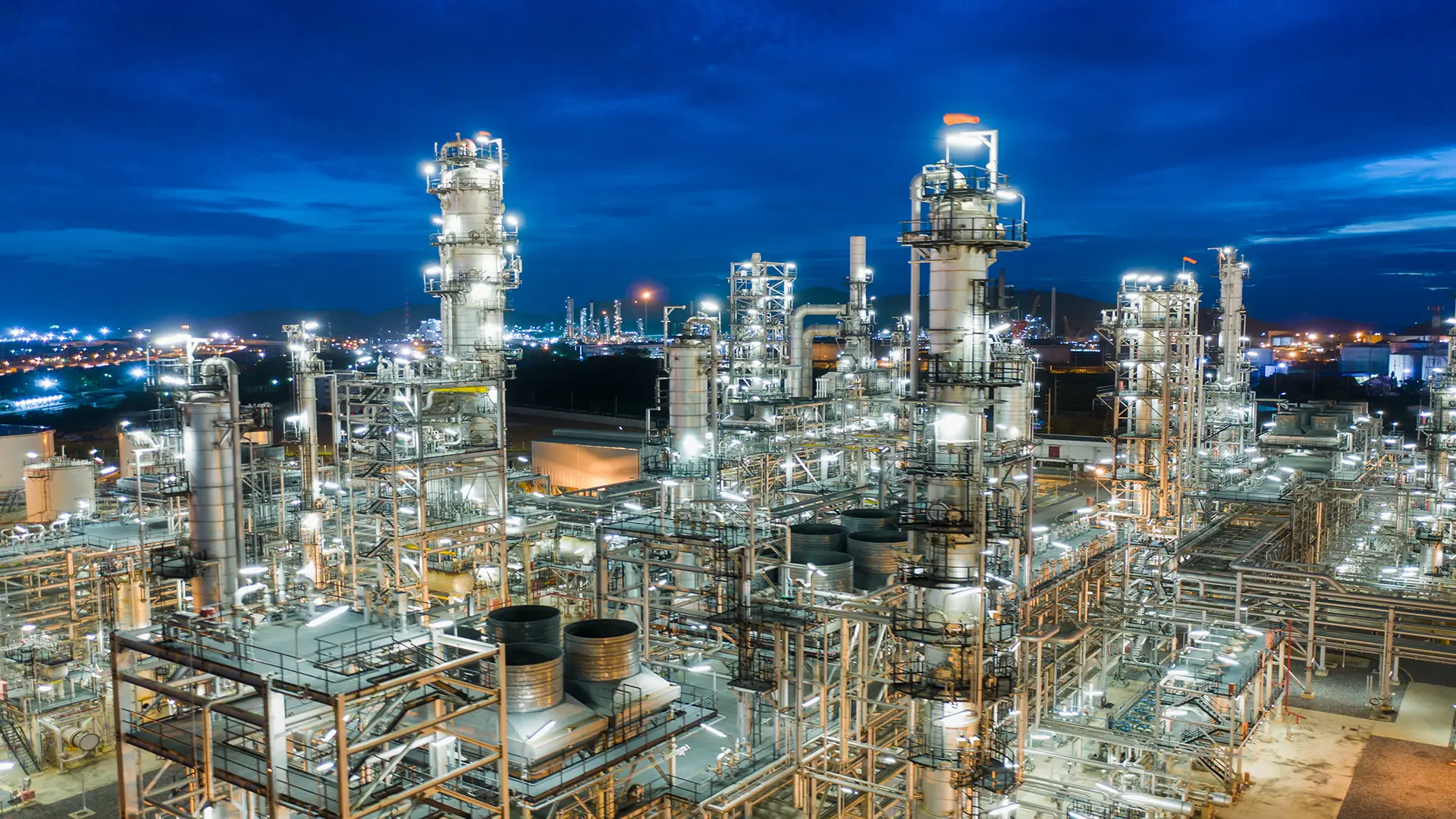
Researched by Industrialinfo.com (Industrial Information Resources, Incorporated; Houston, Texas). The $6 billion Snohvit project includes Europe's largest natural gas liquefaction plant being built on Melkoya Island, north of the Arctic Circle near Hammerfest, Norway. The Snohvit consortium, which is developing the project, includes Statoil (OSE:STL, NYSE:STO) (Oslo, Norway), Norsk Hydro (OSE:NHY.OL) (Oslo, Norway) and TotalFinaElf PARIS:TOTF.PA) (Paris, France). Investment in the project will have reached $3.9 billion in the period 2001-5 before any revenues start to flow but from 2006 to 2030 incoming revenues will be around $26 billion based on estimated petroleum prices and exchange rates.
Statoil, in partnership with Linde (XETRA:LING.DE) (Wiesbaden, Germany), who have the $380 million contract to design and build the plant on Melkoya, have developed a proprietary technology for liquefying natural gas with the heat exchanger installed in a huge 'freezer cabinet' measuring 15m x 17m x 40m containing externally cooled tubes through which the gas flows in a highly energy intensive process. Under normal atmospheric pressure gas becomes liquid at minus 163 Celsius and this reduces volume by 600% making it suitable for ship transport. Leveling of the site has been undertaken by the Danish/Norwegian consortium AFS-Pihl.
The process plant will be constructed on a massive barge measuring 9m x 154m x 54m which will be built by Izar Construcciones naval yard at Ferrol in Spain. When the barge is completed it will be towed to an outfitting yard where about 24,000 tons of gas liquefication process equipment will be installed on its deck. The barge will then be transported to Melkoya on a heavy-lift ship and installed in a dock blasted out in advance. This building approach greatly reduces the need for steel work on Melkoya and allows for higher productivity when compared with constructing the plant on site.
Linde's contract includes tank storage facilities for natural gas at a temperature of minus 163 degrees Celsius. The company will also provide specialized equipment needed to load the liquefied gas onto tankers as well as project management, engineering, procurement and construction supervision services for the entire liquefaction plant. The plant will have the capacity to produce 4.3 million tons of liquefied natural gas per year.
The technology produced by Statoil and Linde has begun to dent the near monopoly for the supply of heat exchangers to the LNG industry held by Air Products and Chemicals (NYSE:APD) (Allentown, Pennsylvania), which currently claims to have 90% of the world's heat exchangers in operation or under construction. Shell, the world's largest supplier of LNG have acquired some parts of the Statoil-Linde technology which they will initially apply in one of their plants on the north Australian coast.
The El Paso Global LNG Company (NYSE:EP) (Houston, Texas) and Iberdrola (MADRID:IBE.MC) (Madrid, Spain) will be Snohvit's biggest customers with El Paso taking 2.4 billion cubic meters and Iberdola 1.6 billion cubic meters per annum. French licensees Gaz de France (PARIS:GDPFp.PA) (Paris, France) and TotalFinaElf will dispose of their own annual volumes.
The annual global market growth rate for LNG is about 8% per annum. U.S. gas consumption is 17% higher than domestic production and the primary contributor to the balance has been the pipeline from Canada. Sources are diversifying and in 2000 six companies delivered gas in liquid form to the U.S.A. Spain will receive Norwegian gas by ship and pipeline. Norway has delivered gas to Spain by pipeline since 1993 and the country doubled its gas consumption between 1995 and 2000.
LNG has been the world's fastest growing energy sector over the past decade and quadrupled in size from 1980 to 2000. A total of 137 billion cubic meters of gas were carried by ship in 2000, which represented 26% of all gas exports worldwide. The balance of 74% was transported by pipeline. The largest recipient of LNG is Japan, accounting for 52% of imports worldwide. Indonesia, Algeria, Malaysia and Australia are the biggest exporters.
Somewhat younger than the oil from the Snohvit and Barents Sea fields, which will feed Melkoya, are nine amber beads, which were uncovered during excavations on the island. They are estimated to be about 4,000 years old from the late Stone Age. Archaeologists say that the beads demonstrate contact between dwellers in the far north and those in more southern climes. Melkoya's LNG will be heading back down the same route.
/news/article.jsp
false
Want More IIR News Intelligence?
Make us a Preferred Source on Google to see more of us when you search.
Add Us On GoogleAsk Us
Have a question for our staff?
Submit a question and one of our experts will be happy to assist you.

Forecasts & Analytical Solutions
Where global project and asset data meets advanced analytics for smarter market sizing and forecasting.
Learn More
Industrial Project Opportunity Database and Project Leads
Get access to verified capital and maintenance project leads to power your growth.
Learn MoreIndustry Intel
-
2026 North American Labor OutlookPodcast Episode / Apr 24, 2026
-
2026 European Metals & Minerals Project Spending OutlookPodcast Episode / Apr 7, 2026
-
The Age of Critical Minerals in the AmericasPodcast Episode / Mar 20, 2026
-
2026 Regional Chemical Processing OutlookPodcast Episode / Mar 6, 2026
-
From Data to Decisions: How IIR Energy Helps Navigate Market VolatilityPodcast Episode / Nov 21, 2025