Petroleum Refining
India's Reliance Industries Commissions Export-Oriented Refining Unit
Reliance Petroleum Limited (BOM:532743) (RPL) (Mumbai) commissioned the world's largest single-location refinery complex on December 25, 2008, by bringing onstream...
Released Thursday, January 08, 2009
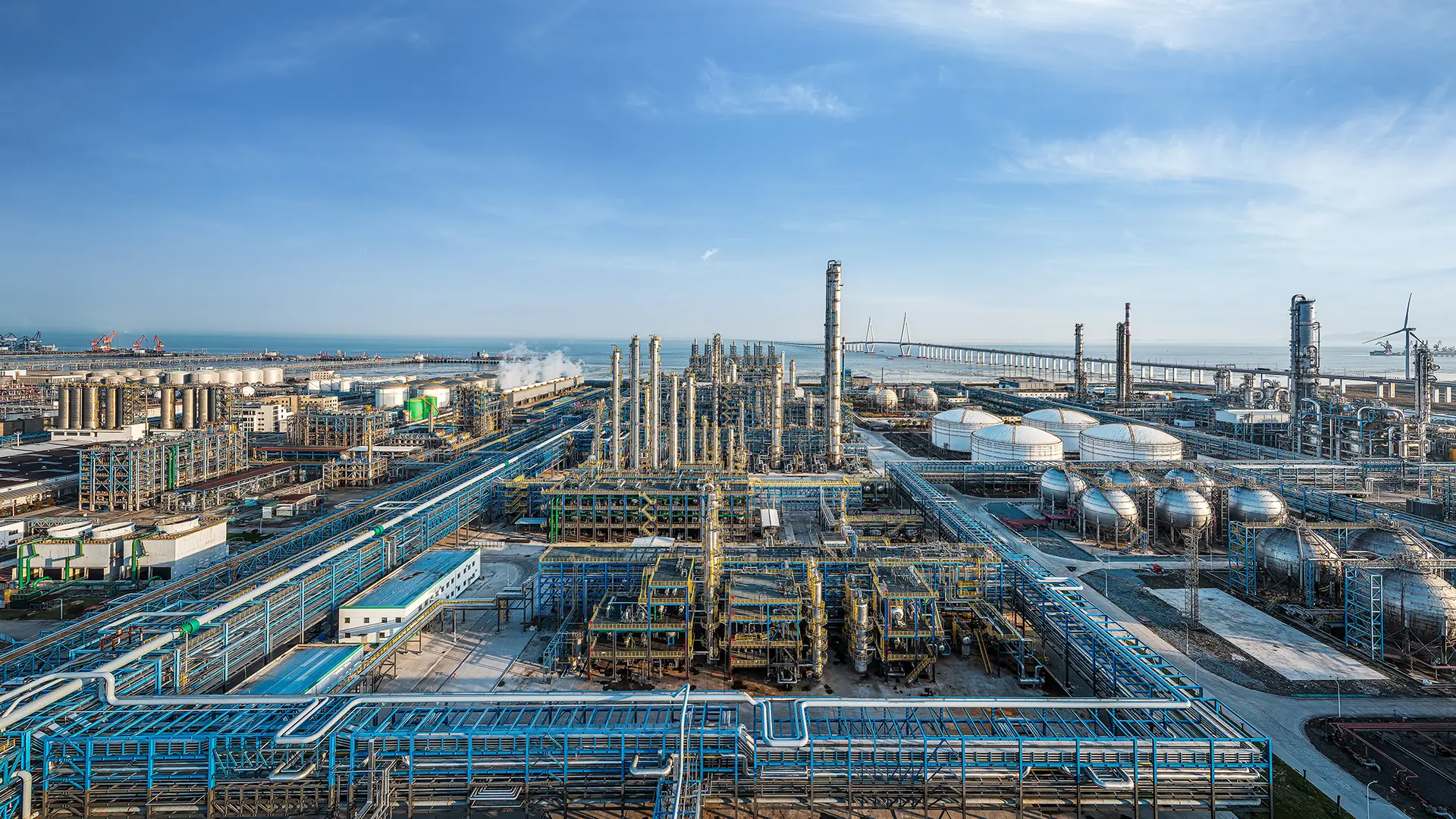
Researched by Industrial Info Resources (Sugar Land, Texas)--Reliance Petroleum Limited (BOM:532743) (RPL) (Mumbai) commissioned the world's largest single-location refinery complex on December 25, 2008, by bringing onstream a 100% export-oriented refinery unit next to the existing unit in the Jamnagar Special Economic Zone in Gujarat. The two units have a combined processing capacity of 1.24 million barrels per day (BBL/d) of crude oil and constitute the world's sixth-largest refining complex. The export-oriented refinery unit was constructed in a record 36 months with a total investment of $6 billion. The unit has a processing capacity of 580,000 BBL/d of crude oil and signifies an addition of 20% to India's total crude oil refining capacity, which now stands at about 3.8 million BBL/d.
The new unit will process sweet or light grades of crude with low sulfur content for an initial period of two months. When fully operational, the unit will process sour or heavy grades of crude with a high sulfur content. The crude distillation unit of the refinery, in which the extraction of diesel, kerosene, naphtha and petrol takes place, was started on December 25 with the expectation of having the first product ready for delivery in eight to 10 days. The secondary processing units of the complex are currently under synchronization and are slated for commissioning shortly.
The unit will initially produce petrol and diesel that is compliant with the Euro-IV grade. The quality of the products will be subsequently upgraded for compliance with Euro V norms after auxiliary units such as the desulfurization unit go onstream. The refinery will have a production capacity of 31,000 tons per day of diesel and 25,000 tons per day of naphtha, petcoke, petrol and sulfur. While production of petrol is slated to commence in February 2009, fuel oil and polypropylene are not likely to be produced before March.
In view of the prevalent economic recession and the consequent slump in demand for petroleum products in major global markets such as Africa, Europe and the U.S., the unit will commence operating at full capacity only after about three to four months. The fuels produced will be stored until they are ready for export as large consignments. Global oil consumption in 2009 is expected to drop by 0.2% from 2008 to 85.68 million barrels per day, and global demand is expected to decline by 0.5% to 85.3 million barrels per day, the steepest slump in demand for oil in over a decade.
RIL's strategy for the existing unit as well as for the new unit is to competitively source heavy or sour grades of crude oil that are inexpensive and process the inexpensive raw material through complex refining methods to produce output of superior quality, thus attracting high margins, estimated to be more than $10 per barrel. RIL will also benefit from the strategic proximity of the refining complex to the Middle East crude supplies, which mainly consist of sour or heavy grades of crude. The firm is also looking to capitalize on delays and cost overruns that are plaguing several large refinery projects and has embarked on a swift marketing campaign in Asia, East Africa, Europe and Mexico. In a bid to boost trading operations, the firm has already leased storage tanks for clean oil products in the Caribbean, the Mediterranean and Singapore.
The RPL refinery has a Nelson Complexity Index (NCI) of 14.0, enabling it to process inferior grades of crude oil and yield high-quality products compliant with Euro-IV or Euro-V standards. The NCI measures the secondary conversion capacity of a refinery in relation to its primary distillation capacity. The index is computed by assigning a complexity factor to each major piece of equipment in the refinery based on the complexity of the process and cost relative to crude distillation, which is assigned a complexity factor of 1. The overall NCI of the refinery is obtained by adding the individual complexity value of all equipment. The NCI is indicative of the investment intensity of the refinery as well as its potential value addition. The higher the NCI is, the higher the cost of the refinery and the value of its products. Refineries in the U.S. rank the highest worldwide with an average NCI of 9.5, while those in Europe have an average NCI of 6.5.
View Project Report - 89001322 89001323
Industrial Info Resources (IIR) is a marketing information service specializing in industrial process, energy and financial related markets with products and services ranging from industry news, analytics, forecasting, plant and project databases, as well as multimedia services.
/news/article.jsp
false
Want More IIR News Intelligence?
Make us a Preferred Source on Google to see more of us when you search.
Add Us On GoogleAsk Us
Have a question for our staff?
Submit a question and one of our experts will be happy to assist you.

Forecasts & Analytical Solutions
Where global project and asset data meets advanced analytics for smarter market sizing and forecasting.
Explore Our SolutionsRelated Articles
-
Venezuela's PDVSA Continues with Refinery RepairsMay 20, 2026
-
U.S. Consumers Mull EVs Amid Higher Gasoline PricesMay 15, 2026

Industrial Project Opportunity Database and Project Leads
Get access to verified capital and maintenance project leads to power your growth.
Discover Our DatabaseIndustry Intel
-
The Role of Contract Manufacturing in Global Pharma GrowthPodcast Episode / May 8, 2026
-
2026 North American Labor OutlookPodcast Episode / Apr 24, 2026
-
2026 European Metals & Minerals Project Spending OutlookPodcast Episode / Apr 7, 2026
-
The Age of Critical Minerals in the AmericasPodcast Episode / Mar 20, 2026
-
2026 Regional Chemical Processing OutlookPodcast Episode / Mar 6, 2026