Metals & Minerals
Norway Agrees Controversial Deep Sea Mining Plan
Norway's rival political parties have agreed to pursue plans to open large areas of the Norwegian continental shelf for commercial deep sea mining.
Released Tuesday, December 19, 2023
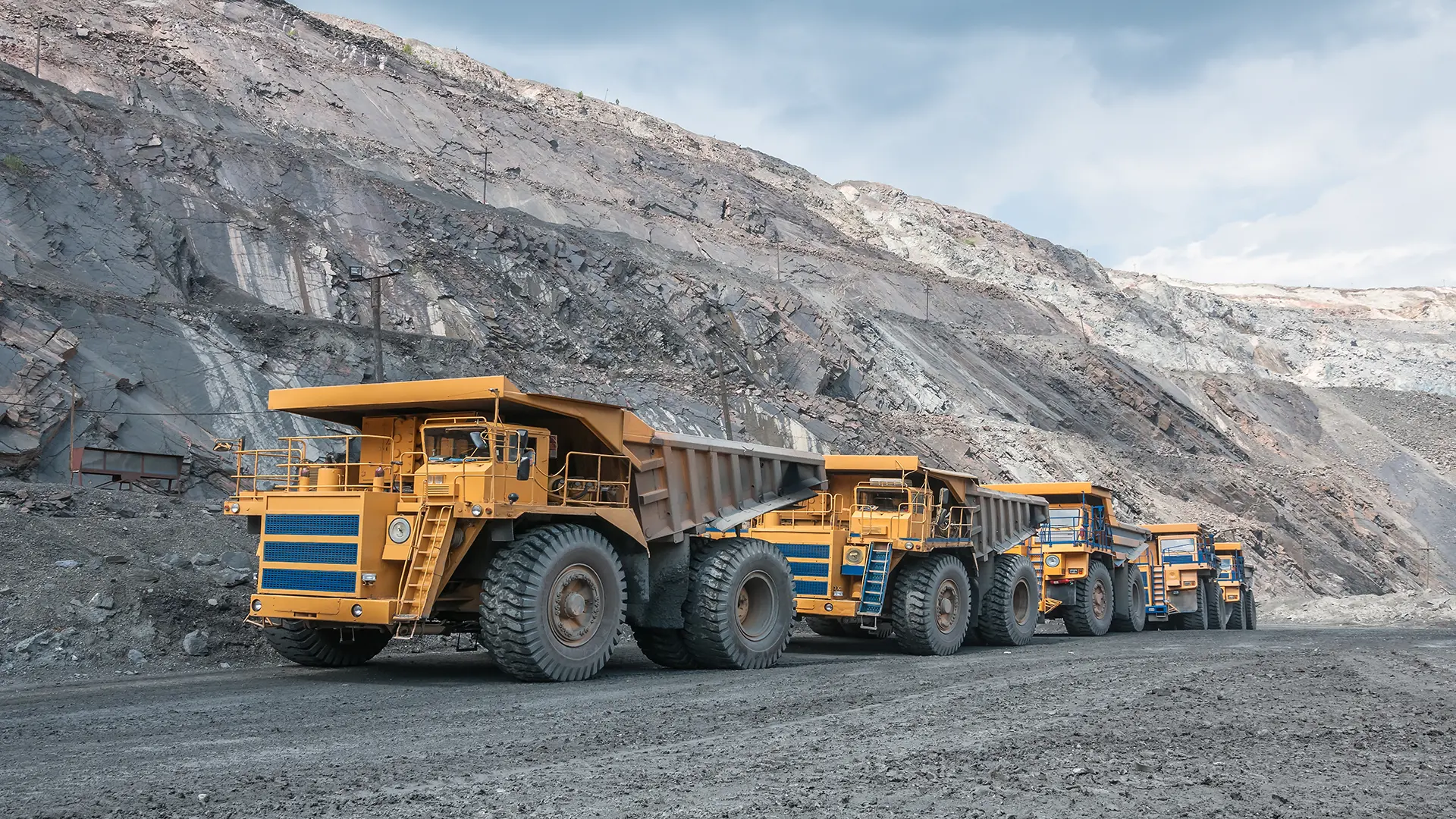
Written by Martin Lynch, European News Editor for Industrial Info (Galway, Ireland)--Norway's rival political parties have agreed to pursue plans to open large areas of the Norwegian continental shelf for commercial deep sea mining.
The minority-led government claimed the controversial plan, which would see an area in the Arctic Ocean larger than the U.K. opened for potential mining, was in line with its national strategy to seek new economic opportunities and reduce its reliance on oil and gas. The proposed area is located southwest of the Arctic island of Svalbard and covers an area of 280,000 square kilometers. The Ministry of Petroleum and Energy said that it will now proceed with setting out specific areas for extraction permits. The first phase will be an exploration phase "where private players can secure rights." It said a work program must be drawn up for the exploration phase that includes environmental assessments and mapping.
A report earlier this year by the Norwegian Petroleum Directorate (NPD) stated: "Of the metals found on the seabed in the area [of an earlier completed study], magnesium, niobium, cobalt and rare earth minerals are present on the European Commission's list of critical minerals. Costly, rare minerals such as neodymium and dysprosium are extremely important for magnets in wind turbines and the engines in electric vehicles." In volume terms, a resource estimate for areas in the Norwegian Sea and Greenland Sea showed there were 38 million tonnes of copper and 45 million tonnes of zinc accumulated in polymetallic sulfide formations.
In a joint statement after the agreement the Norwegian government said: "The majority believe that this is a sound framework that both ensures that environmental considerations are taken care of throughout the process, that Norway gains more knowledge about mineral deposits, the environment and species diversity in the deep sea, while at the same time that players in the industry gain sufficient predictability to invest in a new industry that can contribute to great value creation in the future." With regards to the environmental issues, it added: "The precautionary principle has been decisive in the negotiations. We agree that there is a significant lack of knowledge related to environmental conditions in deep sea areas and the consequences of an extraction. This uncertainty therefore means that they have agreed that the government will send the first extraction plans to the parliament for approval."
It was welcomed by Håkon Knudsen Toven, head of seabed minerals at industry representative group Offshore Norway. "It is very good that a broad majority now supports the government's proposed opening process," reported NRK. "It provides predictability which is important for companies that want to invest in a potential new industry on the Norwegian continental shelf."
Minister of Petroleum and Energy Terje Aasland has been a strong proponent for seabed mining, saying: "We need minerals to succeed in the green transition. Currently, the resources are controlled by a few countries, which makes us vulnerable. Seabed minerals can become a source of access to essential metals, and no other country is better positioned to take the lead in managing such resources sustainably and responsibly. Success will be crucial for the world's long-term energy transition."
The European Union (EU) does not support deep seabed mining, banning the practice. It has also called for a moratorium on all such practices until major scientific gaps on the impacts can be filled. Norway's decision has been condemned globally by environmental groups. "This is a disaster for the sea," said Frode Pleym, head of the local chapter of Greenpeace. "Norway is now allowing irreversible interventions in areas where nature is completely unknown."
Industrial Info Resources (IIR) is the leading provider of industrial market intelligence. Since 1983, IIR has provided comprehensive research, news and analysis on the industrial process, manufacturing and energy related industries. IIR's Global Market Intelligence (GMI) helps companies identify and pursue trends across multiple markets with access to real, qualified and validated plant and project opportunities. Across the world, IIR is tracking over 200,000 current and future projects worth $17.8 Trillion (USD).
/news/article.jsp
false
Want More IIR News Intelligence?
Make us a Preferred Source on Google to see more of us when you search.
Add Us On GoogleAsk Us
Have a question for our staff?
Submit a question and one of our experts will be happy to assist you.

Forecasts & Analytical Solutions
Where global project and asset data meets advanced analytics for smarter market sizing and forecasting.
Explore Our SolutionsRelated Articles
-
Australia's Lithium Comeback Boosted by Pilgangoora Expansio...October 23, 2026
-
Africa's Gold Boom: Rising Prices Strengthen State Control a...October 23, 2026
-
ABB Builds Backlog with Canadian Mining, U.S. Tech WorkOctober 21, 2026
-
Antofagasta Minerals Boosts Copper OutputOctober 21, 2026

PECWeb Global Market Intelligence Platform
Identify opportunities, anticipate change, and execute with confidence. PECWeb connects the industrial intelligence you need, from projects and assets to operational events, all in one platform.
Discover PecwebIndustry Intel
-
Brazil Critical Minerals 2027: Rare Earths, Lithium, CopperPodcast Episode / Oct 16, 2026
-
US Craft Labor Outlook 2026: Wages, Per Diems, Data CentersPodcast Episode / Oct 16, 2026
-
Latin America Data Center Outlook 2026: Power, Hubs & GrowthPodcast Episode / Oct 9, 2026
-
Food and Beverage CapEx Outlook 2026: Tariffs, AI, AfricaPodcast Episode / Oct 9, 2026
-
North America Refining 2026: New Pipelines to PADD 5Podcast Episode / Oct 2, 2026