Metals & Minerals
BLM Land Use Decision Could Mean Beginning of the End of Coal Mining in Powder River Basin
The Biden administration would prohibit new federal leases for coal mining in the Powder River Basin
Released Monday, May 20, 2024
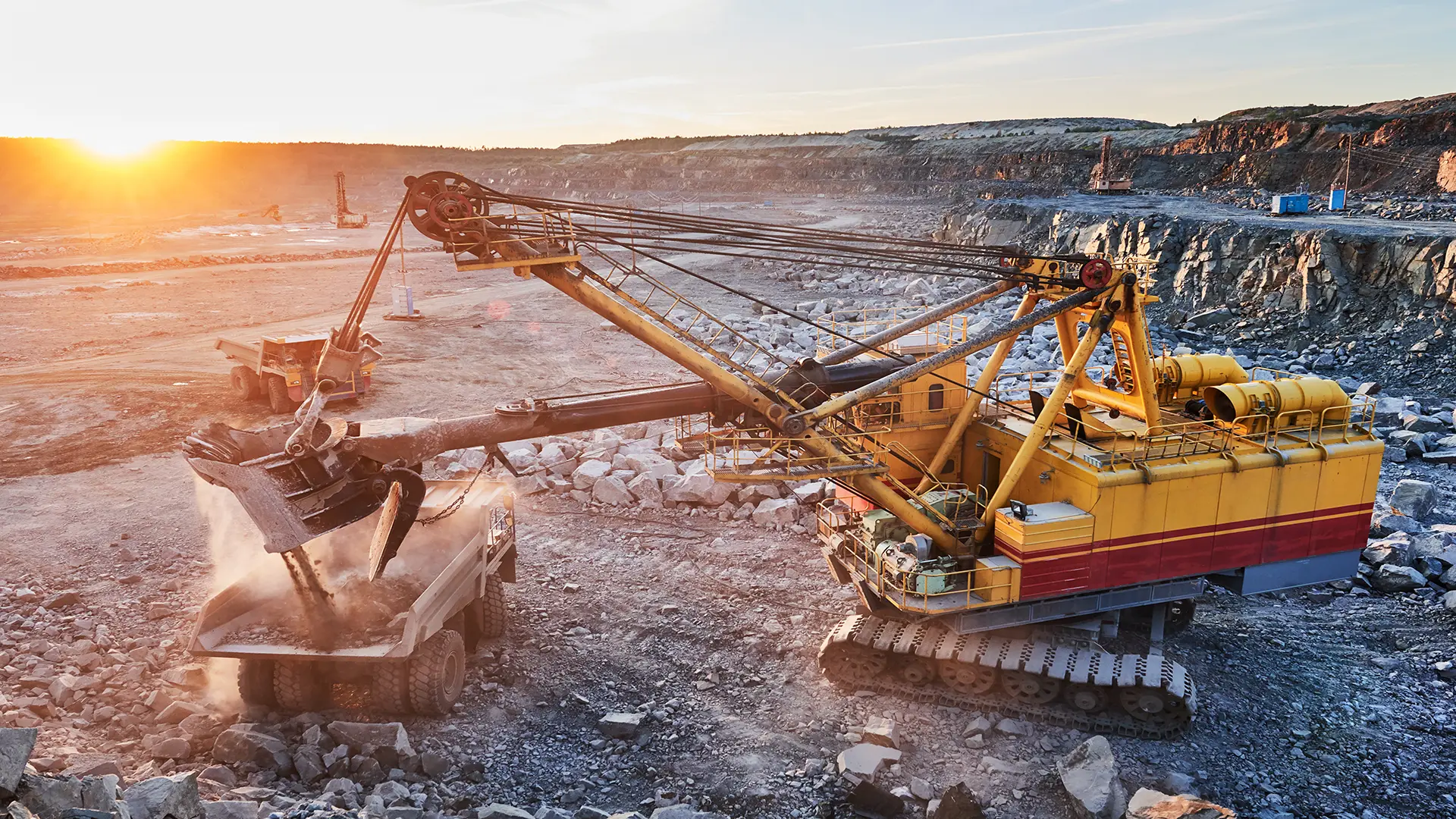
Written by John Egan for Industrial Info Resources (Sugar Land, Texas)--Republican elected officials and a representative of the coal industry blasted the Biden administration's draft final land use plans that would prohibit new federal leases for coal mining in the Powder River Basin (PRB), which stretches across Montana and Wyoming.
Even one Democrat signaled an openness to cross swords with the administration: U.S. Senator Jon Tester (D-Montana), locked in a tight reelection race, said he might lobby the administration to reject the Bureau of Land Management's May 16 land use decisions from becoming final because they could hurt his constituents.
The PRB is the largest producer of coal in the U.S., accounting for about 44% of all coal produced. In 2022, 14 coal mines on federal land in the PRB produced about 238.5 million short tons of coal, down sharply from the peak of 428 million short tons in 2008.
The PRB's declining production is a reflection of trends in other basins across the nation. U.S. thermal coal demand has been declining for years, largely due to tougher environmental regulations, low-cost and abundant natural gas and the growing competitiveness of renewables such as solar and wind.
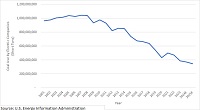
In 2007, national demand for the coal used to generate electricity peaked at slightly more than 1 billion short tons, according to the Energy Information Administration (EIA) (Washington, D.C.). This year, the EIA forecast that U.S. demand for thermal coal will fall to slightly more than 373 million short tons. Next year, national demand will sink even further, to an estimated 346 million short tons, the agency said. For more on how falling coal demand is affecting adjacent industries, see May 14, 2024, article - Falling Coal Use Hits Adjacent Industries, State Budgets.
The two coal lease land decisions by the Bureau of Land Management (BLM) (Washington, D.C.), a branch of the Department of Interior, were announced quietly May 16 through press releases with innocuous headlines about proposed changes to "field office management" plans.
The plans, if they withstand almost-certain legal challenges and a potential change in presidential administration in the fall, would prohibit new coal-leases on federal land in the country's largest coal-producing region.
The two BLM decisions, which include a supplemental environmental impact statement (SEIS), were issued in response to a 2022 decision by a federal court in Montana that overturned a Trump-era regulation on PRB leases. The judge instructed the BLM to: "complete new coal screening and National Environmental Policy Act (NEPA) analyses that consider a no leasing and limited coal leasing alternatives in the PRB; and disclose the public health impacts, both climate and non-climate, of burning fossil fuels (coal and oil and gas) from the planning areas," the two BLM statements explained.
Under the bureau's determination, the 14 active coal mines in the Powder River Basin can continue operating on lands they have leased, but they cannot expand onto other public lands in the region.
One of the BLM offices, the Buffalo (Wyoming) field office, oversees federal coal leasing in the Cowboy State. The other field office, located in Miles City, Montana, oversees coal mining in that state.
The proposed land use decisions, supported by the SEIS, determined that coal-mining poses significant risks beyond global climate change, and therefore new land should not be leased for coal mining by the federal government. Existing leases will not be affected. The last coal lease in Wyoming expires in 2041 while Montana's last coal lease ends in 2060, according to the BLM.
The BLM will take public protest on the land use decisions for 30 days. The decisions were published in the Federal Register Friday. A final decision is expected later this year, after public comments are considered by BLM.
Unlike many Biden administration decisions on energy and the environment, the low-key announcements from the BLM were not accompanied by statements from senior officials about how these decisions will move the U.S. away from fossil fuels, protect the climate, improve public health or protect at-risk communities.
The two BLM decisions are part of a flurry of Biden administration energy and environmental regulations in advance of the presidential contest this November. Finalized rules that adhere to the guidelines of the Administrative Procedure Act are harder to overturn than presidential executive orders, which can be reversed with the stroke of a pen. Should Donald Trump defeat Biden in November, he has pledged to overturn Biden's energy and environmental regulations and adopt a "drill, baby, drill" approach to energy and the environment.
In addition, the Congressional Review Act (CRA), passed by GOP-controlled Congress during the Clinton administration, allows lawmakers to overturn executive agency regulations finalized at the end of one presidential administration. Under the CRA, any regulation finalized during the last 60 legislative days of a presidential administration can be overturned with a simple majority vote in both houses of Congress. Hence, the Biden administration's desire to finalize as many regulations as possible before the CRA's 60-day legislative window opens.
For more on the recent flurry on Biden energy and environmental regulations, many of which were criticized by Republicans, see: May 16, 2024, article - FERC Seeks to Break Logjam in Transmission Siting and Cost Allocation with Order 1920; May 10, 2024, article - DOE Identifies 10 Preliminary National Transmission Corridors; May 3, 2024, article - Biden Administration Finalizes Changes to Environmental Review Law; April 26, 2024, article - EPA Issues Rules That Could Reshape Electric Generation; and April 2, 2024, article - Federal Agency Finalizes Rule to Cut Methane Waste in Oil and Gas.
The BLM decisions, while generally welcomed by Democratic elected officials and environmental and public health groups, were sharply criticized by Republicans and a mining representative. One Democrat said he might fight the rules as well.
In a statement, Senator John Barrasso (Wyo.), the top Republican on the Senate Energy and Natural Resources Committee, said, "President Biden continues to wage war on Wyoming's coal communities and families. This will kill jobs and could cost Wyoming hundreds of millions of dollars used to pay for public schools, roads, and other essential services in our communities." Rich Nolan, president and chief executive of the National Mining Association (Washington, D.C.), added this: "At a time of deteriorating grid reliability, soaring electricity demand and ongoing concern about global energy shocks, proposing a plan of no new coal leasing in the Powder River Basin is outrageous. This damages American energy security and affordability and is a severe economic blow to mining states and communities."
U.S. Senator Jon Tester (D-Mont.), who is facing a tight re-election fight this November, positioned himself as potentially opposing BLM decisions that hurt Montanans. In a statement to E&E News, a Tester spokesperson said, "Senator Tester will always stand up to President Biden's energy policies when they don't make sense for Montana. He is reviewing the proposal and encourages Montanans to make their voices heard during the public (protest) period."
Tom Sanzillo, director of financial analysis at the Institute for Energy Economics and Financial Analysis (Cleveland, Ohio), had a different take. He was quoted in a news report in The Washington Post as saying, "The nation's electricity generation needs are being met increasingly by wind, solar and natural gas. The nation doesn't need any increase in the amount of coal under lease out of the Powder River Basin."
Industrial Info Resources (IIR) is the leading provider of industrial market intelligence. Since 1983, IIR has provided comprehensive research, news and analysis on the industrial process, manufacturing and energy related industries. IIR's Global Market Intelligence (GMI) platform helps companies identify and pursue trends across multiple markets with access to real, qualified and validated plant and project opportunities. Across the world, IIR is tracking over 200,000 current and future projects worth $17.8 Trillion (USD).
/news/article.jsp
false
Want More IIR News Intelligence?
Make us a Preferred Source on Google to see more of us when you search.
Add Us On GoogleAsk Us
Have a question for our staff?
Submit a question and one of our experts will be happy to assist you.

Forecasts & Analytical Solutions
Where global project and asset data meets advanced analytics for smarter market sizing and forecasting.
Explore Our Solutions
Industrial Project Opportunity Database and Project Leads
Get access to verified capital and maintenance project leads to power your growth.
Discover Our DatabaseIndustry Intel
-
Innovations Shaping the Next Era of Power GenerationPodcast Episode / May 22, 2026
-
The Role of Contract Manufacturing in Global Pharma GrowthPodcast Episode / May 8, 2026
-
2026 North American Labor OutlookPodcast Episode / Apr 24, 2026
-
2026 European Metals & Minerals Project Spending OutlookPodcast Episode / Apr 7, 2026
-
The Age of Critical Minerals in the AmericasPodcast Episode / Mar 20, 2026