Power
France, Japan, Nepal: Political Turmoil Disturbs Energy Markets
Political upheavals in Japan, France and Nepal could impact energy markets
Released Wednesday, September 17, 2025
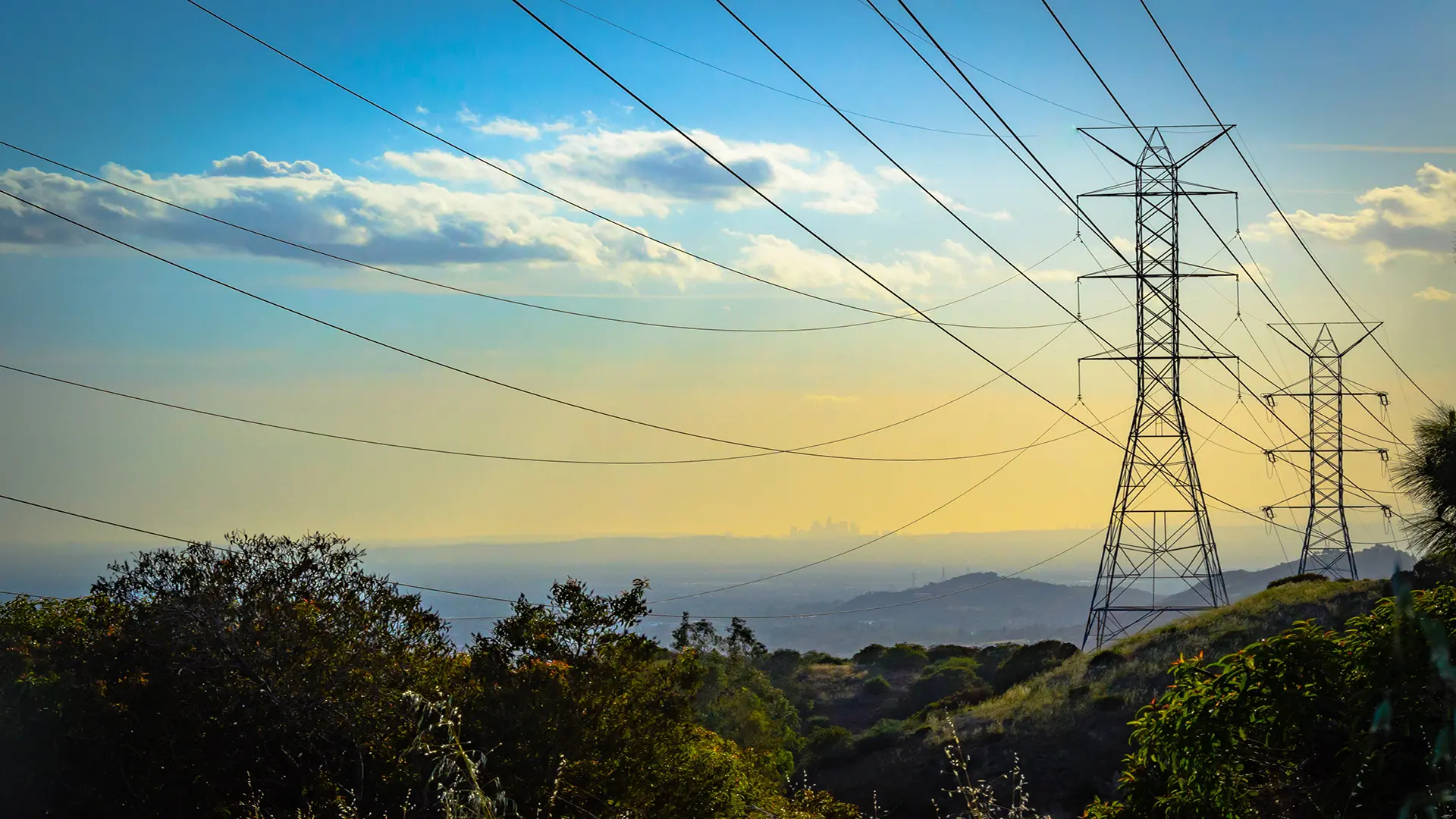
Written by Paul Wiseman for Industrial Info Resources (Sugar Land, Texas)--In recent days, the world has seen Japan's prime minister resign after negotiating a trade deal with the U.S.; France's prime minister voted out after a government financial dispute; and Nepal's prime minister resign and the parliament office set on fire during violent protests over social media communication restrictions.
For more than a year the parliaments in France and Japan have struggled to assemble any kind of consensus as moderate, longtime ruling parties have bled votes to extreme parties both left and right. Neither of the latter is inclined toward common ground discussions that could allow legislation to move forward.
With Japan and France as significant energy market players and Nepal as a hydropower exporter, energy planners are left waiting to see how and if energy policies will change in the process. Here's a by-country breakdown.
Japan Prime Minister Shigeru Ishiba on September 7 announced his intention to resign soon, after negotiating a trade agreement with the U.S., dropping U.S. tariffs from 25% to 15% on goods like automobiles and others. In July elections, Ishiba's ruling coalition came three seats short of the majority needed to rule in Japan's 248-seat upper chamber stemming from the nation's economic woes.
In elections last October, the party lost the majority there as well, marking the first time the Liberal Democratic Party has lacked a majority in at least one house since 1955. Ishiba took the reins at that time, meaning he will have served barely one year in office by the time he schedules a new vote, planned for October of this year.
For energy markets, the uncertainty is palpable. Shortly after Ishiba's resignation, two offshore wind projects were cancelled, with project owners citing instability as the reason. For the future, the level of government subsidies for such projects may depend on who succeeds him.
And as the world's largest liquefied natural gas (LNG) importer, Japan's future energy policy could cause ripples through world markets. It is currently pursuing LNG from Alaska through a potential venture with the Alaska LNG project. As yet there has been no noted impact on those proceedings. For related information, see September 15, 2025, article - Alaska LNG Secures Asian Steel and Offtake Agreements.
France: This nation is also struggling with economic issues as the government faces huge budget deficits and requirements to pay increasing interest on bonds due to investor concerns. On that background, France's French National Assembly on September 8 voted overwhelmingly to oust Prime Minister François Bayrou who, like Ishiba, only took office last October.
Bayrou had asked for the vote as he sought passage of a package that would slash €44 billion ($51 billion) from the budget. An unpopular plan, it would have eliminated two public holidays and locked in government spending.
Less than a day after Bayrou's ouster, French President Emmanuel Macron replaced him with political ally Sébastien Lecornu.
Even with this quick decision, the fact that extreme factions in the Assembly are refusing to negotiate their positions. Arriving at any policy decisions whatsoever, including energy, will be difficult. The nation exports significant electricity to its EU neighbors due to its continued reliance on nuclear power generation. But its state-owned utility, Électricité de France (EDF), faces uncertainty.
However, at least Lecornu has, like Macron, been a strong proponent of nuclear and renewable energy in the past. But EDF carries a significant debt load, which is part of the issue faced by the government as a whole. Decisions soon will be necessary on how to fund repairs and/or replacements of France's aging nuclear fleet.
Natural gas markets are also in flux. Before its invasion of Ukraine in 2022, Russia was France's main supplier. After embargoing such trade, France turned to LNG. The U.S. is now its top LNG supplier, with Norway its top pipeline source of natural gas. Investment in future LNG receiving facilities could be delayed by political turmoil.
Nepal: Neither Japan nor France has suffered physical violence, but Nepal's failed ban on certain social media triggered not only a PM's resignation, but a literal firestorm of protest in the setting afire of the parliament building.
Prime Minister KP Sharma Oli lifted the social media ban and resigned shortly after protests began, but his actions failed to end the unrest. In fact, on September 8, 19 protesters were killed in clashes with police, which has further increased violence, as many saw the social media ban as an attempt to silence their ability to speak freely about perceived economic injustices favoring families of those in political power. Former Supreme Court Justice Sushila Karki was named as Nepal's new prime minister on Friday.
Nepal is a significant exporter of hydroelectrically-generated power to India, Bangladesh, and other neighbors.
Analysts in India are concerned about trade with Nepal in general, which has grown exponentially in recent years. While India receives grid power from Nepal, the small nation in return receives most of its oil from India.
Estimates are that Nepal has more than 40,000 megawatts (MW) of economically feasible hydroelectric capacity. Over the next decade, India has committed to purchasing up to 10,000 MW of that power.
Also, Indian investment was involved in Nepal beginning in June 2025 to export power to Bangladesh, sending 40 MW of power through India-based transmission lines.
While political turmoil in all three nations has at least an element of economic interest, energy futures are connected to government funding, support, and regulation. Many decisions will remain on hold until and unless things are sorted out.
Industrial Info Resources (IIR) is the leading provider of industrial market intelligence. Since 1983, IIR has provided comprehensive research, news and analysis on the industrial process, manufacturing and energy related industries. IIR's Global Market Intelligence (GMI) platform helps companies identify and pursue trends across multiple markets with access to real, qualified and validated plant and project opportunities. Across the world, IIR is tracking more than 200,000 current and future projects worth $17.8 trillion (USD).
/news/article.jsp
false
Want More IIR News Intelligence?
Make us a Preferred Source on Google to see more of us when you search.
Add Us On GoogleAsk Us
Have a question for our staff?
Submit a question and one of our experts will be happy to assist you.

Forecasts & Analytical Solutions
Where global project and asset data meets advanced analytics for smarter market sizing and forecasting.
Explore Our SolutionsRelated Articles

Industrial Project Opportunity Database and Project Leads
Get access to verified capital and maintenance project leads to power your growth.
Discover Our DatabaseIndustry Intel
-
Innovations Shaping the Next Era of Power GenerationPodcast Episode / May 22, 2026
-
The Role of Contract Manufacturing in Global Pharma GrowthPodcast Episode / May 8, 2026
-
2026 North American Labor OutlookPodcast Episode / Apr 24, 2026
-
2026 European Metals & Minerals Project Spending OutlookPodcast Episode / Apr 7, 2026
-
The Age of Critical Minerals in the AmericasPodcast Episode / Mar 20, 2026