Chemical Processing
IEA Report Highlights Challenges of Low-Emissions Hydrogen
Low-emissions hydrogen has been bedeviled by project cancellations and persistent challenges
Released Thursday, September 25, 2025
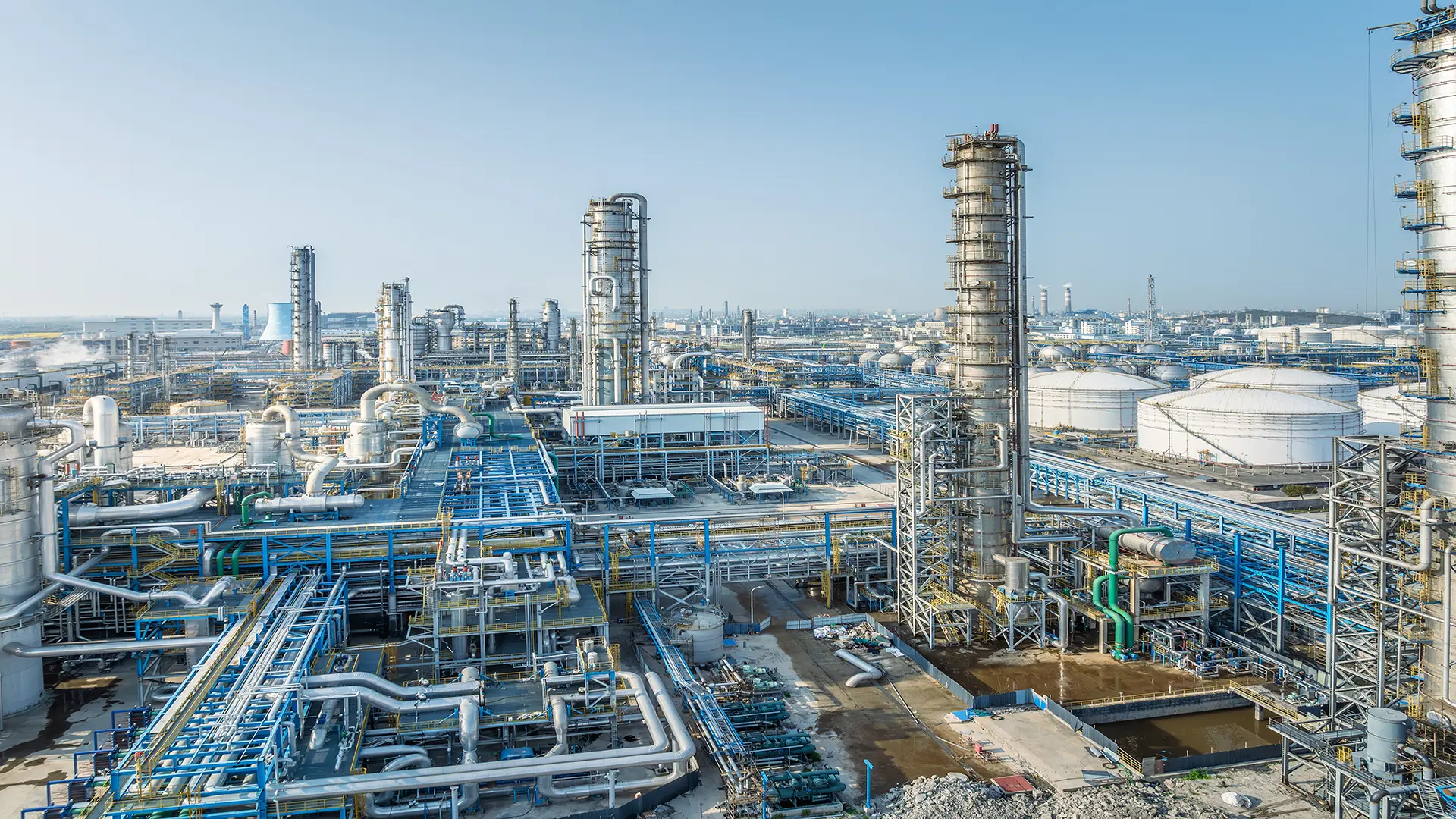
Written by John Egan for Industrial Info Resources (Sugar Land, Texas)--The global hydrogen business is growing, but one sector of that industry--low-emissions hydrogen--has been bedeviled by project cancellations and "persistent challenges," the International Energy Agency (IEA) (Paris, France) reported in its recent report, Global Hydrogen Review 2025, released September 12. This is the fifth year the agency has produced the report.
The industries producing and using hydrogen have developed a color palette to show the many ways it can be produced. To combat global warming, the IEA has been a cheerleader for greater production and use of low-emissions (low-e) hydrogen, of which there are two types: Green hydrogen is produced with an electrolyzer powered by non-emitting renewable electric generation. Blue hydrogen is made by steam gas reforming powered by electricity generated by natural gas, coupled with carbon sequestration technology.
So-called grey hydrogen is created using fossil-fuel generation not equipped with carbon sequestration technology, while purple or pink hydrogen is created using electricity from a nuclear power plant.
Global demand for all "colors" of hydrogen rose about 2% in 2024, to just less than 100 million tons, and demand is expected to meet or slightly exceed 100 million tons this year, the IEA report said. But low-e hydrogen accounts for a tiny percentage, about 1%, of the overall global hydrogen market. So while the agency noted that production of low-e hydrogen rose about 10% in 2024, that rise came on a small base. Low-e hydrogen amounted to about 1 million tonnes out of a market of about 100 million tons.
Petroleum refining and chemical production continued to be the largest consumer of hydrogen. That is not expected to change significantly in the near term, the IEA said.
Hopes for low-e hydrogen as a force for decarbonization were high about five years ago, when the IEA began preparing these annual reports. But since then, high costs, supply-chain delays and shifting governmental support mechanisms have dimmed the outlook for low-e hydrogen.
The report noted that, depending on the location, renewable hydrogen can be between 1.5 and seven times more expensive to produce than unabated fossil-driven hydrogen. This cost premium is an important challenge for project developers. But the IEA added that "a wide range of final products use hydrogen as an intermediate feedstock, and in many cases the cost impact is likely to be manageable."
But facts are facts. "The pipeline of low-emissions (hydrogen) production projects has shrunk, but a strong expansion by 2030 is still in sight," the IEA report said. However, "For the first time (since 2021), potential low-emissions hydrogen production by 2030 based on announced projects has declined."
In last year's review the agency projected that, based on projects under development, production of low-e hydrogen could reach 49 million tonnes per year by 2030. In this year's report, however, that outlook has shrunk about 25%, to about 37 million tonnes per year by 2030.
Potential production fell for both projects using electrolysis (green) and those using fossil fuels with carbon capture (blue). The IEA said that electrolysis projects represented about 80% of the project fallout. Delays and cancellations included early-stage projects across Africa, the Americas, Europe and Australia.
The outlook for low-e hydrogen production and use in the U.S., never particularly bright, has dimmed further during the Trump administration in ways that underscore the IEA's diminished expectations for that clean fuel. In May, the U.S. Department of Energy's Office of Clean Energy Demonstrations canceled 24 clean-energy financial assistance awards totaling $3.7 billion. Some hydrogen projects were included in that cancellation.
Then, over the summer, Congress passed President Donald Trump's tax and budget proposal, which shortened by five years the sunset date for clean hydrogen tax credits, called section 45V credits. Given the president's antipathy to renewable energy, the administration may take further action that impede the production of green hydrogen.
The IEA's reduced outlook for low-e hydrogen echoes the perspectives of some industry experts, including Trey Hamblet, Industrial Info's senior vice president of research operations. For more on that, see August 22, 2025, article - The Green Hydrogen Bubble - A Pop Heard Around the World.
Despite what IEA called an industry recalibration around low-e hydrogen, it reiterated its belief that low-e hydrogen production "is expected to grow strongly by 2030. Low-emissions hydrogen production from projects that are today operational or have reached final investment decision (FID) is set to reach 4.2 Mtpa (million tons per year) by 2030, a fivefold increase compared with 2024 production."
Adopting an optimistic outlook, the IEA said, "While the uptake of low-emissions hydrogen is not yet meeting the ambitions set in recent years--held back by high costs, uncertain demand and regulatory environments, and slow infrastructure development--there are still notable signs of growth. A recent wave of project delays and cancellations has reduced expectations for the deployment of low-emissions hydrogen this decade. However, in the early stages of adopting new technologies, there are often moments of strong progress as well as periods of sluggish development, and several indicators suggest that the sector continues to mature."
The low-e hydrogen sector is "still nascent and different regions have taken different approaches to policy development," the report continued. "Given the versatility of hydrogen, there is no 'silver bullet' in terms of effective policy instruments, and the final choice will depend on the specific country context.
The agency emphasized the importance of policy steps to boost demand, apparently in the belief that production will follow. For example, it recommended the maintenance of support schemes for low-emissions hydrogen production, with a focus on shovel-ready projects that target existing applications.
Industrial Info Resources (IIR) is the leading provider of industrial market intelligence. Since 1983, IIR has provided comprehensive research, news and analysis on the industrial process, manufacturing and energy related industries. IIR's Global Market Intelligence (GMI) platform helps companies identify and pursue trends across multiple markets with access to real, qualified and validated plant and project opportunities. Across the world, IIR is tracking over 200,000 current and future projects worth $17.8 Trillion (USD).
/news/article.jsp
false
Want More IIR News Intelligence?
Make us a Preferred Source on Google to see more of us when you search.
Add Us On GoogleAsk Us
Have a question for our staff?
Submit a question and one of our experts will be happy to assist you.

Forecasts & Analytical Solutions
Where global project and asset data meets advanced analytics for smarter market sizing and forecasting.
Explore Our SolutionsRelated Articles
-
Urenco Announces New U.S. Uranium Processing ExpansionJune 12, 2026
-
Germany's Hydrogen Support Fund Gets EU ApprovalJune 02, 2026

Industrial Project Opportunity Database and Project Leads
Get access to verified capital and maintenance project leads to power your growth.
Discover Our DatabaseIndustry Intel
-
Brazil: Efficiency, Innovation, and Opportunities in the Food & Beverage IndustryPodcast Episode / Jun 12, 2026
-
2026-2027 Investment Radar for Mexico, Central America & the CaribbeanPodcast Episode / May 29, 2026
-
Innovations Shaping the Next Era of Power GenerationPodcast Episode / May 22, 2026
-
The Role of Contract Manufacturing in Global Pharma GrowthPodcast Episode / May 8, 2026
-
2026 North American Labor OutlookPodcast Episode / Apr 24, 2026