Petroleum Refining
Nigeria's Refining Sector Undergoing Major Transformation
Nigeria's refining sector is the largest in Africa and is undergoing a major transformation, with private refineries now leading the drive toward energy self-sufficiency.
Released Monday, April 13, 2026
Reports related to this article:
Plant(s): View 1 related plant in PECWeb
Written by Abhishek Choudhary for IIR News Intelligence (Sugar Land, Texas)
Summary
Nigeria's refining sector is the largest in Africa and is undergoing a major transformation, with private refineries now leading the drive toward energy self-sufficiency.Nigeria's Path Toward Self-Sufficiency
Despite being one of Africa's top crude oil producers, Nigeria has long relied heavily on imported refined petroleum products due to underperforming state-owned refineries.The Nigerian government owns three refineries under the Nigerian National Petroleum Company (NNPC) in Port Harcourt, Warri and Kaduna, with a combined processing capacity of 445,000 barrels per day (bpd). These facilities were originally designed to meet domestic fuel demand. However, since 2018, NNPC has struggled to operate them effectively due to aging equipment, poor maintenance, operational inefficiencies, crude supply shortages and financial shortfalls. As a result, none of the three NNPC refineries are currently operational and Nigeria remains dependent on imports, incurring substantial foreign exchange costs.
In the early 2020, NNPC undertook major rehabilitation efforts, including a reported US$1.5 billion overhaul of Port Harcourt and billions more for Warri and Kaduna. Despite these investments, the refineries failed to operate efficiently and continued to incur heavy losses. Investigations by Nigeria's House of Representatives revealed allegations of fraud, mismanagement and misappropriation of public funds in the rehabilitation process.
By 2025-2026, NNPC acknowledged decades of neglect and financial waste, ultimately shutting down the facilities and shifting its strategy toward partnerships with operational experts, moving away from contractor-led programs that had delivered little long-term value. Most recently, the restart of NNPC's 210,000-bpd Port Harcourt Refinery has been delayed indefinitely. The refinery had been under a planned shutdown for rehabilitation work since December 2021. This failure of state-run refineries created an opportunity for private investment to transform Nigeria's refining landscape.
Private-sector refineries, led by the 650,000-bpd Dangote Refinery, have emerged as the dominant force in Nigeria's refining industry. They now command a significant share of the domestic market, reduce imports and expand exports, sharply contrasting with the decades of inefficiency in state-owned refineries.
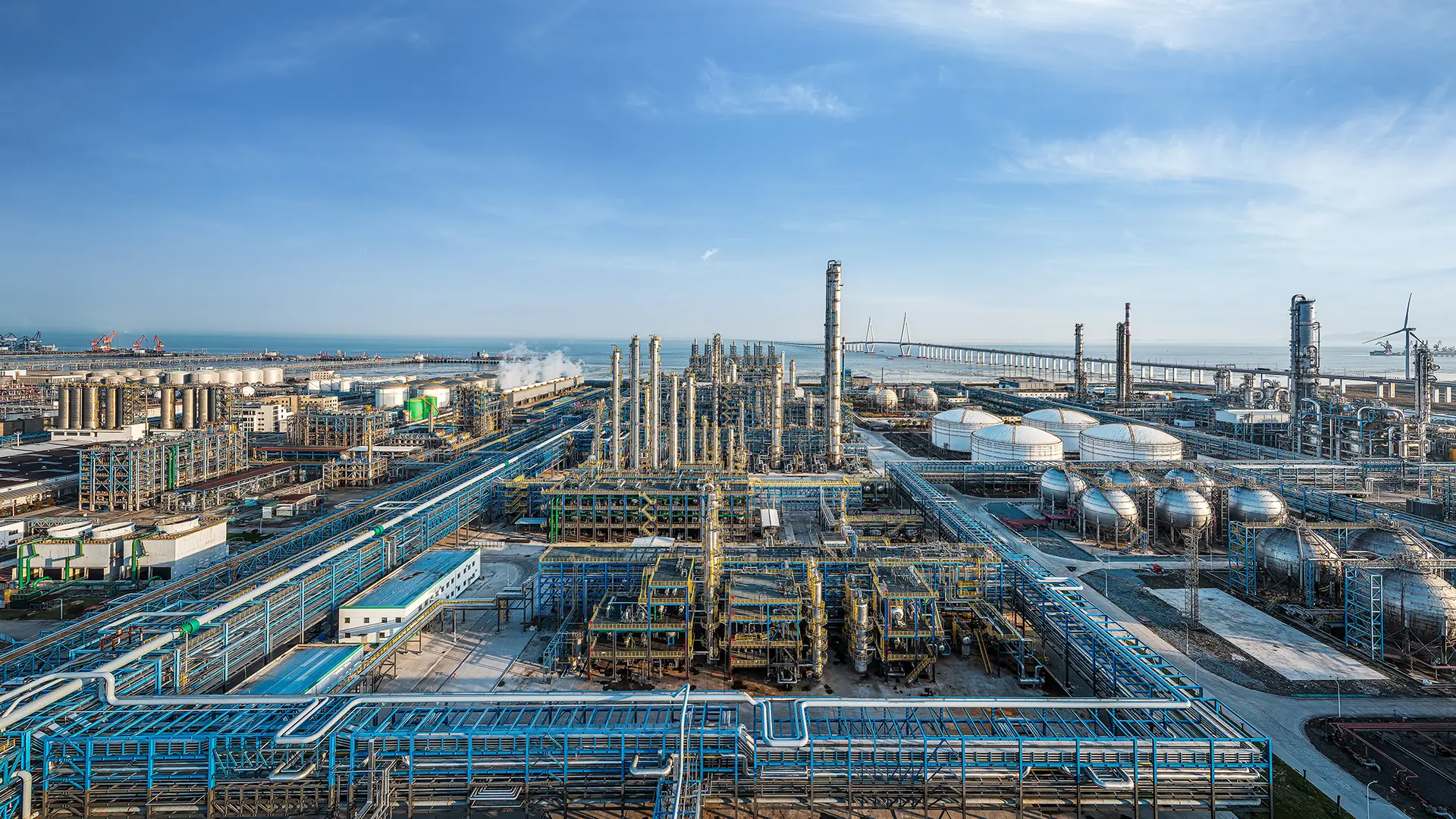
The Dangote refinery in Lekki has already made a substantial impact, reducing Nigeria's reliance on imported fuel and supplying a major share of domestic demand. As the world's largest single-train refinery, it helped cut gasoline imports from US$14.06 billion in 2024 to US$10 billion in 2025. Additional outputs include 830,000 tons per year of polypropylene, 77,000 tons of sulfur and 585,000 tons of carbon black feedstock. Dangote has begun exporting polypropylene globally, and further expansions are planned to increase petrochemical production, broaden its range of chemicals including linear alkyl benzene (LAB) and support domestic industries such as plastics, detergents and textiles. Subscribers to Industrial Info Resources' Global Market Intelligence (GMI) Petroleum Refining Plant Database can view a detailed profile of the Dangote refinery.
Currently, Nigeria's total refinery capacity stands at 684,500 bpd, largely boosted by the Dangote facility, according to Industrial Info Resources' database. By 2030, Dangote aims to expand its capacity to 1.4 million bpd, while other private players plan to add around 1.17 million bpd. However, these projects face significant funding and logistical challenges. If achieved, Nigeria's combined refining capacity would rise to 2.628 million bpd, positioning the country as a major regional fuel exporter.
Nigeria's petroleum refining sector is entering a new era. With decades of import dependence behind it, private investments led by the Dangote refinery are driving the country toward self-sufficiency, stronger energy security, and a growing regional role. Sustaining this progress will require smart, forward-looking financial and regulatory policies.
Key Takeaways
- Private-sector refineries have emerged as the dominant force in Nigeria's refining industry.
- The 650,000-bpd Dangote Refinery is reducing Nigeria's reliance on imported fuel.
- By 2030, Dangote aims to expand its capacity to 1.4 million bpd.
About Industrial Info Resources
Industrial Info Resources (IIR) is the leading provider of industrial market intelligence. Since 1983, IIR has provided comprehensive research, news and analysis on the industrial process, manufacturing and energy related industries. IIR's Global Market Intelligence (GMI) helps companies identify and pursue trends across multiple markets with access to real, qualified and validated plant and project opportunities. Across the world, Industrial Info Resources is tracking over 250,000 current and future projects worth $30.2 Trillion (USD).
/news/article.jsp
false
Want More IIR News Intelligence?
Make us a Preferred Source on Google to see more of us when you search.
Add Us On GoogleAsk Us
Have a question for our staff?
Submit a question and one of our experts will be happy to assist you.

Forecasts & Analytical Solutions
Where global project and asset data meets advanced analytics for smarter market sizing and forecasting.
Explore Our SolutionsRelated Articles
-
Africa's Midstream Sector Ramps Up to Meet New DemandSeptember 14, 2026
-
LNG Leads Capex Growth in African Energy Expansion 2026-30September 01, 2026

PECWeb Global Market Intelligence Platform
Identify opportunities, anticipate change, and execute with confidence. PECWeb connects the industrial intelligence you need, from projects and assets to operational events, all in one platform.
Discover PecwebIndustry Intel
-
Brazil Critical Minerals 2027: Rare Earths, Lithium, CopperPodcast Episode / Oct 16, 2026
-
US Craft Labor Outlook 2026: Wages, Per Diems, Data CentersPodcast Episode / Oct 16, 2026
-
Latin America Data Center Outlook 2026: Power, Hubs & GrowthPodcast Episode / Oct 9, 2026
-
Food and Beverage CapEx Outlook 2026: Tariffs, AI, AfricaPodcast Episode / Oct 9, 2026
-
North America Refining 2026: New Pipelines to PADD 5Podcast Episode / Oct 2, 2026