Petroleum Refining
Oil, Refining at Risk from This Year's Atlantic Hurricane Season
This year's Atlantic hurricane season could sideline as much as 1 million barrels per day in refining capacity
Released Friday, May 23, 2025
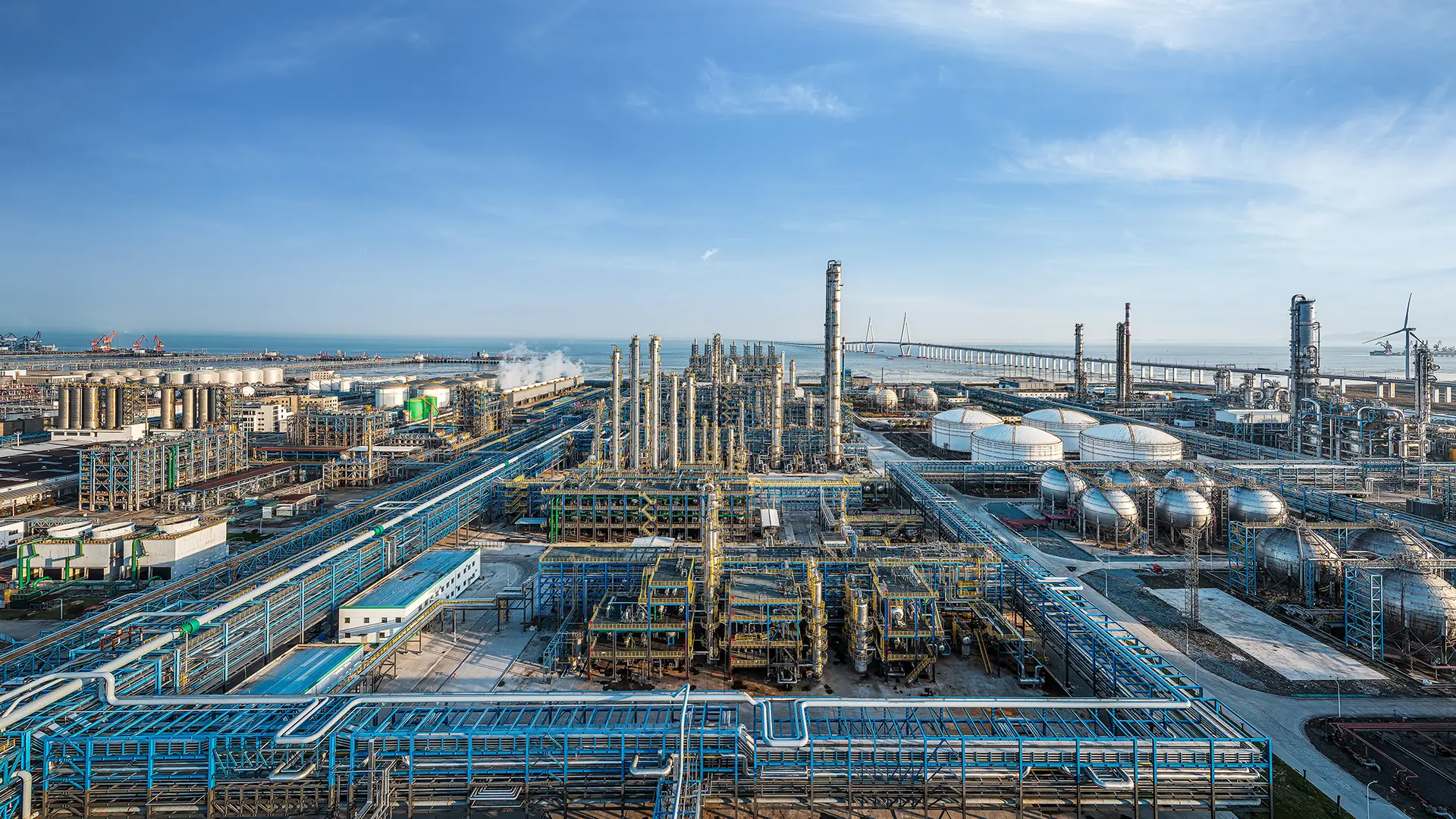
Written by Daniel Graeber for Industrial Info Resources (Sugar Land, Texas)--This year's Atlantic hurricane season, which lasts through September, could sideline as much as 1 million barrels per day in refining capacity, the U.S. government has advised.
Warm water in the Atlantic during the spring can create conditions that are later conducive to hurricane formation. In an early-year report, researchers at Colorado State University said they were expecting an above-average hurricane season this year, with as many as four major storms predicted.
That compares with a five-year average of 3.2 major hurricanes. Last year, five major hurricanes made landfall, shutting down oil and gas production in the Gulf of Mexico (designated as the Gulf of America by the Trump administration) and impacting refineries along the coast.
Cold winter weather this year curbed oil production in northern states such as North Dakota, while severe storms have already tested the nation's power grid. Gulf Coast operators, meanwhile, were given time to practice their response plans during Hurricane Preparedness Week, which ran from May 5-9. For more on that, see May 9, 2025, article - Hurricane Preparedness Week: Gulf Coast Energy Sector Faces Annual Test of Resilience.
"Preparedness isn't just about evacuation and shutdown procedures--it includes supply-chain resilience, personnel safety protocols, cybersecurity measures and robust communication strategies," added Aaron Studwell, IIR Energy's meteorologist.
Last year saw storms form earlier than usual in the Atlantic, with Hurricane Beryl forming in June. Beryl was a rare Category 5 storm that preceded an active hurricane season.
There were 18 named storms, 11 hurricanes and five major hurricanes for last year's storm season. Four of those storms--Beryl, Debby, Helene and Milton--were responsible for most of the estimated $225 billion in damage.
The National Oceanic and Atmospheric Administration (NOAA) characterizes an "average" season as one with 14 named storms, seven hurricanes and three major hurricanes.
Storms in September 2024 sidelined nearly 300,000 barrels of oil per day (BBL/d) in Gulf production, accounting for about 16% of total U.S. crude oil production. The Gulf of Mexico is only a minor gas producer.
Onshore, hurricanes can spell trouble for the nation's refinery sector. Phillips 66 (Houston, Texas) was forced to shutter its Alliance refinery in Louisiana after storm damage in 2021. Like offshore facilities, refinery operators will evacuate staff ahead of storms, and the Gulf Coast accounts for about half of the total U.S. refining capacity.
The U.S. Energy Information Administration (EIA) said Tuesday that it's difficult to make an accurate damage assessment.
"However, because of the total volume of refining capacity in each region, more than 1.0 million barrels per day of capacity could be temporarily taken offline in anticipation of a major storm," the agency said.
Hillary Stevenson, vice president of energy intelligence at IIR Energy, noted, "In 2024, 50,000 BBL/d of refining capacity was sidelined temporarily due to Beryl, with 370,000 BBL/d taken offline during Francine." That could put pressure on commodity prices. Should a storm hit Florida, for example, regional gasoline prices would spike because the state lacks refineries to produce its own fuel. Hurricane Helene, which made landfall in September as a Category 4 storm in Florida, left an estimated 4 million people with power at the peak.
And while lower relative to previous years, crude oil prices would likely be impacted as well, though the average for this year could be at levels not seen since the COVID-19 pandemic.
Industrial Info Resources (IIR) is the leading provider of industrial market intelligence. Since 1983, IIR has provided comprehensive research, news and analysis on the industrial process, manufacturing and energy related industries. IIR's Global Market Intelligence (GMI) helps companies identify and pursue trends across multiple markets with access to real, qualified and validated plant and project opportunities. Across the world, IIR is tracking over 200,000 current and future projects worth $17.8 Trillion (USD).
/news/article.jsp
false
Want More IIR News Intelligence?
Make us a Preferred Source on Google to see more of us when you search.
Add Us On GoogleAsk Us
Have a question for our staff?
Submit a question and one of our experts will be happy to assist you.

Forecasts & Analytical Solutions
Where global project and asset data meets advanced analytics for smarter market sizing and forecasting.
Explore Our SolutionsRelated Articles
-
War, Refineries Keep U.S. Gasoline Prices ElevatedMay 22, 2026
-
Venezuela's PDVSA Continues with Refinery RepairsMay 20, 2026

Industrial Project Opportunity Database and Project Leads
Get access to verified capital and maintenance project leads to power your growth.
Discover Our DatabaseIndustry Intel
-
Innovations Shaping the Next Era of Power GenerationPodcast Episode / May 22, 2026
-
The Role of Contract Manufacturing in Global Pharma GrowthPodcast Episode / May 8, 2026
-
2026 North American Labor OutlookPodcast Episode / Apr 24, 2026
-
2026 European Metals & Minerals Project Spending OutlookPodcast Episode / Apr 7, 2026
-
The Age of Critical Minerals in the AmericasPodcast Episode / Mar 20, 2026