Metals & Minerals
Overview of Domestic Steel Manufacturing Trends Going into 2004
Industrialinfo.com is forecasting an increase in capital spending activity at U.S. steel mills in 2004, as production is consolidated, shuttered mills are restarted, and older mills in need of repair receive needed attention - Includes the U.S. Steel Production Table (past six years)
Released Friday, January 09, 2004
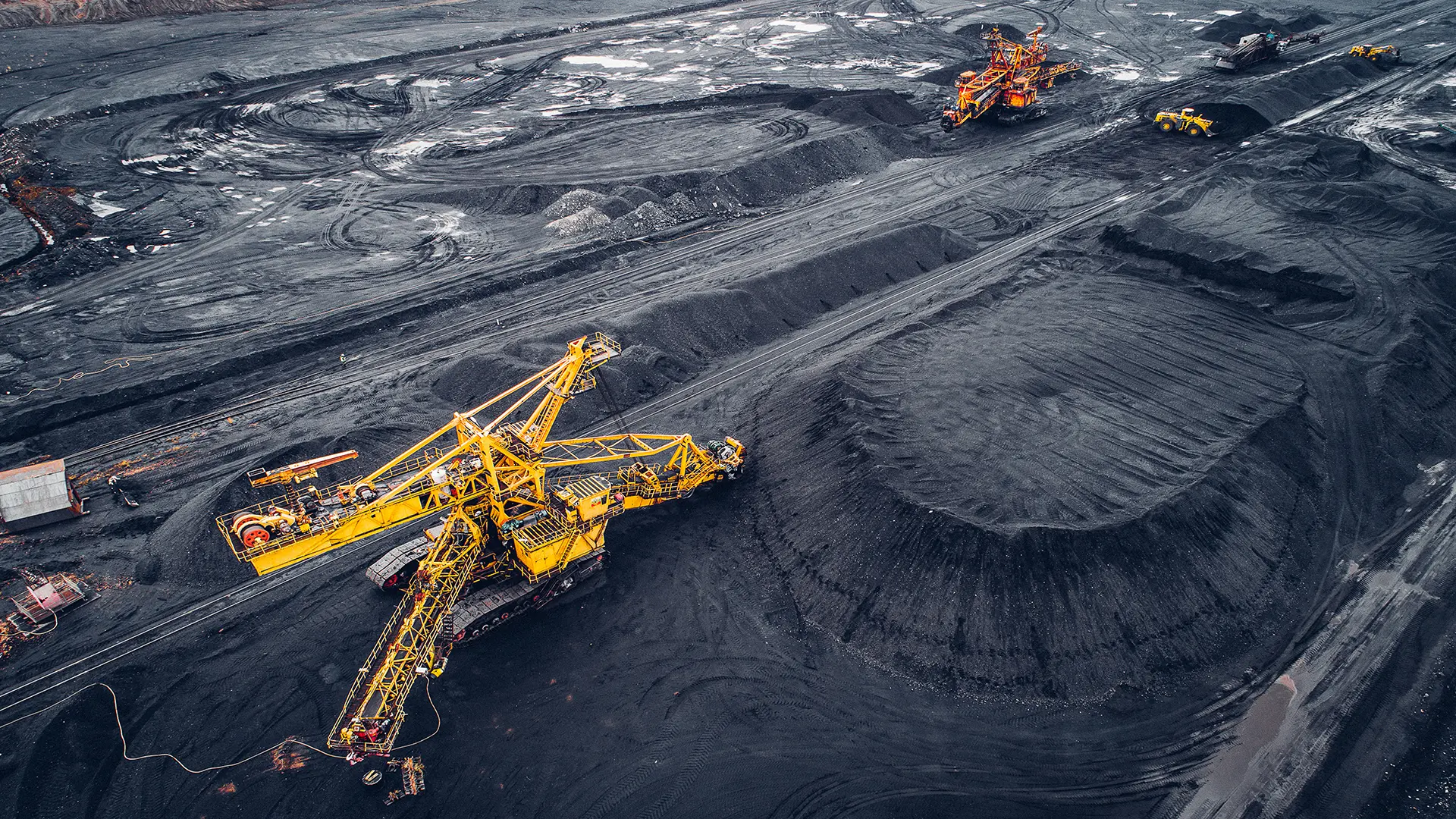
Written by Dirk Muyskens, Consulting Engineer for Industrialinfo.com (Industrial Information Resources, Incorporated; Houston, Texas). U.S. production of steel has remained static over the past 50 years - running at about 100,000,000 tons per year. During this time the economy has grown, but the use of steel has not kept pace. One of the chief reasons for this is that plastics and light metals, such as aluminum, have replaced steel in many applications including the automotive industry.
During this 50-year period starting in 1954, the basic oxygen process gradually replaced other steel production processes, namely open hearth and Bessemer processes, until now. BOP is the only process used in integrated steel mills that use pig iron feed. BOP production has been declining from 83 million tons in 1973 to 50 million tons in 2003.
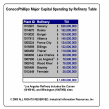 Statistics on U.S. steel production from 1998-2003 are shown in the accompanying table (click on the image at right to view), followed below by definitions of terms.
Electric arc furnaces were first used in 1909 with production of 16,000 tons in that year, which has grown to 50 million tons in 2003. Figures for intermediate years were 3.7 million tons in 1949, 11 million tons in 1962, and 35 million tons in 1991. At the present time, U.S. steel production is equally divided between BOP and electric furnace outputs. The advantage of electric furnace is that mini-mills can be set up close to customers and sources of scrap iron. However, the mills economic status depends on the quality and price of available scrap, and scrap prices have been inching upward.
It is expected that total U.S. steel production will continue at a rate of about 100 million tons per year, and production will be evenly divided between integrated mills and electric producers.
According to Joseph Govreau, Manager of Metals & Minerals for Industrialinfo.com, "During the past ten years, tremendous upheaval has occurred for U.S. steel manufacturers, as foreign competition, energy costs, feedstock costs, and labor issues have combined to force a significant percentage of the U.S. steel manufacturing sector to close and/or file for bankruptcy." Mr. Govreau went on to state, "This era witnessed the demise of Bethlehem Steel, and LTV Steel, to name a few, and has led to recent consolidation of the industry led by U.S. Steel Corporation (NYSE:X) (Pittsburgh, Pennsylvania), newcomer International Steel Group (ISG) (Richfield, Ohio), and mini-mill producer Nucor. Most recently, Russian steel producer, Serverstal Group (Vologda, Russia) acquired troubled integrated steel producer Rouge Steel."
In the recently released 2004 Industrial Outlook, Industrialinfo.com is forecasting an increase in capital spending activity at U.S. steel mills in 2004, as production is consolidated, shuttered mills are restarted, and older mills in need of repair receive needed attention.
At present time, there are 17 integrated mills in the U.S. The mill with the smallest capacity is the Warren Mill (Plant 1016767), rated at 1.7 million tons per year. The largest mill is the U.S. Steel plant at Gary, Indiana (1049988) with a capacity of 7.5 million tons a year. In the past ten years there have been four integrated mills permanently shut down.
In electric furnace operations there are two types of mills: those that make carbon steel and those that make specialty steels. Average capacity of carbon steel mills is one million tons per year, although there is considerable variation in size of mills. These mills are also known as mini-mills. There are 41 companies operating these mills, the largest, of which is Nucor Corporation (NYSE:NUE) (Charlotte, North Carolina). There are 36 companies operating specialty mills and average capacity of these is 500,000 tons per year. The total number of electric furnace mills is about 100 in the U.S.
For a complete listing of these mills, with mill contacts and other pertinent mill information contact Industrialinfo.com's Member Center at 800-762-3361.
Definitions:
Imports - Steel imports arrive from all parts of the world. No single country or region dominates export of steel to the United States.
Pig Iron - Pig iron is made in a blast furnace and is not suitable for steel manufacture due to high carbon content. Pig iron is the feed to a basic oxygen furnace, which reduces the carbon content for steel manufacture.
Basic Oxygen Furnace - Basic oxygen furnace is a pear-shaped furnace, lined with refractory bricks, that refines molten iron from the blast furnace and scrap into steel. Up to 30% of the charge into the BOF can be scrap, with hot metal accounting for the rest.
BOFs, which can refine a heat (batch) of steel in less than 45 minutes, replaced open-hearth furnaces in the 1950s; the latter required five to six hours to process the metal. The BOF's rapid operation, lower cost and ease of control give it a distinct advantage over previous methods.
Scrap is dumped into the furnace vessel, followed by the hot metal from the blast furnace. A lance is lowered from above, through which blows a high-pressure stream of oxygen to cause chemical reactions that separate impurities as fumes or slag. Once refined, the liquid steel and slag are poured into separate containers.
Electric Arc Furnace - In these furnaces, scrap is usually 100% of the charge, although direct reduced iron (DRI) can also be used or supplemented. Heat is supplied by electricity that arcs from graphite electrodes to the metal bath. Furnaces may be supplied by direct (DC) or alternating current (AC). DC units consume less energy and fewer electrodes but they are more expensive than AC units.
Direct Reduced Iron - Iron is produced form crushed iron ore. Impurities are driven off and iron is produced through the use of massive amounts of natural gas. The process produces 97% iron compared to 93% in a blast furnace. DRI is attractive where there is low-cost gas. The process is used in some countries, but at present no iron is made by DRI process in the United States due to the high cost of gas. DRI is used as a feed to electric arc furnaces. Some DRI is imported into the U.S.
/news/article.jsp
false
Want More IIR News Intelligence?
Make us a Preferred Source on Google to see more of us when you search.
Add Us On GoogleAsk Us
Have a question for our staff?
Submit a question and one of our experts will be happy to assist you.

Forecasts & Analytical Solutions
Where global project and asset data meets advanced analytics for smarter market sizing and forecasting.
Explore Our SolutionsRelated Articles
-
U.K Plan to Nationalize British Steel Angers ChinaMay 25, 2026
-
Key Lithium Project in Australia Moves ForwardMay 22, 2026

Industrial Project Opportunity Database and Project Leads
Get access to verified capital and maintenance project leads to power your growth.
Discover Our DatabaseIndustry Intel
-
Innovations Shaping the Next Era of Power GenerationPodcast Episode / May 22, 2026
-
The Role of Contract Manufacturing in Global Pharma GrowthPodcast Episode / May 8, 2026
-
2026 North American Labor OutlookPodcast Episode / Apr 24, 2026
-
2026 European Metals & Minerals Project Spending OutlookPodcast Episode / Apr 7, 2026
-
The Age of Critical Minerals in the AmericasPodcast Episode / Mar 20, 2026