Power
Spain, Portugal Recovering After Worst Power Outage
Spain and Portugal are recovering after an almost total collapse of their electricity grids yesterday where power cuts brought both countries to a standstill.
Released Wednesday, April 30, 2025
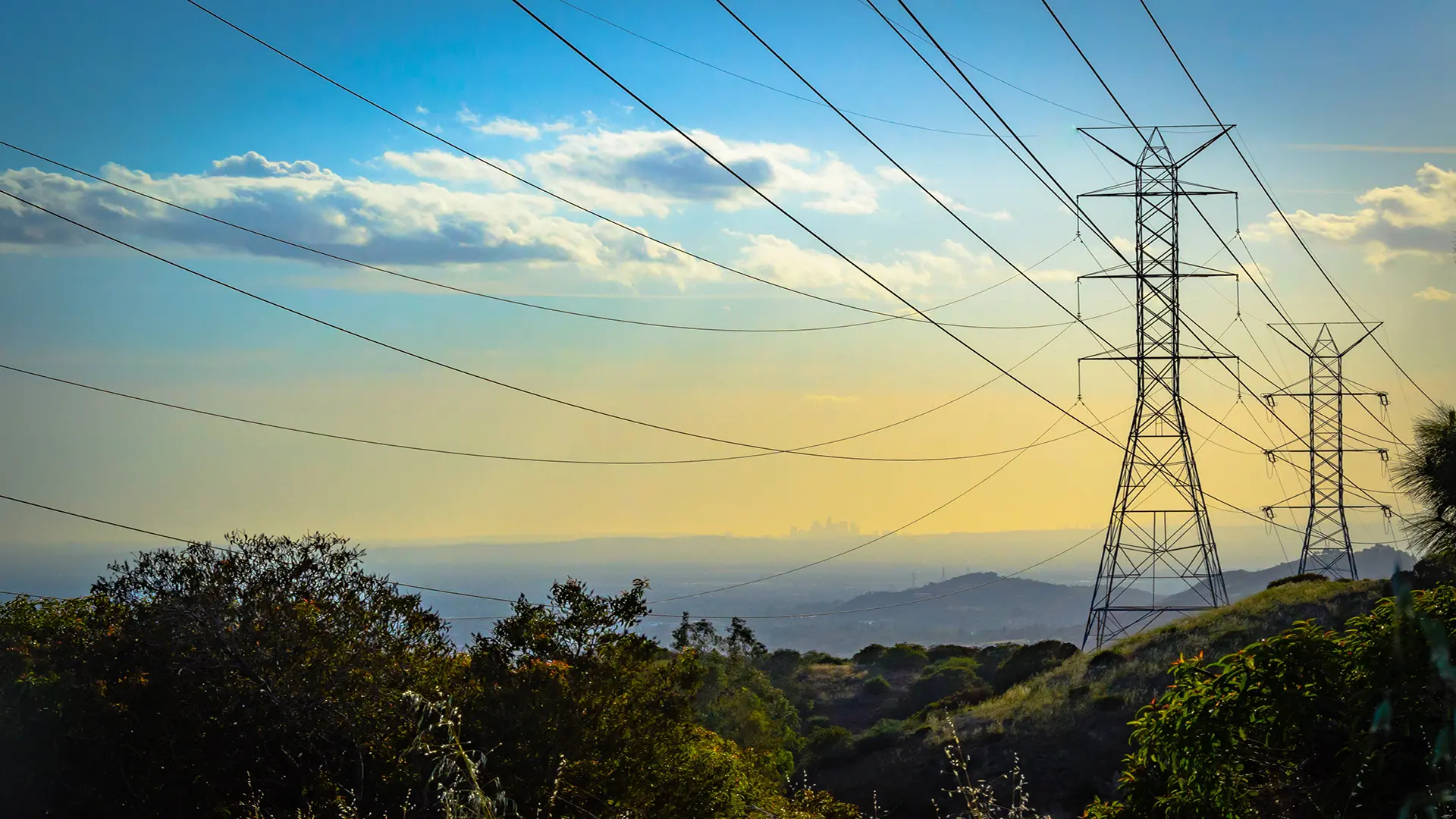
Written by Martin Lynch, European News Editor for Industrial Info (Galway, Ireland)--Spain and Portugal are recovering after an almost total collapse of their electricity grids yesterday where power cuts brought both countries to a standstill.
Tens of millions of people and thousands of businesses were affected by the wide scale outage which saw traffic systems grind to a halt, airports and metro stations shut, refineries and power plants taken offline, and the failure of phone lines, mobiles and ATMs. At 12.33pm, Spain's power grid lost 15 gigawatts (GW) - around 60% of its capacity - in the space of five seconds, according to the government. Spain's partially state-owned grid operator Red Eléctrica today confirmed that the loss of generation for the Iberian region was total at its worst. It caused chaos in both countries and as a result, both Spain and Portugal declared a state of emergency. As of this morning more than 90% of power has been restored but it could take days for everything to return to normal.
There is still no explanation for what caused the outage which RED Electrica called "exceptional and totally extraordinary," while its head of operations Eduardo Prieto said it "cannot speculate right now on the causes." There was early speculation that a cyberattack was responsible, but Spain's Prime Minister Pedro Sánchez said there was no evidence yet: "The causes are still being studied. It's best not to speculate." His sentiments were echoed by the European Commission's (EC's) vice president Teresa Ribera: "At the moment, there is nothing that allows us to say that the power outage affecting Spain and Portugal is due to any kind of sabotage or cyberattack. "We are working with the utmost caution and we will have to continue investigating to determine what are the specific causes that have generated this incident, which is one of the most serious that have been recorded in Europe for a long time." Endesa (Madrid, Spain) and Iberdrola (Bilbao), the country's main electricity providers, said they are continuing to investigate the incident.
Other unconfirmed possibilities for the outage include a "rare atmospheric phenomenon" in Spain, according to Portuguese grid operator, REN, which maintained that extreme temperature variations in Spain's interior had caused increasing vibrations in the power lines that led to failure. Some experts pointed to the impact that Spain's very high percentage of renewable energy was having on grid stability. Renewables make up 66% of installed capacity and supply almost 60% of power generated. Professor Miguel de Simón Martín of the University of León, told The Times newspaper: "Unlike hydro or thermal generators, wind and photovoltaic systems do not have inertia, as they are connected to the grid via power electronics (inverters). This characteristic means that the higher the renewable penetration, the lower the robustness of the grid. Consequently, with a low interconnection capacity and a high share of inverter-based renewable generation, our grid is today more vulnerable and has less room to react to disturbances."
Rystad Energy's senior analyst, Pratheeksha Ramdas, highlighted some of the key issues: "The partial restoration of power across Iberia has brought to light a deeper vulnerability in the region's energy system. A critical blackout lasting a few hours highlighted the heavy dependence on cross-border electricity flows. Spain's high renewable penetration exposed difficulties in balancing intermittent supply, while Portugal's complete reliance on imports underscored its lack of flexibility and energy storage. Although France managed the situation better, it still faced difficulties in managing unexpected electricity flows. This disruption serves as a clear warning: without stronger domestic resilience and improved regional coordination, future grid failures could have even more severe consequences."
Spanish refiner Petronor (Muskiz, Spain) shut all units at its 220,000-barrel-per-day (BBL/d) Bilbao oil refinery due the blackout to ensure safety conditions. Moeve (Madrid, Spain), formerly CEPSA, shut the 244,000-BBL/d Gibraltar-San Roque Refinery - the largest in the Iberian Peninsula - and the 220,000-BBL/d La Rabida refinery in Huelva. It is now slowly restarting both. The company was also forced to shut down its 250,000-tonne-per-year San Roque base-oils plant. BP's (NYSE:BP) (London, England) Castellon refinery was unaffected. Industrial Info is tracking the activities at Spain's nine key refineries. Subscribers to Industrial Info's Global Market Intelligence (GMI) Project Database can click here for plant activities.
Industrial Info Resources (IIR) is the leading provider of industrial market intelligence. Since 1983, IIR has provided comprehensive research, news and analysis on the industrial process, manufacturing and energy related industries. IIR's Global Market Intelligence (GMI) helps companies identify and pursue trends across multiple markets with access to real, qualified and validated plant and project opportunities. Across the world, IIR is tracking over 200,000 current and future projects worth $17.8 Trillion (USD).
/news/article.jsp
false
Want More IIR News Intelligence?
Make us a Preferred Source on Google to see more of us when you search.
Add Us On GoogleAsk Us
Have a question for our staff?
Submit a question and one of our experts will be happy to assist you.

Forecasts & Analytical Solutions
Where global project and asset data meets advanced analytics for smarter market sizing and forecasting.
Explore Our Solutions
PECWeb Global Market Intelligence Platform
Identify opportunities, anticipate change, and execute with confidence. PECWeb connects the industrial intelligence you need, from projects and assets to operational events, all in one platform.
Discover PecwebIndustry Intel
-
Latin America Data Center Outlook 2026: Power, Hubs & GrowthPodcast Episode / Oct 9, 2026
-
Food and Beverage CapEx Outlook 2026: Tariffs, AI, AfricaPodcast Episode / Oct 9, 2026
-
North America Refining 2026: New Pipelines to PADD 5Podcast Episode / Oct 2, 2026
-
Biomanufacturing Onshoring 2026: GLP-1, CDMO and ReshoringPodcast Episode / Oct 2, 2026
-
2026 US Data Center Outlook: Power, Land & CoolingPodcast Episode / Sep 18, 2026