Chemical Processing
UOP Technology Selected for New Aromatics Complex at Mangalore
ONGC Mangalore and Petrochemicals Limited (OMPL) (Mumbai, Maharashtra) is setting up an aromatic unit at the Mangalore Special Economic Zone (MSEZ).
Released Friday, May 23, 2008
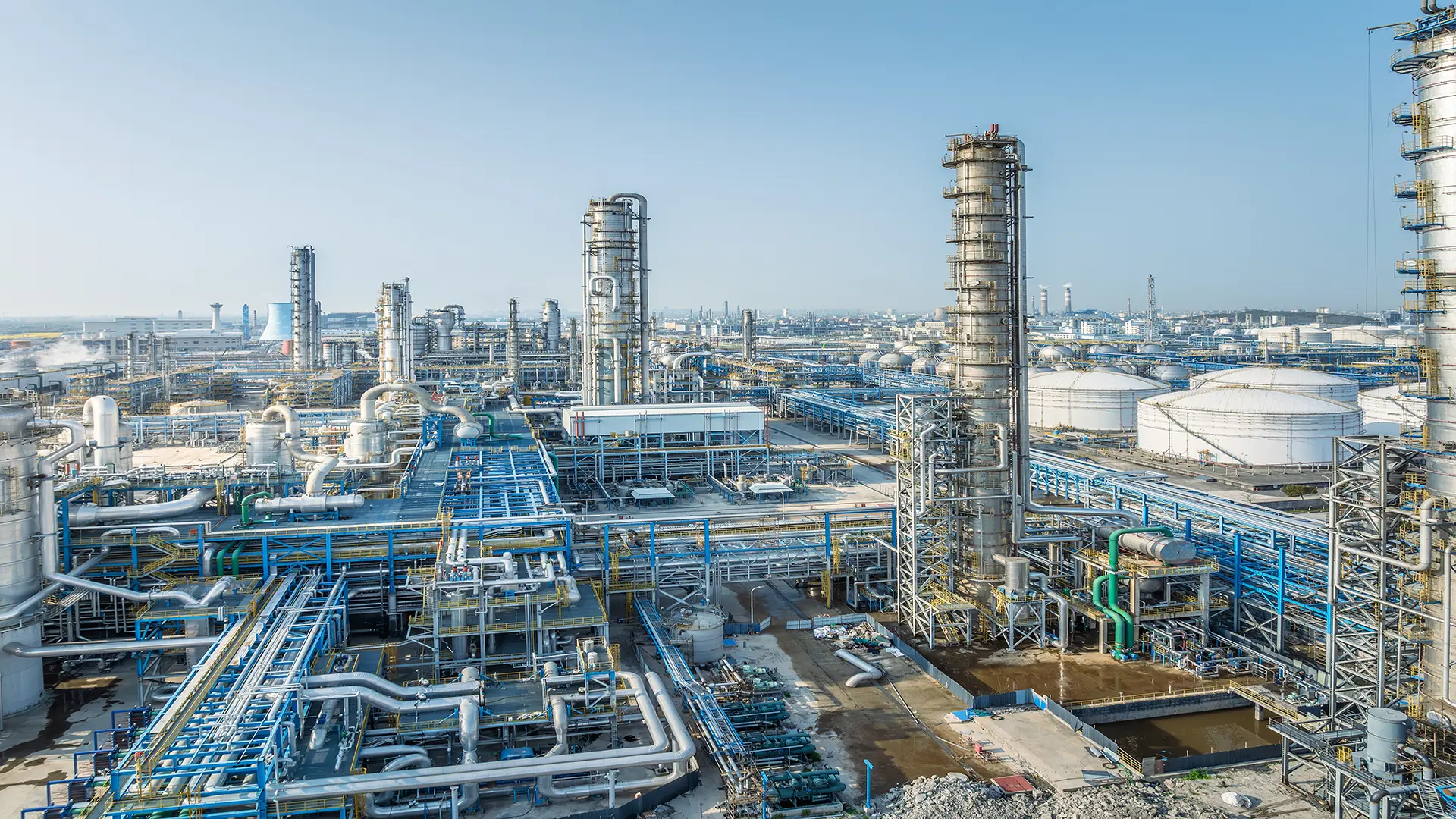
Researched by Industrial Info Resources (Sugar Land, Texas)--ONGC Mangalore and Petrochemicals Limited (OMPL) (Mumbai, Maharashtra) is setting up an aromatic unit at the Mangalore Special Economic Zone (MSEZ). OMPL is promoted by India's largest crude oil and natural gas producer, Oil and Natural Gas Commission Limited (ONGC) (Dehradun, Uttarakhand) and its subsidiary, Mangalore Refinery and Petrochemicals Limited (MRPL) (Mangalore, Karnataka). MSEZ is also the site of MRPL's refinery unit.
ONGC and MRPL will hold 49% equity in OMPL, and the remaining 51% will be offered to public and other strategic partners. ONGC is expected to invest close to $4 billion in the project. MRPL's refinery has the capacity to refine 12.5 million metric tons per year (about 268,000 barrels per day) of crude oil. Its products include aviation turbine fuel, bitumen, diesel, fuel oil, naphtha and petrol.
The refinery and aromatic units will be integrated and the refinery's naphtha and aromatic-rich stream will be used as feedstock for the aromatic unit. The aromatic complex is being designed to produce 900,000 metric tons per year of para-xylene and 275,000 metric tons per year of benzene. The plant is scheduled to go on-stream by the end of 2010. The OMPL complex will be the largest petrochemical complex in South India.
OMPL has selected UOP LLC (Des Plaines, Illinois) to supply technology, equipment and basic engineering services for the new plant. Several UOP technologies will be used in the aromatic complex, including the UOP Continuous Catalyst Regeneration (CCR) Platforming Process, the UOP Isomar Process, the UOP Parex Process, the UOP Tatoray Process, and the Shell Sulfolane Process.
The CCR Platforming process is used to efficiently produce aromatics from naphthenes and paraffins with the least possible ring opening or cracking. Aged catalyst is continuously replaced with freshly generated catalyst from an external regenerator. Use of current catalyst technology and reduction of reaction pressure greatly reduce the actual-to-theoretical yield gap.
The Isomar process is a catalytic process, in which ethyl benzene (EB) isomerization catalysts are used to transform EB into xylenes, and EB dealkylation catalysts are used to generate a valuable benzene co-product from EB. UOP offers I-300 EB dealkylation catalyst and I-400 EB isomerization catalyst. Both catalysts show very high aromatic ring retention, resulting in high yields of xylenes and benzene at very low hydrogen consumption.
The UOP Parex process is used to recover para-xylene from a mixture of C8 aromatic isomers by using a solid zeolite adsorbent that is selective for para-xylene, ensuring efficient purification and recovery.
The UOP Tatoray process selectively converts toluene, C9 aromatics (A9) and C10 aromatics (A10) into xylenes and benzene. Disproportionation -- the conversion of toluene into benzene and xylenes, and transalklyation -- the conversion of a mixture of toluene and A9/A10 into xylenes and benzene, are the two major reactions involved in the Tatoray process. A Tatoray unit in an aromatics complex can more than double the yield of para-xylene from a given naphtha feedstock. The reactions are carried out in a hydrogen atmosphere to lessen coke formation on the catalyst and ensure nearly zero ring destruction in the process.
In the Shell SulfolaneTM process, extractive distillation is combined with liquid-liquid extraction to recover high purity aromatics from mixtures of hydrocarbons. The combined process allows Sulfolane units to process hydrocarbons of a much wider boiling range than either technique would allow when used alone. A single unit can simultaneously recover high purity C6-C9 aromatics, which can be individually recovered later by simple fractionation. The solvent tetrahydrothiophene 1, 1-dioxide, or sulfolane, developed by Shell Oil Company (Houston, Texas) in the 1960s, lends the process its name. It is still the most efficient solvent available to recover aromatics.
View Project Report - 89000881 89000918 89000920 89000923 89001183 89001185 89001198
Industrial Info Resources (IIR) is a marketing information service specializing in industrial process, energy and financial related markets with products and services ranging from industry news, analytics, forecasting, plant and project databases, as well as multimedia services.
/news/article.jsp
false
Want More IIR News Intelligence?
Make us a Preferred Source on Google to see more of us when you search.
Add Us On GoogleAsk Us
Have a question for our staff?
Submit a question and one of our experts will be happy to assist you.

Forecasts & Analytical Solutions
Where global project and asset data meets advanced analytics for smarter market sizing and forecasting.
Explore Our SolutionsRelated Articles
-
Europe's Declining Carbon Capture SectorJune 24, 2026
-
U.S. Seeks New Section 301 Tariffs in Forced Labor FlapJune 18, 2026
-
Urenco Announces New U.S. Uranium Processing ExpansionJune 12, 2026

PECWeb Global Market Intelligence Platform
Identify opportunities, anticipate change, and execute with confidence. PECWeb connects the industrial intelligence you need, from projects and assets to operational events, all in one platform.
Discover PecwebIndustry Intel
-
2026 European Petroleum Refining Project OutlookPodcast Episode / Jun 26, 2026
-
Brazil: Efficiency, Innovation, and Opportunities in the Food & Beverage IndustryPodcast Episode / Jun 12, 2026
-
2026-2027 Investment Radar for Mexico, Central America & the CaribbeanPodcast Episode / May 29, 2026
-
Innovations Shaping the Next Era of Power GenerationPodcast Episode / May 22, 2026
-
The Role of Contract Manufacturing in Global Pharma GrowthPodcast Episode / May 8, 2026