Power
MATS Forces FirstEnergy to Close Six Coal-Fired Plants This Year
The recently finalized Mercury and Air Toxics Standards (MATS) rule from the EPA will force Midwestern utility giant FirstEnergy Corporation (NYSE:FE) to close six coal-fired power plants.
Released Thursday, February 02, 2012
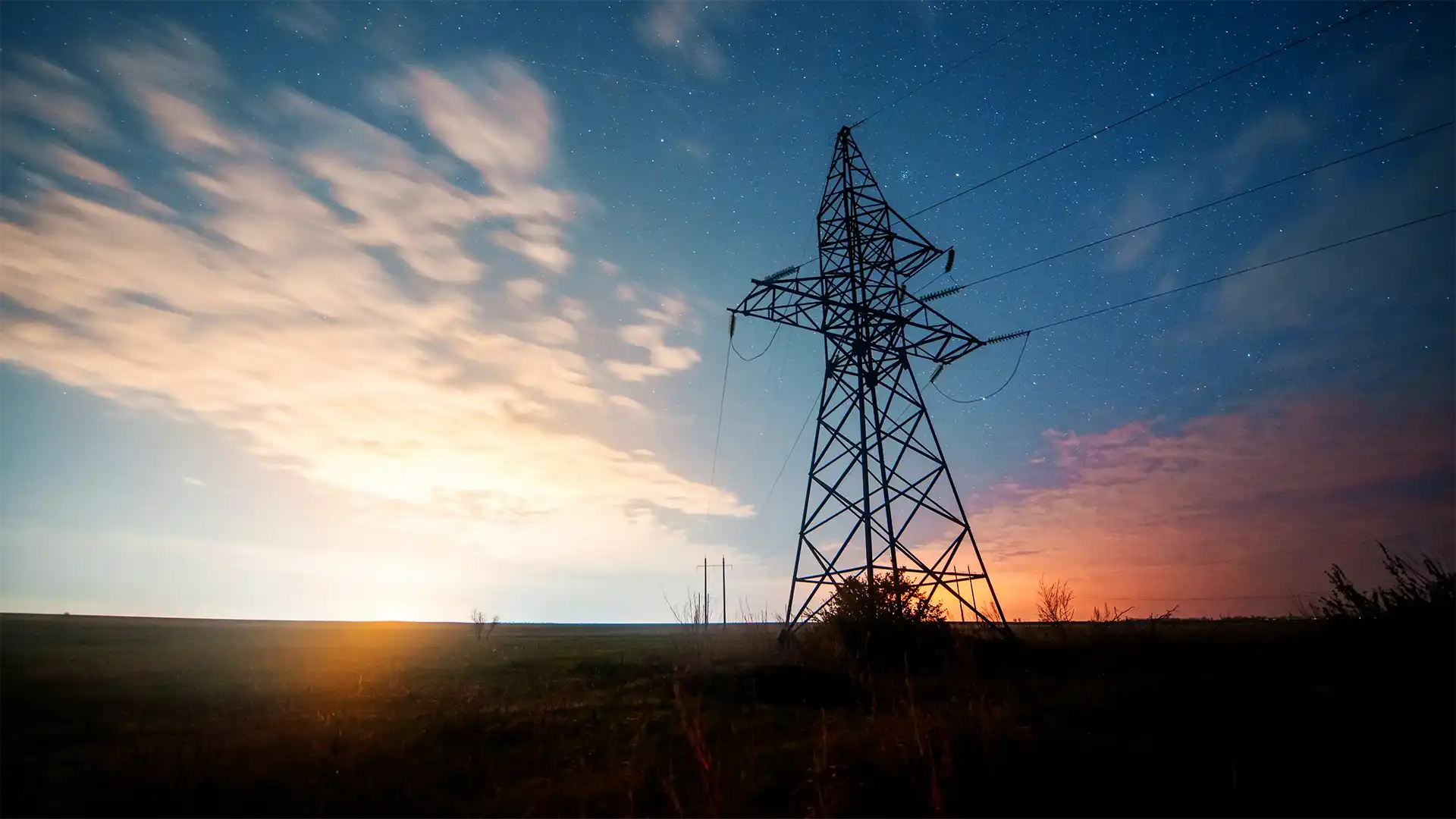
Written by John Egan for Industrial Info Resources (Sugar Land, Texas)--The recently finalized Mercury and Air Toxics Standards (MATS) rule from the U.S. Environmental Protection Agency (EPA) (Washington, D.C.) will force Midwestern utility giant FirstEnergy Corporation (NYSE:FE) (Akron, Ohio) to close six coal-fired power plants with aggregate generating capacity of 2,689 megawatts (MW) by September 1, 2012.
The plants to be shuttered were intermediate or peaking generators that account for about 12% of the company's generation capacity, but only about 10% of the actual electricity generated by FirstEnergy, FirstEnergy spokesman Mark Durbin told Industrial Info.
"MATS does not allow trading and it has a very aggressive implementation schedule," Durbin said in an interview this week. "It's possible we could have kept some of these plants open if MATS allowed trading," like the EPA's Cross-State Air Pollution Rule (CSAPR). "MATS was the game-changer--it forced our hand. Under the rule, all coal-fired generators have to install mercury-reduction equipment by 2015 or risk being out of compliance. There's a finite number of equipment manufacturers and engineering and construction firms that can do that work." MATS had been known as the Utility Boiler MACT rule--an acronym for Maximum Achievable Control Technology. For more on the MATS rule, see December 27, 2011, article - Environmental Protection Agency Finalizes Mercury and Air Toxics Standards.
FirstEnergy does not plan to build replacement generation, Durbin continued: "There is excess generation in the marketplace right now, and we plan to go to the market to meet any future needs we may have for generation. It is possible we could install some combustion turbines at some plant sites in the future, but we don't see a strong need for that in the immediate future." FirstEnergy operates in the PJM (Pennsylvania-New Jersey-Maryland) region, and Durbin said the utility can purchase electricity for about $30-$40 per megawatt-hour. The utility can buy generation for far less than it would cost to build new generation or install mercury-reduction equipment at these six plants.
In a Jan. 26 announcement, FirstEnergy said it would close the following plants by September 2012:
- Bay Shore Power Station, Units 2-4, located in Oregon, Ohio. This plant began operating in 1955. Units 2-4 have an aggregate generating capacity of 495 MW. Unit 1 will remain open.
- Eastlake Power Station, located in Eastlake, Ohio. This five-unit, 1,233-MW plant went online in 1953.
- Ashtabula Power Station, located in Ashtabula, Ohio. This single-unit, 244-MW generator went into service in 1956.
- Lake Shore Power Station, located in Cleveland, Ohio. This single-unit, 245-MW generator began operating in 1941.
- Armstrong Power Station, located in Kittkanning, Pennsylvania. This single-unit, 356-MW generator went online in 1958.
- R. Paul Smith Power Station, located in Williamsport, Maryland. This single-unit, 116-MW generator went online in 1909).
FirstEnergy said the closures would affect 529 employees. Some of those affected employees may apply for open positions within the company. Some affected employees may be able to take advantage of an early retirement program being offered to employees who are at least 55 years old.
FirstEnergy's plant retirements are subject to review for reliability impacts, if any, by PJM Interconnection, the regional transmission organization that controls the area where they are located. "We're not sure what PJM might do, but we can't justify keeping those plants open." He said it was possible that PJM could order FirstEnergy to keep one or more of these six plants operating, to ensure adequate reliability in the region.
FirstEnergy is a diversified energy company with subsidiaries involved in the generation, transmission and retail distribution of electricity to customers located in Ohio, Pennsylvania, New Jersey, West Virginia, Virginia and Maryland. Once the plant closures are complete, FirstEnergy will have about 20,300 MW of generating capacity.
View Plant Profile - 1010275 1014599 1009936 1010132 1016330 1014488
Industrial Info Resources (IIR), with global headquarters in Sugar Land, Texas, and eight offices outside of North America, is the leading provider of global market intelligence specializing in the industrial process, heavy manufacturing and energy markets. Industrial Info's quality-assurance philosophy, the Living Forward Reporting Principle, provides up-to-the-minute intelligence on what's happening now, while constantly keeping track of future opportunities.
/news/article.jsp
false
Want More IIR News Intelligence?
Make us a Preferred Source on Google to see more of us when you search.
Add Us On GoogleAsk Us
Have a question for our staff?
Submit a question and one of our experts will be happy to assist you.

Forecasts & Analytical Solutions
Where global project and asset data meets advanced analytics for smarter market sizing and forecasting.
Explore Our SolutionsRelated Articles

Industrial Project Opportunity Database and Project Leads
Get access to verified capital and maintenance project leads to power your growth.
Discover Our DatabaseIndustry Intel
-
Innovations Shaping the Next Era of Power GenerationPodcast Episode / May 22, 2026
-
The Role of Contract Manufacturing in Global Pharma GrowthPodcast Episode / May 8, 2026
-
2026 North American Labor OutlookPodcast Episode / Apr 24, 2026
-
2026 European Metals & Minerals Project Spending OutlookPodcast Episode / Apr 7, 2026
-
The Age of Critical Minerals in the AmericasPodcast Episode / Mar 20, 2026