Power
FERC Seeks to Break Logjam in Transmission Siting and Cost Allocation with Order 1920
The Federal Energy Regulatory Commission aims to expedite siting of high-voltage transmission lines
Released Thursday, May 16, 2024
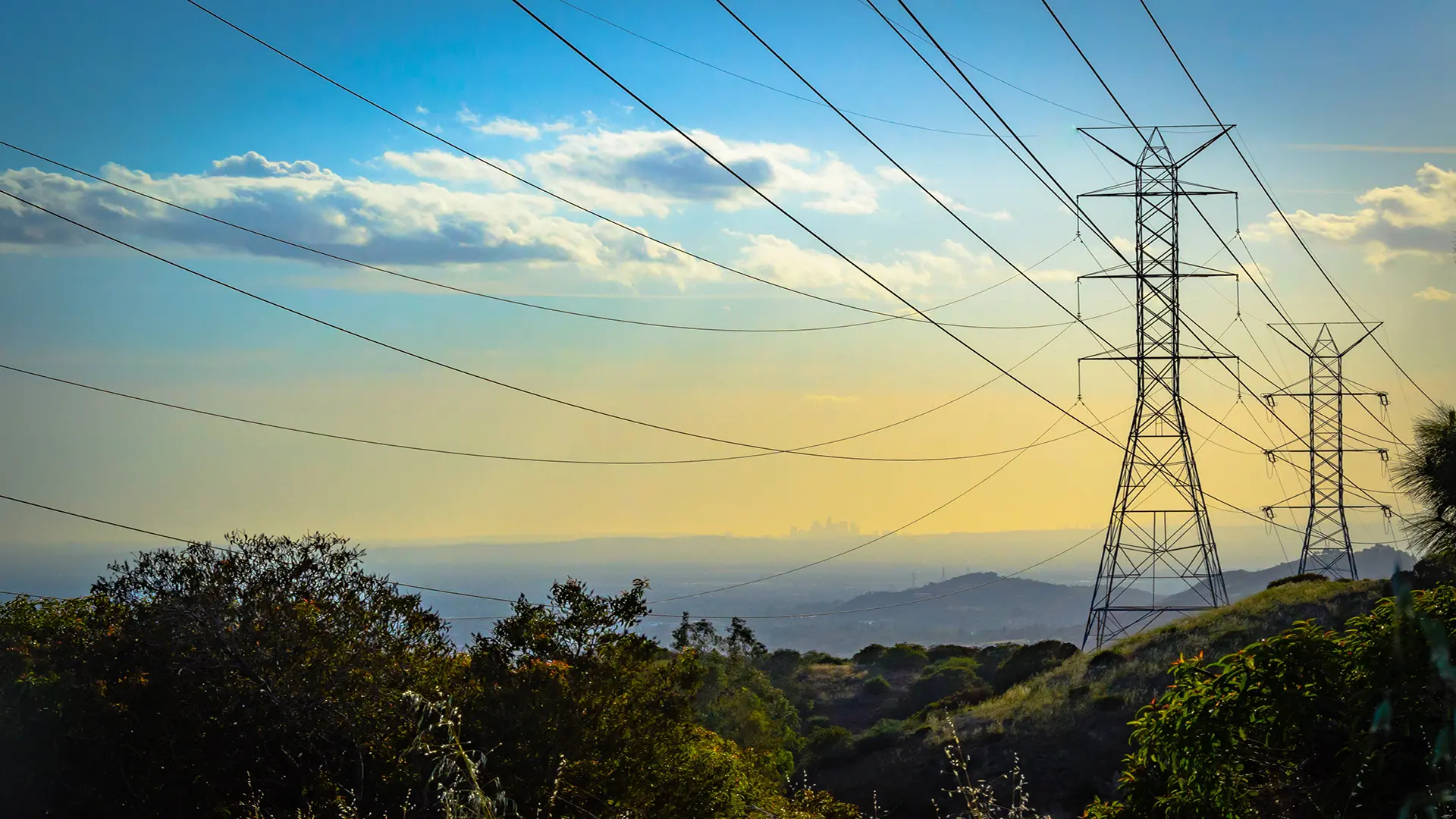
Written by John Egan for Industrial Info Resources (Sugar Land, Texas)--The Federal Energy Regulatory Commission (FERC) (Washington, D.C.), the U.S. agency overseeing interstate electric transmission, issued a rule this week that aims to expedite siting of high-voltage transmission lines between regional transmission providers. It also proposed a cost-allocation methodology that could remove a major impediment to siting transmission lines, specifying who would pay--and who would not--for new transmission facilities that nearly all observers agree are needed.
In voting 2-1 to adopt Order 1920, FERC Chairman Willie Phillips said, "Our country is facing an unprecedented surge in demand for affordable electricity while confronting extreme weather threats to the reliability of our grid and trying to stay one step ahead of the massive technological changes we are seeing in our society. Our nation needs a new foundation to get badly needed new transmission planned, paid for and built. With this new rule, that starts today."
The panel said Order 1920 "marks the first time in more than a decade that FERC has addressed regional transmission policy--and the first time the Commission has ever squarely addressed the need for long-term transmission planning."
The grid rule adopts specific requirements for transmission providers to conduct long-term planning for regional transmission facilities and determine how to pay for them. It reflects tens of thousands of pages of comments, filed over the course of the past three years, from hundreds of stakeholders representing all sectors of the electric power industry, advocacy groups and state and other government entities.
The rule requires transmission operators to conduct and periodically update long-term transmission planning over a 20-year time horizon to anticipate future needs. It also provides for cost-effective expansion of transmission that is being replaced, when needed, known as "right-sizing" transmission facilities. And it expressly provides for the states' pivotal role throughout the process of planning, selecting, and determining how to pay for transmission lines.
The nation's regional transmission groups, such as the PJM Interchange (PJM) (Valley Forge, Pennsylvania), the Midcontinent Independent System Operator (MISO) (Carmel, Indiana) and the Southwest Power Pool (SPP) (Little Rock, Arkansas), were created by FERC years ago to take a broader, regional approach to operating, maintaining and building transmission assets across multi-state regions.
But those transmission groups have yearslong backlogs of interconnection requests, mostly from developers who want to build renewable energy projects. Contentious issues, such as which parties would have to pay to connect a new generator to the grid, have bedeviled developers, state regulators, transmission groups and others for years.
Most adjacent transmission organizations are interconnected with each other, which means a problem in one area could quickly cascade into other areas. This became evident during February 2021's Winter Storm Uri, where widespread power plant failures in Texas were felt in other states, even Mexico, even though ERCOT is only nominally connected to other states and transmission groups. For more on that, see February 19, 2021, article - UPDATES: Lights Back On in Texas, but Winter Storm Fallout Could Long Linger.
Industrial Info's Global Market Intelligence (GMI) platform is tracking about 1,542 U.S. electric transmission projects valued at over $105 billion.
"Over the last dozen years," FERC Chairman Phillips said in a statement May 13, "FERC has worked on five after-action reports on lessons learned from extreme weather events that caused outages that cost hundreds of lives and millions of dollars. We must get beyond these after-action reports and start planning to maintain a reliable grid that powers our entire way of life. "We need to seize this moment. The grid cannot wait. Our communities cannot wait. Our nation cannot wait."
Further commentary was provided by a joint statement from Phillips and Commissioner Allison Clements, which said, in part, "We are in the midst of a pivotal moment for the electricity system. As a nation, we are seeing unprecedented demands on the grid from extreme weather, increasing and rapidly changing patterns of electricity use, and fundamental shifts in the resource mix. And there is every reason to believe those trends will continue, and, indeed, accelerate, in the years ahead."
More than 70% of today's transmission grid was built over 25 years ago, and much of the grid began operating in the 1960s and 1970s, they observed, adding: "Our country cannot meet the challenges of today, let alone tomorrow, with yesterday's transmission system. And being unprepared to meet those increased demands jeopardizes the safety and security of our grid."
Beset by severe weather and skyrocketing electric demand growth, market participants have been scrambling to maintain a reliable and resilient electric system. FERC has been working on this transmission order for several years. During that time, it has received over 15,000 pages of comments from nearly 200 stakeholders, the commission staff said.
In a presentation to the commission May 13, FERC staff said the new rule "adopts specific requirements addressing how transmission providers must conduct long-term planning for regional transmission facilities and determine how to pay for them, so needed transmission is built."
Mindful of the contentious and litigious issue of cost allocation for building new transmission projects, Order 1920 set forth these cost-allocation provisions:
- Before applicants submit compliance filings, they must open a six-month engagement period with relevant state entities
- Applicants must propose a default method of cost allocation to pay for selected long-term regional transmission facilities, and
- Applicants may propose, a state agreement process that lasts for up to six months after a project is selected for participants to determine, and transmission providers to file, a cost allocation method for the selected facilities
FERC's third commissioner, Republican Mark C. Christie, blasted the rule as a "pretext for enacting a sweeping policy agenda never passed by Congress, denies the states the authority promised by the agency's (Notice of Proposed Rulemaking on transmission), and fails the commission's consumer protection duty under the Federal Power Act."
In a lengthy dissent with over 278 footnotes, Christie said, "Denial is not just a river in Egypt. The short-sightedness of the final rule and the special interests who lobbied this Commission to deny states this key role is a denial of the reality of how transmission actually gets built in the union of states that is the United States of America."
Christie's disappointment was echoed by the National Association of Regulatory Commissioners (NARUC) (Washington, D.C.), whose members include state utility regulators. In a May 14 statement, NARUC Executive Director Greg R. White said the group is still assessing the new rule and evaluating its options, "but we are generally disappointed by the significantly diminished state role envisioned by the FERC order with respect to transmission planning and cost allocation. In light of our recent joint task force with FERC on electric transmission and the newly proposed collaboration, we hope there will be future opportunities to ensure that state voices are heard."
U.S. Senator Kevin Cramer (R-ND), ranking minority member of Senate Environment and Public Works (EPW) Subcommittee on Transportation and Infrastructure, also blasted the order. In a statement, he said Order 1920 "is an assault on the sovereignty of the states and the two most basic mandates of the Commission: affordability and reliability. At the behest of radical environmentalists, FERC is diluting the principle of 'just and reasonable rates' by socializing the cost of massive transmission projects on ratepayers even if they may not directly benefit. Expanded benefits inevitably means more ratepayers foot the bill, not less. ... This will require three times more miles of high voltage overhead power lines than we already have and vast landscapes of wind turbines and solar panels -- all at the mercy of the intermittent weather and imported batteries from China."
A spokesperson for PJM said the group was still reviewing the 1,300-page order and would not comment until it finished its review. SPP also said it was still reviewing the order, adding: "In the meantime, we acknowledge the need for our industry to continually modernize its planning processes so that our grid is ready for future challenges and opportunities. SPP works closely with its stakeholders and other industry partners to assess and adapt its long-term planning approach on an ongoing basis."
Separate from the FERC decision, the U.S. Department of Energy (DOE) (Washington, D.C.) has been taking steps to expedite the construction of transmission capacity. For more on that, see May 10, 2024, article - DOE Identifies 10 Preliminary National Transmission Corridors and November 1, 2023, article - DOE Selects Three Transmission Projects for Federal Support.
Industrial Info Resources (IIR) is the leading provider of industrial market intelligence. Since 1983, IIR has provided comprehensive research, news and analysis on the industrial process, manufacturing and energy related industries. IIR's Global Market Intelligence (GMI) platform helps companies identify and pursue trends across multiple markets with access to real, qualified and validated plant and project opportunities. Across the world, IIR is tracking over 200,000 current and future projects worth $17.8 Trillion (USD).
/news/article.jsp
false
Want More IIR News Intelligence?
Make us a Preferred Source on Google to see more of us when you search.
Add Us On GoogleAsk Us
Have a question for our staff?
Submit a question and one of our experts will be happy to assist you.

Forecasts & Analytical Solutions
Where global project and asset data meets advanced analytics for smarter market sizing and forecasting.
Explore Our SolutionsRelated Articles

Industrial Project Opportunity Database and Project Leads
Get access to verified capital and maintenance project leads to power your growth.
Discover Our DatabaseIndustry Intel
-
Innovations Shaping the Next Era of Power GenerationPodcast Episode / May 22, 2026
-
The Role of Contract Manufacturing in Global Pharma GrowthPodcast Episode / May 8, 2026
-
2026 North American Labor OutlookPodcast Episode / Apr 24, 2026
-
2026 European Metals & Minerals Project Spending OutlookPodcast Episode / Apr 7, 2026
-
The Age of Critical Minerals in the AmericasPodcast Episode / Mar 20, 2026