Production
Funding and Cost Constraints Could Crimp Middle East-North Africa's Major Project Plans
Any analysis of the short- to middle-term development and growth prospects for the Middle East-North Africa region is made against the backdrop of continuing socio-political volatility
Released Monday, October 29, 2012
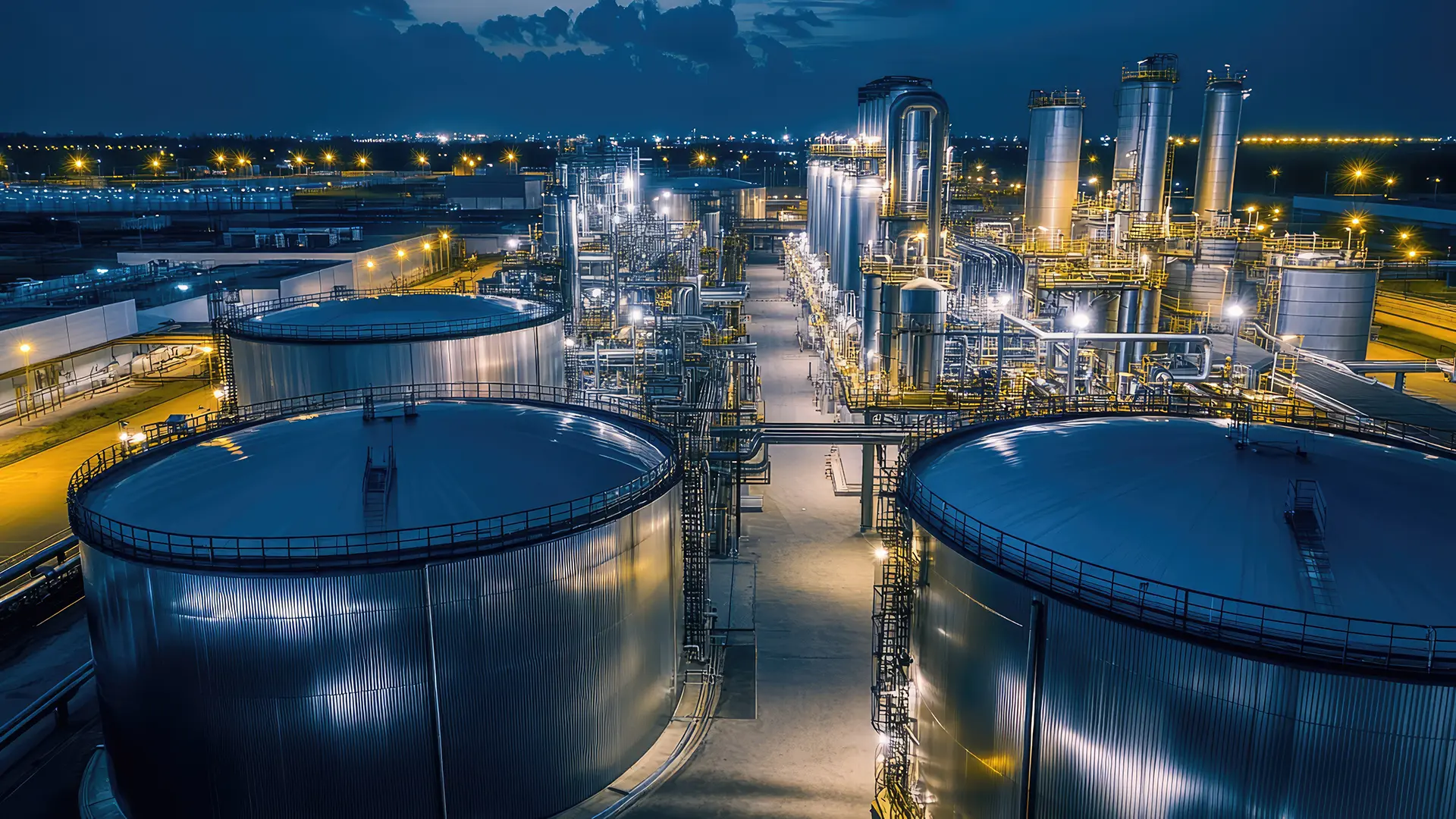
Written by Richard Finlayson, Senior International Editor for Industrial Info Resources (Sugar Land, Texas)--Any analysis of the short- to middle-term development and growth prospects for the Middle East-North Africa (MENA) region is made against the backdrop of continuing socio-political volatility following the upheavals of the Arab Spring, plus the global economic slowdown. This negative environment could affect the feasibility of major construction and industrial development schemes planned for the region.
Uncertainties surrounding project costs and fuel/feedstock supplies are compounded by a marked deterioration of funding conditions, which is likely to further complicate the strategic decisions project sponsors in the region make with respect to investment and financing.
Countries and groupings in the region are planning projects on a five-year time scale as they target a deepened economic base and diversification of products, both within the hydrocarbon resources sector and in sectors downstream and independent from the traditional resource base.
MENA's total energy capital investment is expected to total about $740 billion for the five-year period 2013 - 17, and investments appear to be on the rise, according to Arab Petroleum Investments Corporation (Apicorp) (Dammam, Saudi Arabia). But the capital requirements have mostly been driven by a catch-up effect following the upheavals and unrelenting escalating costs.
In this context, a little more than 75% of energy capital investment is located in seven countries among the biggest holders of oil and gas reserves. Obviously, reports Apicorp, the geographical pattern has favored countries that have not faced the turmoil. On a sectorial level, adjustments in the rapidly expanding power sector have led to a more evenly distributed pattern between the three major value chains: oil, natural gas and power.
Against the background of the deteriorating investment climate, three issues continue to confront investors: rising costs, scarcity of natural gas supply and funding limitations, of which the latter is the most critical. Internal financing could only be secured if the oil price remains above Organization of the Petroleum Exporting Countries' (OPEC) fiscal break-even price, which Apicorp estimated to be about $100 a barrel. Faced with more pressing social demands, governments may not be able to bridge the funding gap. Going forward, policy makers in the region should focus their commitment on improving the investment climate and restoring investor's confidence.
Because of the absence of demand-side management for electrical power in MENA, capacity is projected to grow 7.8% annually. And over a five-year period, this translates to an increment of 124,000 megawatts (MW) above the current 2012 level. This would require capital of about $148 billion over the 2013 - 17 period. Development of the transmission and distribution systems to complement the power addition would require $103 billion in capital investment.
In terms of gross domestic product (GDP) growth, which is forecast by the International Monetary Fund (IMF), the figures for countries in the region illustrate a shakedown period for some, and the effect of international markets in the doldrums for others. Saudi Arabia's GDP is forecast to grow 6% in 2012 and 4.2% in 2013. Libya, after resuming oil production, shows 121.9% in 2012 and 16.7% in 2013. Gas-rich Qatar will see 6.3% this year and 4.9% in 2013. Iraq, with oil production booming, shows 10.2% for 2012 and 14.7% for 2013. The United Arab Emirates (UAE), with its glittering new cities and ambitious construction plans, shows 4% this year and 2.6% growth for next year. Iran, now struggling under sanctions, shows a negative -0.9% for 2012 and moves just above the line with 0.8% for 2013. Egypt appears to have steadied the ship and moves from 2% to 3% growth next year, in line with global averages.
Diversification in industrial activities is a necessity for MENA countries, both for the economic development implications and the parallel provision of jobs and varied career and lifestyle opportunities for populations whose profiles are growing ever younger. The average age is under 30 years and often closer to 20 years. Since 1950, the region's population has grown from about 100 million in 1950 to about 400 million today.
Diversifying on the traditional hydrocarbons base is positive for the chemical industry. The chemicals industry worldwide is just beginning to recover from the worst crisis in decades, and finding that the post-crisis landscape is different. Consultants at Booz & Company say that Middle East companies have capitalized on a cost advantage of 30% to 90% in natural gas-based feedstock. As a result, these companies will have nearly doubled their share of global capacity between 2008 and 2013.
Saudi Arabia and the UAE have both started to move into new chemical products and are making significant investments in integrated petrochemical and specialty chemical projects. But they must carefully choose those products that meet their profitability targets and, at the same time, balance government requirements for diversification and job creation.
The steel industry is another key element in the region's ability to diversify. Arab countries need to build more steelmaking capacity to satisfy growing demand from investments in residential housing and infrastructure, and reduce the heavy reliance on imports, which are subject to external cost changes such as shipping, according to the Arab Iron & Steel Union (AISU) Regional Director in Egypt, Adel Hussein.
The Gulf is forecast to invest $285 billion in new construction projects between now and 2016, which will require about 47.5 million tons of steel, according to Hussein. This means continued imports in the near future, but the production gap also provides strong opportunities for steelmakers in the region.
When the financial crisis hit in 2008, a whole slew of plans were shelved in the following years; some were cancelled and others were postponed. Developers are already beginning to dust them off, but need positive forward global trading conditions to give the impetus for the region to attain its ambitious, but necessary, targets from 2013 onwards.
Industrial Info Resources (IIR), with global headquarters in Sugar Land, Texas, and eight offices outside of North America, is the leading provider of global market intelligence specializing in the industrial process, heavy manufacturing and energy markets. Industrial Info's quality-assurance philosophy, the Living Forward Reporting Principle, provides up-to-the-minute intelligence on what's happening now, while constantly keeping track of future opportunities.
/news/article.jsp
false
Want More IIR News Intelligence?
Make us a Preferred Source on Google to see more of us when you search.
Add Us On GoogleAsk Us
Have a question for our staff?
Submit a question and one of our experts will be happy to assist you.

Forecasts & Analytical Solutions
Where global project and asset data meets advanced analytics for smarter market sizing and forecasting.
Explore Our SolutionsRelated Articles
-
Can Canada Really Achieve its Oil Export Ambitions?May 22, 2026
-
UAE Sees New Pipeline Ready by 2027May 22, 2026

Industrial Project Opportunity Database and Project Leads
Get access to verified capital and maintenance project leads to power your growth.
Discover Our DatabaseIndustry Intel
-
Innovations Shaping the Next Era of Power GenerationPodcast Episode / May 22, 2026
-
The Role of Contract Manufacturing in Global Pharma GrowthPodcast Episode / May 8, 2026
-
2026 North American Labor OutlookPodcast Episode / Apr 24, 2026
-
2026 European Metals & Minerals Project Spending OutlookPodcast Episode / Apr 7, 2026
-
The Age of Critical Minerals in the AmericasPodcast Episode / Mar 20, 2026