Power
German Nuclear Tax to Cost Billions
The German government has announced plans to impose billions of euros in taxes on nuclear power plant operators like E.ON AG and RWE AG, among others, to save more than...
Released Thursday, June 10, 2010
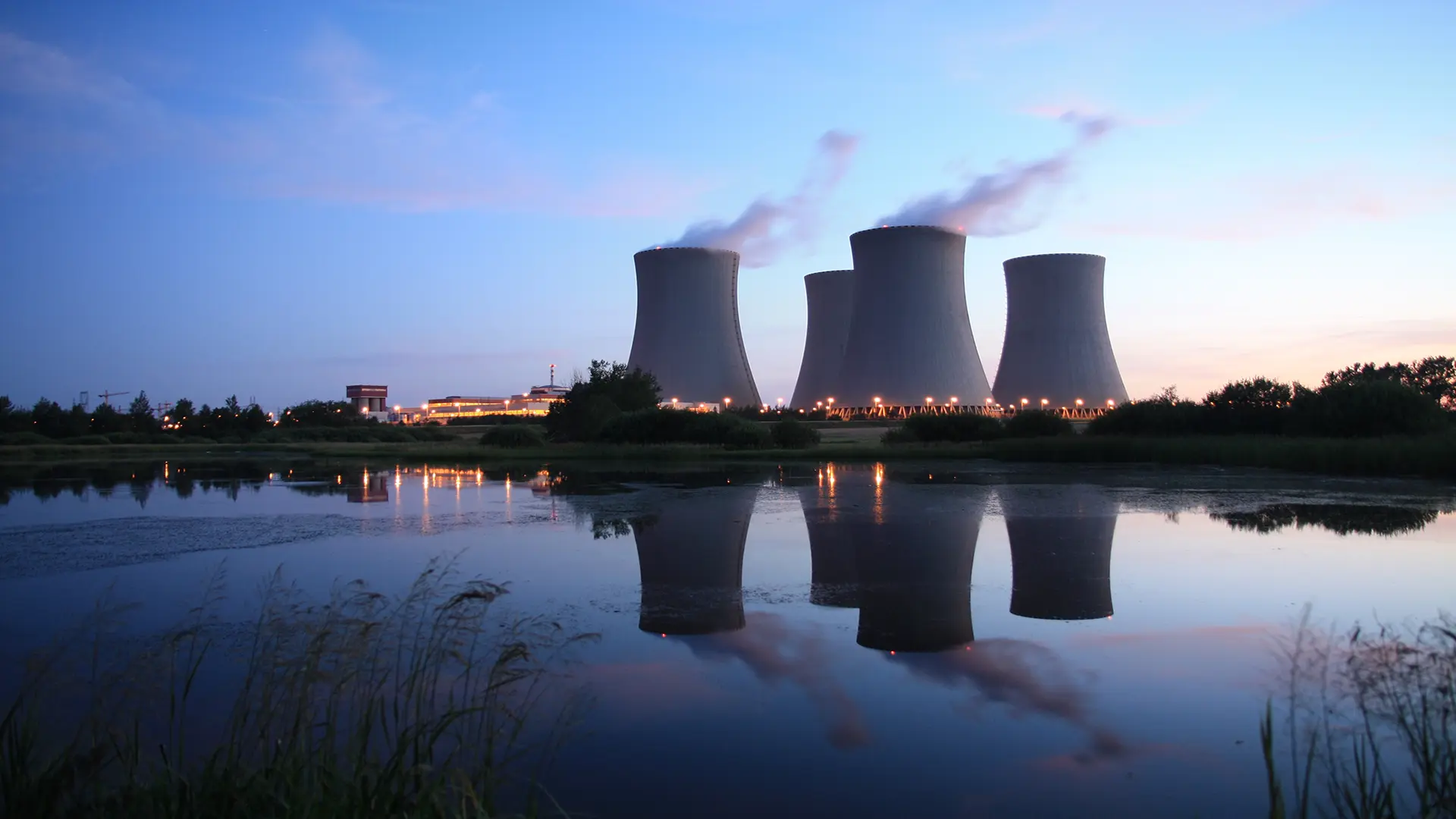
Written by Martin Lynch, European News Editor for Industrial Info (Galway, Ireland)--German energy companies are going to have to pay billions of euros each year to extend the lives of their ageing nuclear plants. The German government has announced plans to impose taxes on nuclear power plant operators like E.ON AG (OTC:EONGY) (Dusseldorf, Germany) and RWE AG (OTC:RWEOY) (Essen, Germany), among others, as part of a wider national austerity plan that it hopes will save more than 80 billion euros (US$96 billion) by 2014.
Germany intends to phase out all 17 of its nuclear power plants by 2021 but the current government, under chancellor Angela Merkel, is in favour of controversial plans to extend the life of some of those facilities by between 10 and 25 years in order to reach its ambitious climate goals and ward off an inevitable energy crisis if the plants are closed on schedule. However, the government plans to tax the energy companies heavily for any proposed life extensions. According to the austerity document, the government aims to raise 2.3 billion euros (US$2.77 billion) a year from the nuclear tax, amounting to about 10 billion euros (US$12.04 billion) by 2014.
The government maintained that the nuclear tax will help offset the cost of paying for the decommissioning of older nuclear facilities, while funding the interim storage of nuclear waste from the country's nuclear waste storage facility at Asse in Lower Saxony. Roughly 126,000 barrels filled with low-level radioactive waste are stored in the old salt mine, which has started letting in groundwater and has been deemed unstable. The government also justified the nuclear tax by saying that because nuclear reactors are not impacted by CO2 emissions penalties like fossil-fuel power plants, energy companies have been making huge profits.
Germany's nuclear plants are controlled and operated by E.ON, RWE, Vattenfall AB (Stockholm, Sweden) and Energie Baden-Württemberg AG (EnBW) (Karlsruhe, Germany). The power plants account for 26% of the nation's energy consumption. For additional information, see related October 19, 2009, article - Germany on Track to Extend Life of Nuclear Power Plants
Earlier this year, state-owned bank Landesbank Baden-Württemberg claimed that the four energy companies stand to make profits of up to 233 billion euros (US$329 billion) if the nuclear plants obtain lifespan extensions of 25 years. However, the lifetime extensions have not been finalized, and according to recent reports, they may be scaled back to 10 years to avoid a protracted political and legal fight. For additional information, see January 25, 2010, article - Germany's Nuclear Future to be Decided this Summer.
A decision on nuclear extensions is due this fall, but it may come too late to save EnBW's Neckarwestheim 1 plant, which was due for closure this spring, and RWE's Biblis facility which faces closure this autumn. Last month, Neckarwestheim 1was brought offline for maintenance and upgrades, and the company remains optimistic about getting an extension.
"Once again, we are investing tens of millions [of euros] in the high technical level of our plant," said Jörg Michels, the technical director of the Neckarwestheim nuclear power station. "In view of the energy concept announced for the autumn by the federal government, we assume that Neckarwestheim 1 will have additional prospects for the future."
He continued: "The federal government has already announced it is making term extensions dependent on strict German and international safety standards. Block I is ideally prepared for this. The plant not only satisfies the safety-technical requirements applicable in Germany, but also the standards required for new plants by the International Atomic Energy Agency (IAEA). In addition, last year the IAEA concluded, after an intensive audit, that Block I is a very good plant measured against international standards and could be operated for a total of 60 years."
View Plant Profile - 1072259 1077978
Industrial Info Resources (IIR) is the leading provider of global market intelligence specializing in the industrial process, heavy manufacturing and energy markets. IIR's quality-assurance philosophy, the Living Forward Reporting Principle, provides up-to-the-minute intelligence on what's happening now, while constantly keeping track of future opportunities.
/news/article.jsp
false
Want More IIR News Intelligence?
Make us a Preferred Source on Google to see more of us when you search.
Add Us On GoogleAsk Us
Have a question for our staff?
Submit a question and one of our experts will be happy to assist you.

Forecasts & Analytical Solutions
Where global project and asset data meets advanced analytics for smarter market sizing and forecasting.
Explore Our SolutionsRelated Articles

PECWeb Global Market Intelligence Platform
Identify opportunities, anticipate change, and execute with confidence. PECWeb connects the industrial intelligence you need, from projects and assets to operational events, all in one platform.
Discover PecwebIndustry Intel
-
Brazil: Efficiency, Innovation, and Opportunities in the Food & Beverage IndustryPodcast Episode / Jun 12, 2026
-
2026-2027 Investment Radar for Mexico, Central America & the CaribbeanPodcast Episode / May 29, 2026
-
Innovations Shaping the Next Era of Power GenerationPodcast Episode / May 22, 2026
-
The Role of Contract Manufacturing in Global Pharma GrowthPodcast Episode / May 8, 2026
-
2026 North American Labor OutlookPodcast Episode / Apr 24, 2026