Production
Lower Commodity Prices Hurt First-Quarter Earnings for Integrated Supermajors
First-quarter earnings declined at four large integrated supermajor oil companies--Exxon Mobil, Chevron, Shell and BP--as relatively soft prices for oil and gas combined with lower refined product margins dragged down profits
Released Wednesday, May 08, 2024
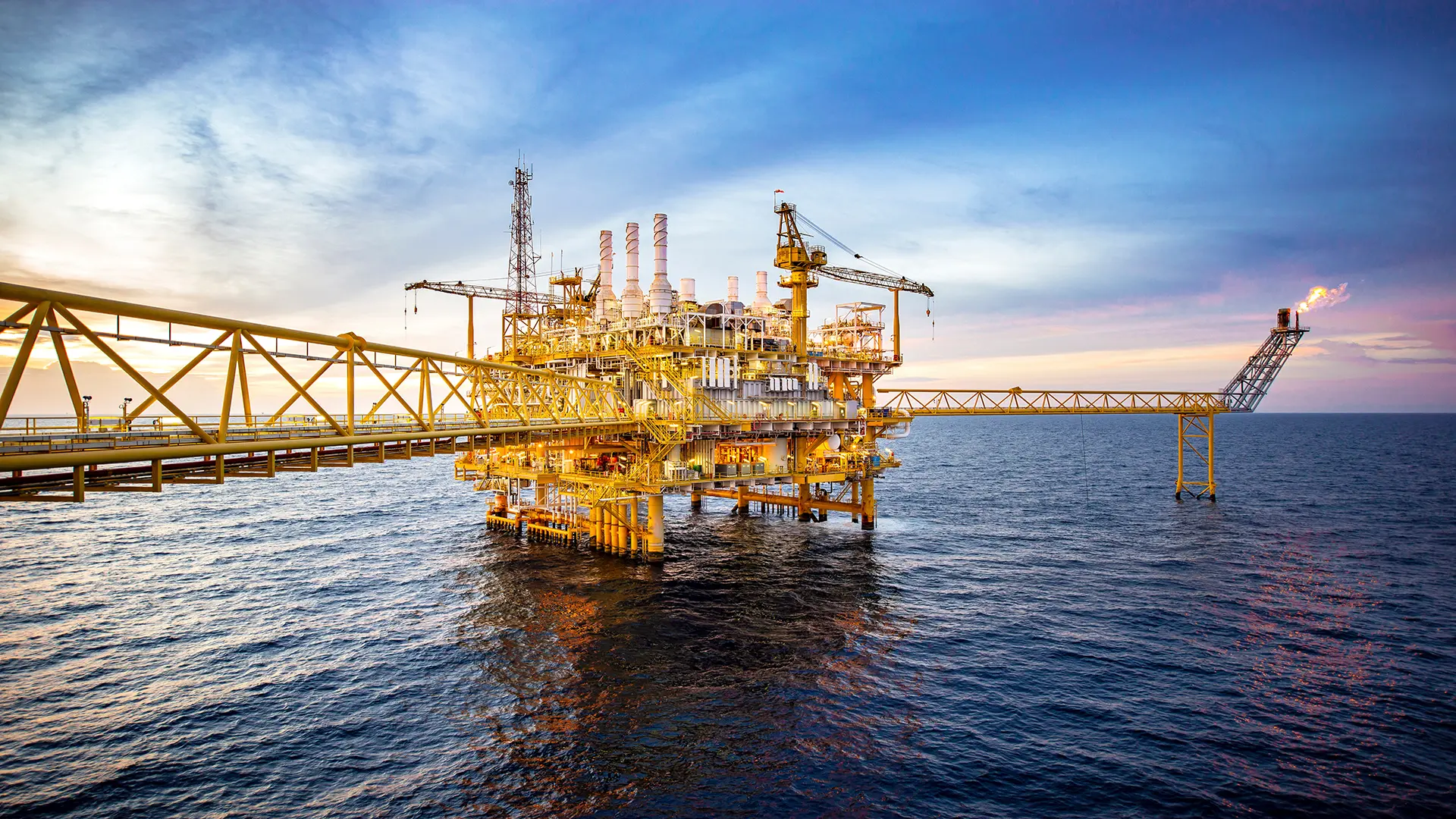
Written by John Egan for Industrial Info Resources (Sugar Land, Texas)--First-quarter earnings declined at four large integrated supermajor oil companies--Exxon Mobil Corporation (NYSE:XOM) (Spring, Texas), Chevron Corporation (NYSE:CVX) (San Ramon, California), Shell plc (NYSE:SHEL) (London, England) and BP plc (NYSE:BP) (London)--as relatively soft prices for oil and gas combined with lower refined product margins dragged down profits.
According to the Energy Information Administration (EIA) (Washington, D.C.) spot prices for West Texas intermediate (WTI) crude oil in Cushing, Oklahoma, averaged about $77.56 for the just-completed quarter, about $1.48 per barrel higher than the year-earlier quarter but sharply lower than first-quarter 2022 prices, where prices shot up after Russia invaded Ukraine in February of that year. In the first quarter of 2022, WTI sold for an average of $94.45, EIA said.
Brent crude oil prices spot prices averaged about $83 per barrel during the just-completed period, about $1.83 higher than year-earlier prices. Two years earlier, Brent sold for an average of $100.26, EIA reported.
First-quarter spot prices for natural gas at Henry Hub, Louisiana, fell about 52 cents per million British thermal units (MMBtu) on a year-over-year basis, to about $2.13 from $2.65. Two years earlier, spot prices averaged $4.65 per MMBtu for the first quarter.
In reporting earnings, most companies highlighted their shareholder returns, "clean energy" credentials and efforts to lower costs. Production was mixed across the four companies: oil rose for two firms but held steady for the other two. Gas production rose for three of the four companies. Some announced share buybacks.
Results from these four integrated supermajors are summarized below.
ExxonMobil
The Spring, Texas-based oil giant reported first-quarter net earnings of $8.2 billion on a generally accepted accounting principles (GAAP) basis compared to $11.4 billion in the year-earlier quarter. Downstream earnings--refining, marketing and chemicals--fell to $7.4 billion from $8 billion in the year-earlier period while profits in the exploration & production ("upstream") segment plummeted 67% to $1.4 billion from $4.2 billion.
Quarterly revenue fell about $3.5 billion, to $83.1 billion from $86.6 billion.
Exxon's global oil production in the quarter rose to about 2.6 million barrels per day (BBL/d), up from 2.5 million BBL/d during the first quarter of 2023. Gas production fell to about 7.4 billion cubic feet per day (Bcf/d) from 8 Bcf/d in the comparable year-earlier quarter and 8.5 Bcf/d in the first quarter of 2022.
In the just-completed quarter, Exxon said it produced more than 600,000 barrels of oil equivalent per day (BOE/d) in Guyana. It made a final investment decision (FID) for a sixth block there, Whiptail, that could add as much as 250,000 BBL/d of new production by the end of 2027. For more on that, see April 16, 2024, article - ExxonMobil FID for Whiptail Development Offshore Guyana Targets 250,000 BBL/d.
The company said it cut structural costs by about $400 million in the just-completed period, bringing to about $10.1 billion of cumulative cost-cutting since 2019. ExxonMobil's earnings release of April 26 said it plans to lower structural costs $15 billion over the 2019-2027 period.
Commenting on the company's first-quarter performance, Darren Woods, chairman and chief executive, said, "Our strategy and focus on execution excellence is creating significant value for society and our shareholders. We delivered a strong quarter with continued growth in advantaged assets, such as Guyana, where production continues at higher-than-expected levels." He praised the company's turnaround performance in its downstream business, which helped drive record first-quarter refining throughput, and said further structural cost reductions were on the way.
ExxonMobil briefly paused its share repurchase program during the quarter but said the annual pace of share repurchases would hit $20 billion once the Pioneer Natural Resources transaction closed. That $59.5 billion all-stock deal closed last week after it was approved by the Federal Trade Commission (Washington, D.C.). The transaction, the largest shale deal ever, greatly expands Exxon's operations in the Permian Shale.
Chevron
Chevron also reported a decline in first-quarter net earnings, to about $5.5 billion from $6.6 billion in the year-earlier quarter. Compared to year-earlier results, GAAP earnings rose slightly in the upstream segment but declined sharply for the downstream business. Quarterly revenue declined about $2 billion, to approximately $48.7 billion from about $50.8 billion.
The company increased upstream crude oil production to about 1.9 million BBL/d, from about 1.7 million BBL/d in the year-earlier period. Natural gas production surged to about 8.3 Bcf/d from 7.5 Bcf/d in the first quarter of 2023.
In reporting earnings April 26, the company said it sent about $6 billion to shareholders during the quarter, comprised equally of dividends and share repurchases.
In the just-completed period, Chevron said its acquisition of PDC Energy helped drive up the company's oil-equivalent production in the Permian and Denver-Julesburg (D-J) basins, and that it "advanced" its carbon capture, hydrogen and renewable fuels businesses.
Capital expenditures (Capex) during the just-completed period rose to $4.1 billion from $3 billion in the year-ago period. Some of that gain derived from post-acquisition investments in the properties formerly owned by PDC Energy.
During the quarter, Chevron said it launched a $500 million Future Energy Fund III focused on venture investments in "technology-based solutions that have the potential to enable affordable, reliable and lower carbon energy."
Mike Wirth, chairman and chief executive, said, "We had another quarter of strong operational and financial performance and delivered superior cash returns to shareholders. U.S. (oil equivalent) production was up 35% from a year ago, and we continued to meet major project milestones."
One area that has not gone as planned is Chevron's acquisition of Hess Corporation (NYSE:HES) (New York, New York), which has been contested by rival ExxonMobil as well as Chinese oil giant CNOOC. For more on that, see April 9, 2024, article - Chevron Buyout of Hess Challenged by ExxonMobil, CNOOC.
Shell
On May 2, Shell reported first-quarter net profits of about $7.4 billion on revenue of $72.5 billion. By comparison, the company earned $8.7 billion on revenue of approximately $87 billion in the comparable year-earlier period.
Upstream earnings fell to slightly more than $5 billion compared to $5.2 billion for the first quarter of 2023. Downstream profits also fell, to $1.9 billion from $2.9 billion in last year's first quarter.
Shell also has a renewable energy business, where profits plummeted to about $553 million from $2.2 billion in the year-earlier quarter. Renewable energy projects in operation leapt 39%, to about 3.2 gigawatts (GW) compared to 2.3 GW for the year-earlier quarter. Shell's year-over-year backlog of renewable energy projects slid to 3.5 GW from 4 GW.
During the first quarter, Shell's U.S. renewable energy subsidiary received approval to build a two-phase, 800-megawatt solar-plus-storage project in Ohio. Also during the quarter, the U.S. solar unit said it would sell about 25% of its assets, up to about 10,600 MW of solar-plus-storage assets. For more on that, see March 25, 2024, article - Ohio Approves Massive Shell-Backed Solar-Battery Storage Project.
In a separate announcement during the first quarter, Shell said it would spend as much as $15 billion on low-carbon energy solutions by 2025, but scaled back its ambitions on carbon intensity. For more on that, see March 15, 2024, article - Shell Modifies Climate Goals.
In announcing earnings May 2, the London-based supermajor said it has completed $3.5 billion of share repurchases during the fourth quarter of 2023, and would embark on another $3.5 billion of buybacks over the next three months. During the first quarter, debt declined about $7 billion, to $68.9 billion from $76.1 billion in the first three months of 2023. The company confirmed its full-year 2024 cash Capex would remain unchanged at between $22 billion and $25 billion.
Commenting on results May 2, CEO Wael Sawan said, "Shell delivered another quarter of strong operational and financial performance, demonstrating our continued focus on delivering more value with less emissions."
Sawan, who has been CEO since early 2023, has told shareholders he would focus the company on higher-profit endeavors, which some took as a tacit move away from renewable energy and towards higher-carbon projects such as crude oil and natural gas.
During the first quarter, the company announced it sold its onshore subsidiary in Nigeria. Last week, the company said it would exit its electric power business in China, with an effective date of December 31, 2023. For more on that, see May 2, 2024, article - Shell, Devon Energy: Your Daily Energy News.
BP
The London-based supermajor released earnings May 7. Its underlying replacement cost profit, equivalent to GAAP net earnings, was about $2.7 billion on slightly under $50 billion of revenue. In the year-earlier quarter, it earned just under $5 billion on revenue of approximately $57 billion. Two years earlier, after Russia's invasion of Ukraine drove up global energy pieces, BP earned $6.4 billion on $51.2 billion of revenue.
BP's upstream business continued to drive its financial results. On a pre-tax basis, that unit earned about $2.8 billion for the just-completed quarter, down from $4 billion and $5.4 billion in the first quarters of 2023 and 2022.
At the downstream business, including chemicals, year-over-year first-quarter profits fell about 52%, to approximately $956 million, compared to just under $2 billion in 2023. That unit earned about $1.8 billion in 2022's first quarter.
Downstream earnings were hurt in the just-completed by an extended outage at BP's refinery in Whiting, Indiana.
In announcing earnings, BP said it would spend an additional $1.75 billion buying back its shares.
Murray Auchincloss, chief executive officer, told investors that BP has six strategic goals:
- Improve safety and reduce emissions
- Drive focus into the business, including continuing to high-grade its portfolio>
- Deliver next wave of efficiency
- Deliver growth projects
- Optimize returns, meaning a return on capital employed of more than 18%, and
- Grow shareholder returns by committing to return at least 80% of surplus cash flow through share buybacks
He continued: "Looking ahead, our destination from international oil company (IOC) to an integrated energy company (IEC) remains unchanged -- but we are delivering as a safer, simpler, more focused and higher value company. We have six clear priorities, and three weeks ago we announced some organizational changes to simplify the business. We continue this today with the announcement of a target to deliver at least $2 billion of cash cost savings by the end of 2026."
Industrial Info Resources (IIR) is the leading provider of industrial market intelligence. Since 1983, IIR has provided comprehensive research, news and analysis on the industrial process, manufacturing and energy related industries. IIR's Global Market Intelligence (GMI) platform helps companies identify and pursue trends across multiple markets with access to real, qualified and validated plant and project opportunities. Across the world, IIR is tracking over 200,000 current and future projects worth $17.8 trillion (USD).
/news/article.jsp
false
Want More IIR News Intelligence?
Make us a Preferred Source on Google to see more of us when you search.
Add Us On GoogleAsk Us
Have a question for our staff?
Submit a question and one of our experts will be happy to assist you.

Forecasts & Analytical Solutions
Where global project and asset data meets advanced analytics for smarter market sizing and forecasting.
Explore Our SolutionsRelated Articles
-
Can Canada Really Achieve its Oil Export Ambitions?May 22, 2026
-
UAE Sees New Pipeline Ready by 2027May 22, 2026

Industrial Project Opportunity Database and Project Leads
Get access to verified capital and maintenance project leads to power your growth.
Discover Our DatabaseIndustry Intel
-
Innovations Shaping the Next Era of Power GenerationPodcast Episode / May 22, 2026
-
The Role of Contract Manufacturing in Global Pharma GrowthPodcast Episode / May 8, 2026
-
2026 North American Labor OutlookPodcast Episode / Apr 24, 2026
-
2026 European Metals & Minerals Project Spending OutlookPodcast Episode / Apr 7, 2026
-
The Age of Critical Minerals in the AmericasPodcast Episode / Mar 20, 2026