Metals & Minerals
'Near-ZLD' Technology is More Practical, Cost-Effective for Mines
Zero-liquid discharge remains an expensive and elusive goal for Metals & Minerals companies, a situation complicated by recent softness in prices for mined commodities like gold and copper
Released Tuesday, February 18, 2014
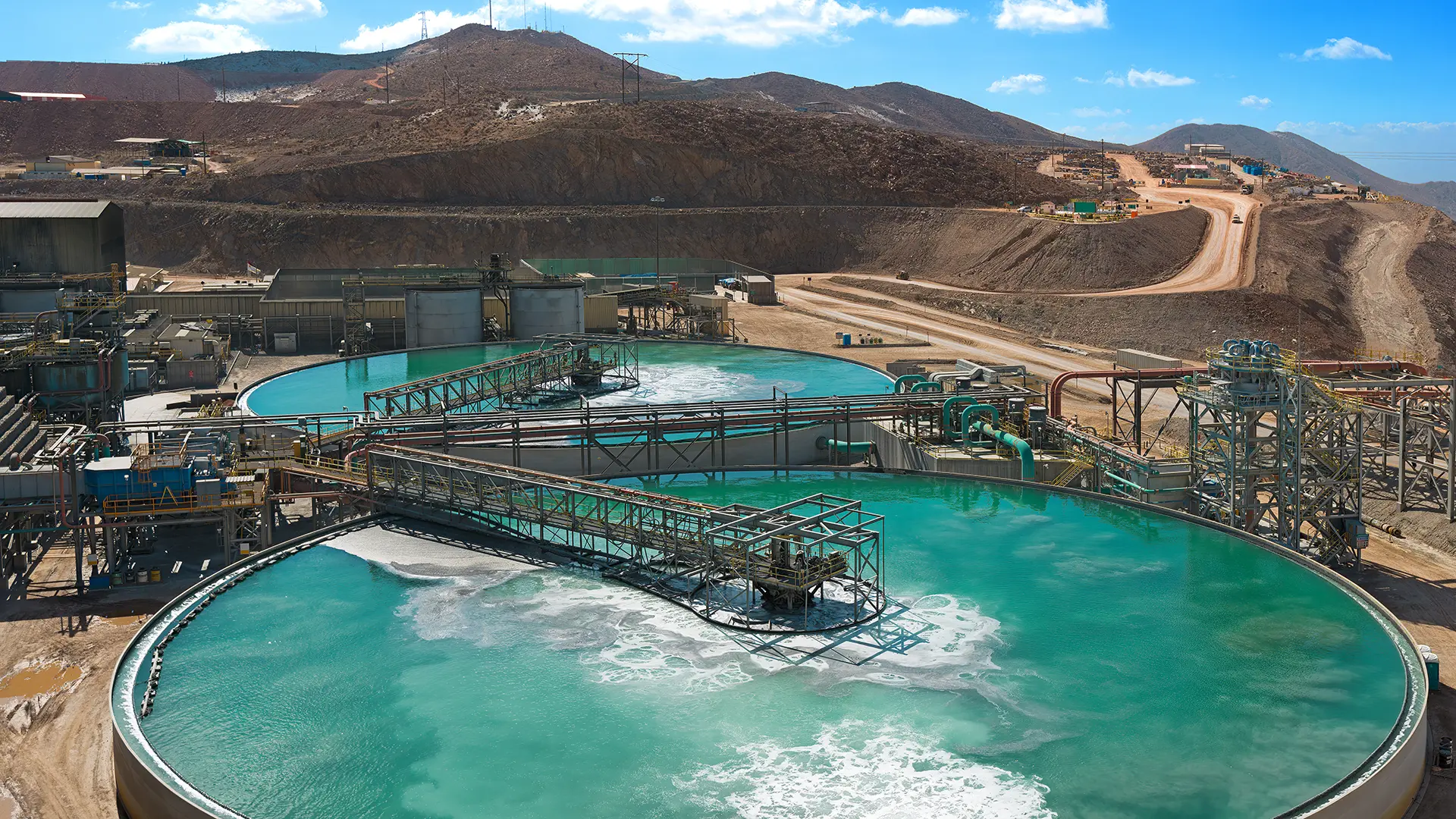
Written by John Egan for Industrial Info Resources (Sugar Land, Texas)--Zero-liquid discharge (ZLD) remains an expensive and elusive goal for Metals & Minerals companies, a situation complicated by recent softness in prices for mined commodities like gold and copper, water experts at Stewart Environmental Consultants LLC (Fort Collins, Colorado) told Industrial Info.
"Mines want to become ZLD, but it costs a lot to prevent that last increment of water from being discharged," said Paul Thoen, Ph.D., a senior design scientist with Stewart Environmental, in an interview. "In practice, it may make more sense to be near-ZLD. What we call 'near-ZLD' is starting to get traction in mines."
"Mines truly have the desire to do ZLD, but they also need to stay in business," said his colleague, Forbes Guthrie. "ZLD is a laudable goal, but for many mines, they first need to figure out how they can get water to mines in areas lacking water. Higher water recovery also helps offset this need, both on the influent and discharge equations."
Guthrie, Stewart's vice president of marketing and commercialization, and Thoen agreed that mines are rethinking their traditional view of water as a waste product that needs to be managed. A growing number of mines are implementing strategic water management plans, particularly in areas where demand for fresh water exceeds its supply. These water plans seek to minimize the draw on freshwater and increase water recycling to minimize a mine's environmental footprint. For more on that issue, see November 13, 2013, article -- Mining Industry's 3 R's: Reduce, Reuse and Recycle Water.
"Mines are running into water challenges, because the ores being mined now are less oxide-based and more sulfide-based," Guthrie said. "That has a big impact on water issues, because wastewater with sulfides in it is harder to treat than water with oxide wastes in it."
Guthrie and Thoen will both speak at the upcoming Colorado Water Summit, to be held March 3-4 in Denver, Colorado. The event is being produced by Information Forecast Incorporated (Infocast) (Woodland Hills, California).
The water crisis in California is emblematic of the types of water-related challenges mines face around the world, the consultants said. Commercial and industrial customers like mines, or Oil & Gas producers, often have deep pockets that enable them to outbid other types of water users, such as municipalities and farms, for supplies of fresh water. But when the demand for fresh water significantly outstrips its supply, political and regulatory forces come into play. If there's not enough fresh water for cities and crops, restrictions will be imposed on all users, as California is doing now.
Regulations spurred by water shortages could limit mines' access to fresh water, require mines to treat wastewater to certain levels of purity, or impose other operating restrictions that add costs and lower output.
"Today, getting all the way to ZLD is prohibitively expensive, because it is so expensive to prevent that last few percent of liquid discharge," Thoen said. "It can cost tens of millions of dollars, double the cost of a wastewater treatment plant, to get to 100% zero-liquid discharge."
Today, many mines are incurring acceptable costs to treat about 50% of their wastewater with high-density sludge and/or some membrane systems. Advances in rugged membrane filtration processes now allow the industrial sector to achieve far greater water recovery efficiency at both capital and operating costs that make good financial sense, Thoen said.
Stewart Environmental Consultants has designed a high-recovery membrane system capable of recovering more than 97% of most mine process water. In some cases, the material filtered from the water can have value; one example is calcium sulfate, where the material can be used in local agriculture as a soil conditioner. Stewart Environmental designed such a system that was installed at a large copper mine in Spain, where water is cost-effectively recovered with an efficiency of 98%, with the balance simply evaporated naturally.
The ceramic and polymeric materials used in Stewart Environmental's system are highly resistant to fouling, which Thoen acknowledged has been a problem with polymeric membrane-based wastewater treatment technologies: "There is a negative perception of membranes in the market. Plus, one bad installation can spread like wildfire through the mining community."
Guthrie said the goal of ZLD was contemplated in the Clean Water Act (CWA), passed more than 40 years ago, but the technology to eliminate water discharges didn't exist at that time. Since the CWA's passage in 1972, water-treatment technology has come a long way. The U.S. Environmental Protection Agency (EPA) (Washington, D.C.) and environmental regulatory agencies in other countries are tightening standards for discharge of high-density sludge from mines and other industrial facilities.
In response to changing regulations and cost or availability of supply water, a growing number of mines are implementing more sustainable practices, particularly around water, which makes the outlook for water treatment business "fairly robust" through the foreseeable future, Guthrie said: "From environmental and risk-management perspectives, the more you can recover, the better off you are. These are environmental decisions with significant economic implications."
Industrial Info Resources (IIR), with global headquarters in Sugar Land, Texas, three offices in North America and nine international offices, is the leading provider of global market intelligence specializing in the industrial process, heavy manufacturing and energy markets. Industrial Info's quality-assurance philosophy, the Living Forward Reporting Principle, provides up-to-the-minute intelligence on what's happening now, while constantly keeping track of future opportunities.
/news/article.jsp
false
Want More IIR News Intelligence?
Make us a Preferred Source on Google to see more of us when you search.
Add Us On GoogleAsk Us
Have a question for our staff?
Submit a question and one of our experts will be happy to assist you.

Forecasts & Analytical Solutions
Where global project and asset data meets advanced analytics for smarter market sizing and forecasting.
Explore Our SolutionsRelated Articles
-
Key Lithium Project in Australia Moves ForwardMay 22, 2026
-
Canada Breaks Ground on Graphite Mine in QuebecMay 21, 2026

Industrial Project Opportunity Database and Project Leads
Get access to verified capital and maintenance project leads to power your growth.
Discover Our DatabaseIndustry Intel
-
The Role of Contract Manufacturing in Global Pharma GrowthPodcast Episode / May 8, 2026
-
2026 North American Labor OutlookPodcast Episode / Apr 24, 2026
-
2026 European Metals & Minerals Project Spending OutlookPodcast Episode / Apr 7, 2026
-
The Age of Critical Minerals in the AmericasPodcast Episode / Mar 20, 2026
-
2026 Regional Chemical Processing OutlookPodcast Episode / Mar 6, 2026