Metals & Minerals
Norway is First to Green Light Deep-Sea Mining
Norway has become the first country in the world to vote in favor of allowing deep-sea mining for minerals.
Released Monday, January 15, 2024
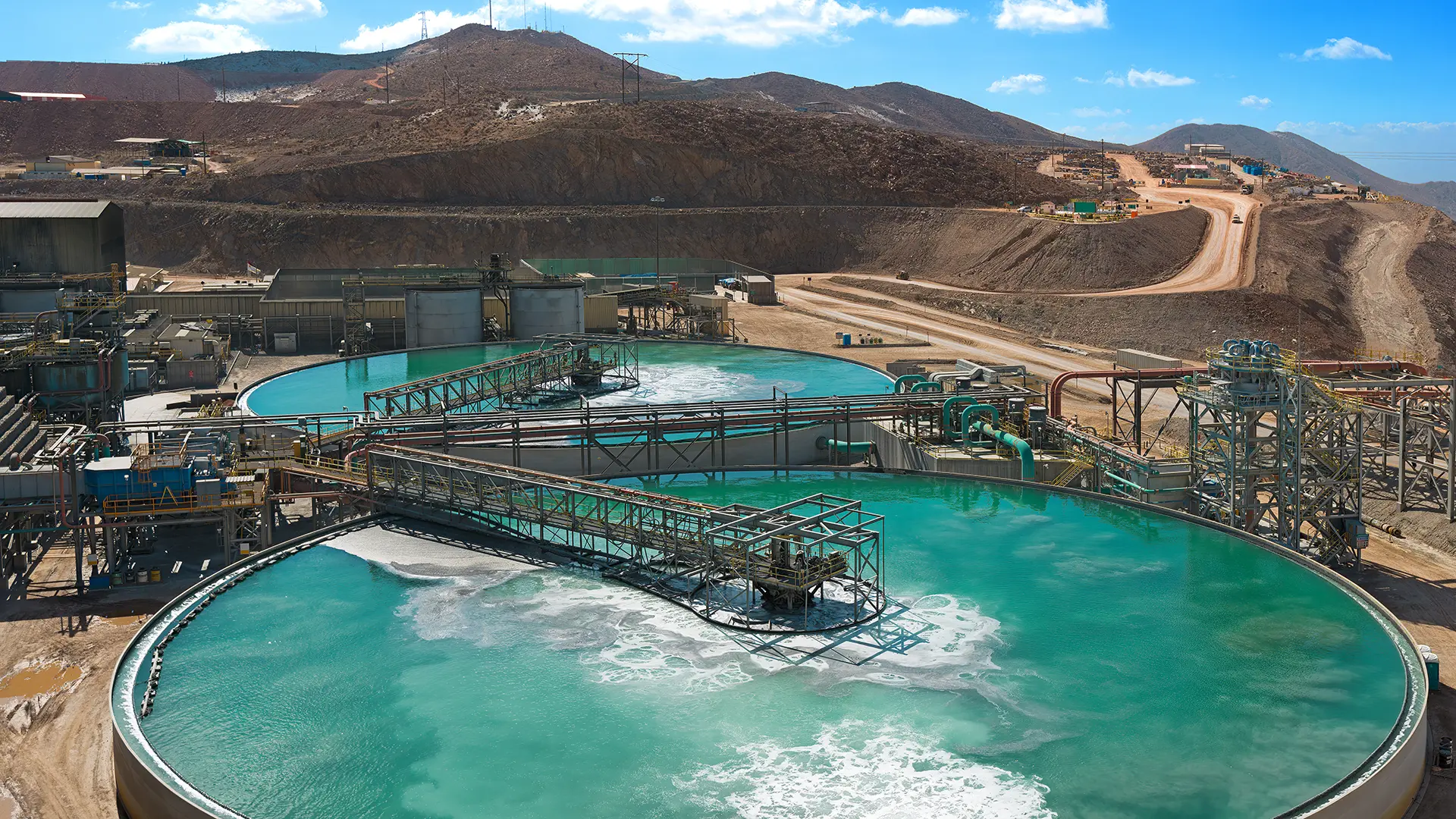
Written by Martin Lynch, European News Editor for Industrial Info (Galway, Ireland)--Norway has become the first country in the world to vote in favor of allowing deep-sea mining for minerals.
The minority-led coalition government voted 80-20 in favor of the controversial measure after signaling its support for the practice in December. The decision has received global condemnation from many scientific and environmental groups, including state body the Norwegian Environmental Agency, which has said that the environmental impact assessment (EIA) failed to meet the legal criteria for such assessments. Deep-sea mining is currently banned in the European Union and the U.K. because of the potential threat to marine life. For additional information, see December 19, 2023, article - Norway Agrees Controversial Deep Sea Mining Plan. Other countries evaluating deep-sea mining include New Zealand, Japan and Namibia, among others.
The vote now opens an area of 280,000 square kilometers in the Arctic Ocean--larger than the U.K.-- for potential mining. Companies will be able to submit applications from later this year. The area is situated between Svalbard, Greenland, Iceland and Jan Mayen Island, much further north than the country's significant oil and gas operations. According to the government, the move supports its national strategy to seek new economic opportunities and reduce its reliance on oil and gas. In volume terms, a resource estimate for areas in the Norwegian Sea and Greenland Sea showed there were 38 million tonnes of copper and 45 million tonnes of zinc accumulated in polymetallic sulfide formations. A report issued last year by the Norwegian Petroleum Directorate (NPD) stated: "Of the metals found on the seabed in the area [of an earlier completed study], magnesium, niobium, cobalt and rare earth minerals are present on the European Commission's list of critical minerals. Costly, rare minerals such as neodymium and dysprosium are extremely important for magnets in wind turbines and the engines in electric vehicles."
The government has stressed that the first phase will be an exploration phase "where private players can secure rights," but added that all applications will have to include environmental assessments and mapping. The decision was welcomed by the mining community, including Norway's Loke Minerals (Stavanger, Norway). Speaking to the BBC, Walter Sognnes, co-founder of Loke, said that exploration will take some time, require significant private investment and cost a lot: "We will have a relatively long period of exploration and mapping activity to close the knowledge gap on the environmental impact. Developing knowledge on the deep ocean is very costly, you need to operate robots and these are very expensive and unfortunately the universities have limited access to these kinds of tools." He did not believe that mineral extraction would start before the early 2030s.
In a previous statement, Frode Pleym, head of Greenpeace Norway, condemned the decision: "This is a disaster for the ocean, and shameful for Norway. The Norwegian government is not only ignoring hundreds of concerned scientists, but also showing disregard for its international obligations and national environmental legislation. By opening up for deep sea mining, Norway has lost all credibility as a responsible ocean nation that signed the UN Ocean Treaty."
Industrial Info Resources (IIR) is the leading provider of industrial market intelligence. Since 1983, IIR has provided comprehensive research, news and analysis on the industrial process, manufacturing and energy related industries. IIR's Global Market Intelligence (GMI) helps companies identify and pursue trends across multiple markets with access to real, qualified and validated plant and project opportunities. Across the world, IIR is tracking over 200,000 current and future projects worth $17.8 Trillion (USD).
/news/article.jsp
false
Want More IIR News Intelligence?
Make us a Preferred Source on Google to see more of us when you search.
Add Us On GoogleAsk Us
Have a question for our staff?
Submit a question and one of our experts will be happy to assist you.

Forecasts & Analytical Solutions
Where global project and asset data meets advanced analytics for smarter market sizing and forecasting.
Explore Our SolutionsRelated Articles
-
Australia's Lithium Comeback Boosted by Pilgangoora Expansio...October 23, 2026
-
Africa's Gold Boom: Rising Prices Strengthen State Control a...October 23, 2026
-
ABB Builds Backlog with Canadian Mining, U.S. Tech WorkOctober 21, 2026
-
Antofagasta Minerals Boosts Copper OutputOctober 21, 2026

PECWeb Global Market Intelligence Platform
Identify opportunities, anticipate change, and execute with confidence. PECWeb connects the industrial intelligence you need, from projects and assets to operational events, all in one platform.
Discover PecwebIndustry Intel
-
Brazil Critical Minerals 2027: Rare Earths, Lithium, CopperPodcast Episode / Oct 16, 2026
-
US Craft Labor Outlook 2026: Wages, Per Diems, Data CentersPodcast Episode / Oct 16, 2026
-
Latin America Data Center Outlook 2026: Power, Hubs & GrowthPodcast Episode / Oct 9, 2026
-
Food and Beverage CapEx Outlook 2026: Tariffs, AI, AfricaPodcast Episode / Oct 9, 2026
-
North America Refining 2026: New Pipelines to PADD 5Podcast Episode / Oct 2, 2026
