Petroleum Refining
The Economy in Latin America: Refinery Perspective for 2006
According to the IMF´s estimates, the region will show a 4.1% economic growth while the WB expects a 4.5% overall growth. But, with the possibility of an increase in left wing political power throughout the region in the up and coming 2006 presidential elections, many are worried that politics might threaten their economic stability due to potential reforms of the current industrial system
Released Wednesday, March 22, 2006
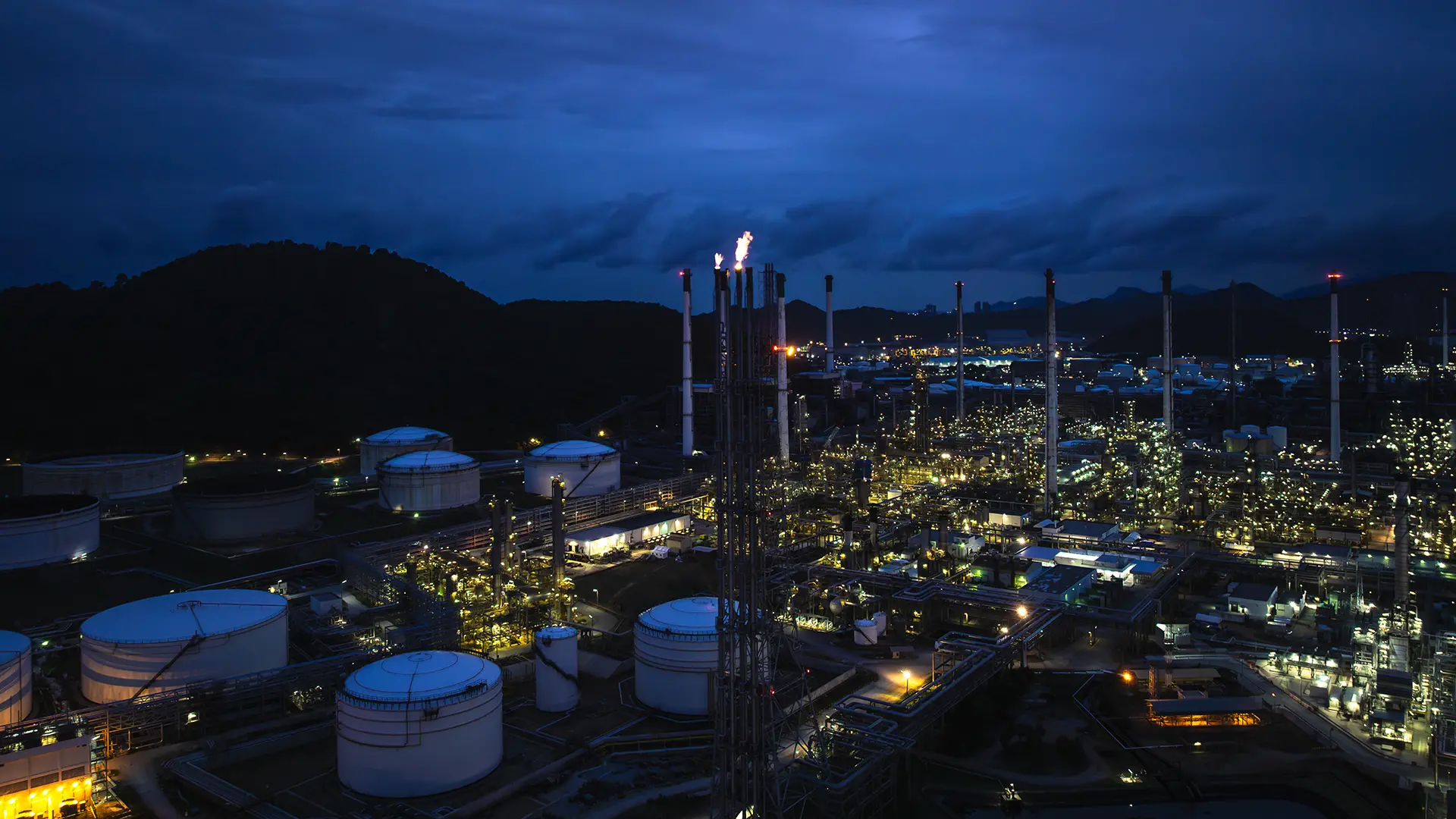
Researched by Industrial Info Resources (Sugar Land, Texas). Overall, Latin America in 2005 found itself to be a time of great economic growth. But, with the possibility of an increase in left wing political power throughout the region due to the up and coming 2006 presidential elections, many are worried that politics might threaten their economic stability due to potential reforms of the current system.
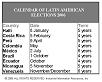 Click on the image at right to view a list of South American upcoming electrions.
A Promising Future for Petroleum Industries
The International Monetary Fund (IMF) and World Bank (WB) predict a favorable future for Latin America. According to the IMF´s estimates, the region will show a 4.1% economic growth while the WB expects a 4.5% overall growth. Moreover, according to Charles Dallara, president of the International Finances Institute, we are not expecting the great economic growth registered in 2004 which reached nearly 6%, but we do anticipate another year of solid economic growth. He continued with the example that in the last couple of years Argentina in particular has been able to reduce its debt levels, increase international trust, and maintain its own economic stability as have other Latin American countries such as Brazil, Mexico, and Chile. Their success is due to their new standard to hold a firm macroeconomic behavior with low inflation and strong bank systems. Currently, most of the international petroleum companies have achieved their objectives in regards to capital structure and risk rating.
The refining industry of South America is controlled by seven main countries: Brazil, Mexico, Colombia, Peru, Venezuela, Chile and Ecuador. Recently as more and more leaders look to the future, Bolivias President Evo Morales decided to exert greater state control over the productions of natural gas while Venezuelas President Hugo Chavez has also tried to handle his countrys petroleum resources by forcing expansion of the pipelines to the Pacific and expanding its fleets to better interact with Asia. For details see related December 30, 2006 news article - Venezuela: The New Saudi Arabia
Brazil
The Brazilian oil giant, Petrobras, announced a record profit in 2005 of $11.2 billion, the biggest in Latin American history. In January 2006, this state-owned Petroleum Company declared that it will invest $18 billion over the next decade to boost natural gas production off the nation's southeast coast and meanwhile reducing imports. The increased Petrobras exploration and production will take place at the Santos Basin area off the coast of four southeastern Brazilian states.
Petrobras is willing to become an important global player in the oil industry by expanding its capabilities and experience in overseas exploration. In December 2005, the petroleum company declared that by 2010 Petrobras wants to almost double its oil and gas output outside of Brazil. In Africa, Petrobras is already present in Nigeria, Angola, and also Tanzania. But, Brazil only produces small amounts of crude off the coast of Angola and plans to start production in Nigeria in early 2007.
For more than three decades, Petrobras has been working towards fulfilling Brazil's dream of oil self-sufficiency. Petrobras has plans to make this a reality in 2006 so that the country may become a net exporter of crude. For details see related February 14, 2006 news article - Petrobras Studies the Construction of an Ethanol Pipeline.
Venezuela
According to analysts, the economy of Venezuela will show a stable macroeconomic growth in 2006 that will be exemplified by a total GDP growth of nearly 8% and a possible controlled inflation of 12%.
In regards to the petroleum industry, Venezuela´s state-owned petroleum company, PDVSA, has announced plans to reach crude oil production levels of 5.8 million barrels per day by 2012. Alejandro Granado, PDVSA´s Vice President of Refining, explained that Venezuela´s petroleum industry will concentrate on increasing the crude oil processing capacity through the expansion of existing refineries and investments in plants within the Caribbean and South America.
Lately, the high price of oil, uncertainty about worldwide oil reserves, increase in the demands for energy, and recent initiatives to increase regional integration in South America have convinced Venezuela that now is the time to undertake an aggressive expansion project to become the world´s oil superpower.
Argentina
Fitch, the international ratings agency, anticipates a positive year for the oil sector in Argentina and views a stable perspective particularly for each of the following sub sectors: exploration, oil services, and refining. According to Indec (Argentinas National Institute of Statistics and Census), half of the companies connected with the petroleum sector will make several investments during the first half of 2006.
During 2006, the most important petroleum companies accounting for 80% of Argentinas oil and gas production are Petrobras Energia (NYSE:PBR), Chevron San Jorge (Chevron Texaco) Repsol YPF (NYSE:REP), Pan American energy, and also Total Austral (Santa Cruz, Argentina). Overall, the plans for these companies is to invest up to $2.5 billion in Argentina, which is close to 15% more than that of 2005. Unfortunately, only 10% of such an investment will be derived to petroleum exploration to increase the countrys oil reserves. Even though the most important oil companies in Argentina made a historical profit in 2005 due to high crude oil prices, they are not willing to invest more in exploration this year because of Argentinas tax regulations as well as its own geological characteristics (the country has mature oil fields already exploited for several years). Only 18% of Argentinas vast surface of 1,450,742 square miles (3,757,407 square kilometers) is used to produce crude oil. Due to lack of detailed information of the remaining 82%, oil companies refuse to invest more in oil exploration. What is more, withholdings such as regalia which is the amount of money paid by oil companies to the Argentinean state for the use of its territory and resources, income tax, and gross income (income without any discount or withholding) account for almost 50% of their total profit.
Argentina´s Government has managed to freeze fuel oil and natural gas prices even though they should have increased them mainly due to a raise in international prices and a reduced peso-dollar exchange rate. President Nestor Kirschner´s decision has been primarily directed toward the reduction of inflation; however, Argentina´s Government has to import natural gas from Bolivia at high prices which in return strongly affects oil and gas prices. Meanwhile, oil producing provinces such as Santa Cruz, Salta, and Neuquen are having less regalia deeply affect their economy.
This year Argentina may have to import diesel fuel due to a declining supply of domestic light crude. During the Argentine Oil & Gas Expo in January 2006, Daniel Risso, who heads the local unit of Exxon Mobil, declared that refineries are already producing at near maximum capacity and may have a hard time to increase output due to the declined crude supply. "The ideal situation would be to get incentives for investment in exploration as well as production so that the nation has an increase in its crude supply," declared Juan Jose Aranguren, president of Argentinas Royal Dutch Shell.
During the first quarter of 2006, most petroleum companies will take out loans, 75% associated to oil and 66% to electricity. In December 2005, one third of oil businessmen estimated that there will be an increase in their absolute sales towards all the refining capability of Argentina.
For information about Industrial Info's South American Refining Coverage contact Member Center at 1-800-762-3361.
Industrial Information Resources (IIR) is a Marketing Information Service company that has been doing business for over 22 years. IIR is respected as the leader in providing comprehensive market intelligence pertaining to the industrial processing, heavy manufacturing, and energy-related industries throughout the world.
Want More IIR News Intelligence?
Make us a Preferred Source on Google to see more of us when you search.
Add Us On GoogleAsk Us
Have a question for our staff?
Submit a question and one of our experts will be happy to assist you.

Forecasts & Analytical Solutions
Where global project and asset data meets advanced analytics for smarter market sizing and forecasting.
Explore Our SolutionsRelated Articles
-
War, Refineries Keep U.S. Gasoline Prices ElevatedMay 22, 2026
-
Venezuela's PDVSA Continues with Refinery RepairsMay 20, 2026

Industrial Project Opportunity Database and Project Leads
Get access to verified capital and maintenance project leads to power your growth.
Discover Our DatabaseIndustry Intel
-
Innovations Shaping the Next Era of Power GenerationPodcast Episode / May 22, 2026
-
The Role of Contract Manufacturing in Global Pharma GrowthPodcast Episode / May 8, 2026
-
2026 North American Labor OutlookPodcast Episode / Apr 24, 2026
-
2026 European Metals & Minerals Project Spending OutlookPodcast Episode / Apr 7, 2026
-
The Age of Critical Minerals in the AmericasPodcast Episode / Mar 20, 2026