Production
EPA Delays Decision on Methane Reduction Among Oil & Gas Companies
The U.S. Environmental Protection Agency has postponed until after the holidays a decision about how best to reduce methane emissions.
Released Monday, December 22, 2014
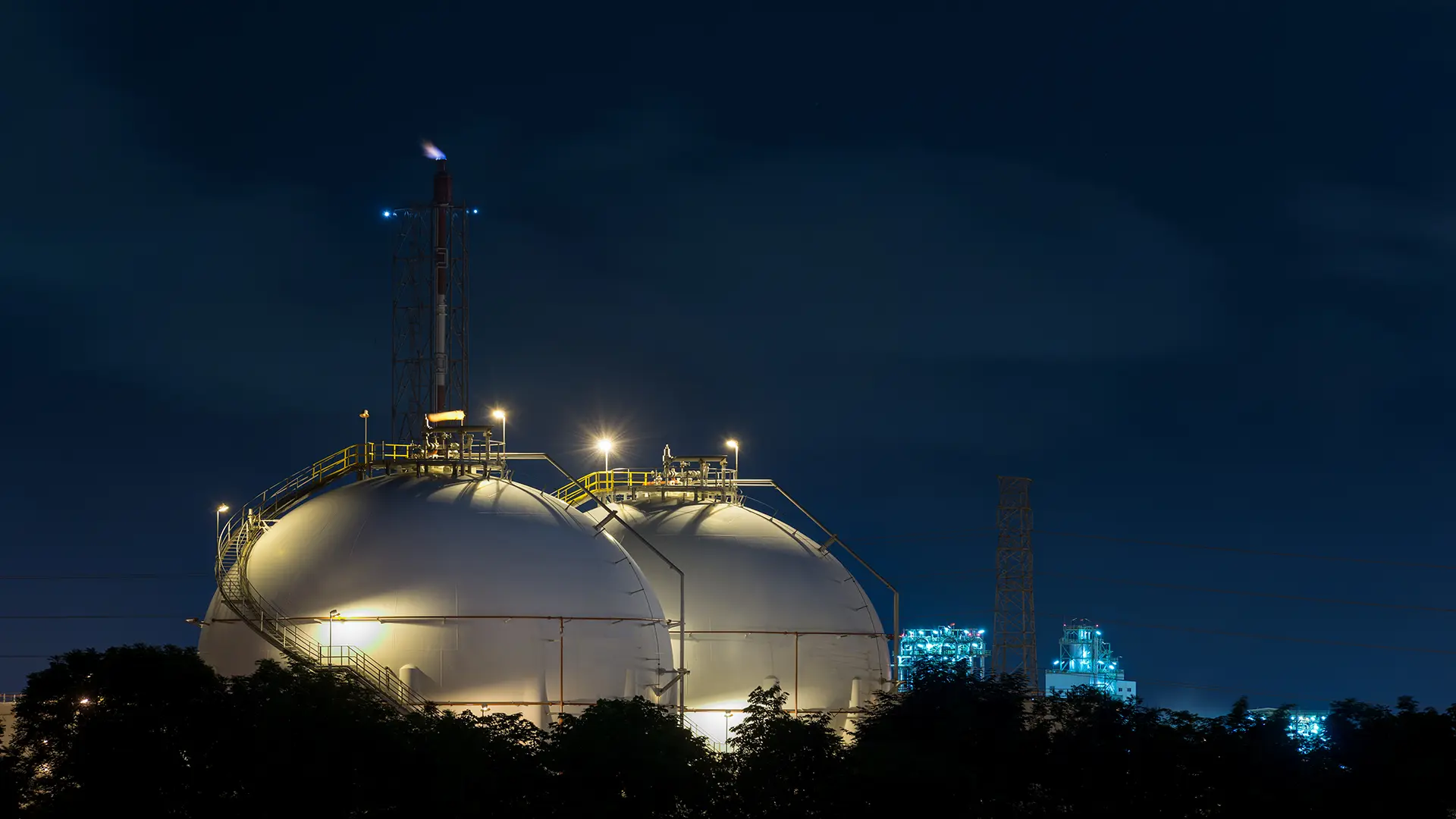
Written by John Egan for Industrial Info Resources (Sugar Land, Texas)--The U.S. Environmental Protection Agency (EPA) (Washington, D.C.) has postponed until after the holidays a decision about how best to reduce methane emissions from the Oil & Gas Industry, an EPA source told Industrial Info late last week. Reducing methane emissions from the Oil & Gas Industry was one part of President Barack Obama's Climate Action Plan, which unveiled this past March. For more on the Obama administrations plan to lower methane emissions, see July 30, 2014, article-EPA Considering Steps to Cut Methane Emissions from Oil & Gas Facilities.
Methane (CH4) is a short-lived but potent greenhouse gas that is more efficient at trapping heat than carbon dioxide (CO2). Pound for pound, the comparative impact of CH4 on climate change is more than 20 times greater than CO2 during a 100-year period, the EPA said. In 2012, the Oil & Gas Industry--including production, processing, storage, transportation and distribution¬--accounted for a larger share of methane emissions, about 29%, than any other sector, according to the EPA's greenhouse gas registry.
In releasing its plan to cut methane emissions in the oil and gas sector, the administration emphasized three elements:
- EPA would determine if new regulations were needed for companies that produce, process, store, transport and distribute oil and natural gas
- The Bureau of Land Management (BLM) (Washington, D.C.), a branch of the Department of the Interior (DOI) (Washington, D.C.), would step up efforts to reduce gas venting and flaring on federal lands, and
- The Department of Energy (DoE) would identify potential "downstream" methane-reduction opportunities, principally in the transportation sector, as part of its Quadrennial Energy Review
The EPA's decision to postpone a decision was welcomed by the Oil & Gas Industry, which had expressed concerns about potential new regulations that could affect companies that extract, process and transport oil and natural gas. "The worst outcome would be a really prescriptive federal regulation, which would have incredible cost implications for our industry," Matt Kellogg, tax and environmental counsel for the Independent Petroleum Association of America (IPAA) (Washington, D.C.), said in an interview with Industrial Info late last week. IPAA represents independent oil and gas producers.
"EPA is still grappling with this issue," Kellogg said of the agency's methane emissions decision. "They're still working through what, if anything, is needed. EPA is trying to get a better understanding where methane emissions come from. Until we know more, we believe an expensive new regulatory scheme covering thousands of wells would have a chilling effect on future development of oil and gas resources." He estimated U.S. companies drill about 30,000 new wells each year.
Oil and gas producers feel new federal regulation of methane emissions is not needed. By the EPA's own calculations, methane emissions account for about 9% of all greenhouse gases. While the Oil & Gas Industry accounts for 29% of all methane emissions, 29% of 9% only amounts to about 2.6% of overall greenhouse gas emissions, Kellogg told Industrial Info. Producers account for about half of that 2.6%, with the balance being attributable to pipelines, terminals and distributors, he estimated. Crafting a new regulation for an industry that contributes 1.3% of all greenhouse gases would be going beyond the point of diminishing returns, he added.
 Click on the icon at right to see a top-level breakdown of greenhouse gas emissions and a breakout by industry of major emitters of methane, a potent greenhouse gas.
If the EPA decided a new rule was needed to control methane emissions from the Oil & Gas Industry, that rule would have to be drafted, released for public comment, and potentially revised before it would be go into effect. Earlier this year, the agency released five white papers on aspects of methane emissions in the Oil & Gas Industry.
One of the other legs of the administration's methane-reduction plan is scheduled to be released any day: BLM's plan to reduce venting and flaring of gas on federal lands, to be achieved in part by promulgating best practices in hydraulic fracturing, well cementing and other tasks that are part of completing a well.
Kellogg and another expert, Mark Barron, an associate at BakerHostetler (Cleveland, Ohio), both spoke at the North American Prospect Expo (NAPE) conference in Denver earlier this month. In his talk at NAPE, Barron said the BLM received more than 200,000 comments on its May 2012 draft rule to limit venting and flaring of gas on federal lands. A revised draft was issued in May 2013. The revised rule was sent to the White House in August 2014, and final approval is still pending.
The BLM regulation has evolved and expanded significantly during the drafting process. "As drafted, it is quite costly, and not necessarily needed," Kellogg told Industrial Info. Although any BLM regulation would only apply to federal lands, he said producers are "quite concerned" that such a regulation could be used to try to toughen state regulation of hydraulic fracturing. "It's easy to see a scenario where a BLM rule could become a national baseline of practices, and groups could point to that rule and say, 'If the federal government is tightening regulations for federal lands, doesn't that mean states have to become more stringent as well?' "
In his NAPE talk, Barron said of the BLM rule, "Litigation is inevitable. Everyone hates it, for different reasons." Litigation could push back the effective date of the regulation. He added the industry is planning on mobilizing for a legislative intervention once the new Congress is seated.
Kellogg predicted IPAA would have an "extensive educational and outreach effort" with the Congress to be seated next month. "We're still strategizing about the best way to move forward with the 114th Congress. We do feel a flexible, state-led regulatory regime is the best approach for hydraulic fracturing. A state-led effort provides flexibility to respond to local conditions and concerns. The worst thing that could happen would be an inflexible, prescriptive federal regulation, which would be incredibly expensive and generate few environmental benefits."
Industrial Info Resources (IIR), with global headquarters in Sugar Land, Texas, three offices in North America and 10 international offices, is the leading provider of global market intelligence specializing in the industrial process, heavy manufacturing and energy markets. Industrial Info's quality-assurance philosophy, the Living Forward Reporting Principle, provides up-to-the-minute intelligence on what's happening now, while constantly keeping track of future opportunities.
/news/article.jsp
false
Want More IIR News Intelligence?
Make us a Preferred Source on Google to see more of us when you search.
Add Us On GoogleAsk Us
Have a question for our staff?
Submit a question and one of our experts will be happy to assist you.

Forecasts & Analytical Solutions
Where global project and asset data meets advanced analytics for smarter market sizing and forecasting.
Explore Our SolutionsRelated Articles

PECWeb Global Market Intelligence Platform
Identify opportunities, anticipate change, and execute with confidence. PECWeb connects the industrial intelligence you need, from projects and assets to operational events, all in one platform.
Discover PecwebIndustry Intel
-
European Chemicals and Transport Fuels OutlookPodcast Episode / Jul 10, 2026
-
2026 European Petroleum Refining Project OutlookPodcast Episode / Jun 26, 2026
-
Brazil: Efficiency, Innovation, and Opportunities in the Food & Beverage IndustryPodcast Episode / Jun 12, 2026
-
2026-2027 Investment Radar for Mexico, Central America & the CaribbeanPodcast Episode / May 29, 2026
-
Innovations Shaping the Next Era of Power GenerationPodcast Episode / May 22, 2026
